Features
Diamonds, tears and tiaras

Marilyn Monroe’s genius and tragedy of her life
By Dahami P. Samarathunga
I remember watching “Blonde”, with a few of friends back in 2022 and finding its portrayal of Marilyn Monroe most unfair. Even though the film was dubbed a ‘fictional biopic’, it seemed as though it had failed to be even that presenting her story as an unending tragedy, with too much focus on the negatives. The director described the film as a representation of Marilyn captured through the lens of a camera, with her highlighted beauty, sensuality, and sex appeal saying it was an emphasis on “the idea of Marilyn Monroe” rather than the actual person herself ignoring the fact that she had fought hard to be taken seriously, instead of as some ‘sexual object’, through the major part of her career.
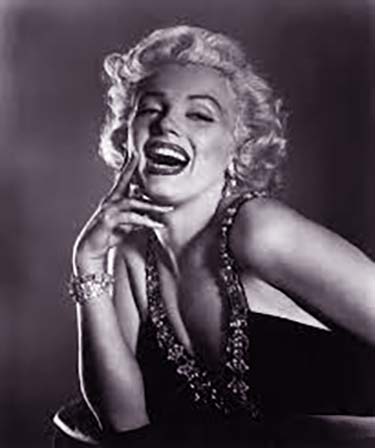
It is no secret that Marilyn was a symbol of Hollywood glitter and arguably the most recognizable movie star of her time. But her success and rise to stardom didn’t come easy as she had to overcome not only the politics behind the scenes in show business but also her own personal demons. In the midst of the multitude of tragedies she endured in her short time on earth, she was one of the hardest working women in show business, who was well aware of the ugly side of Hollywood and as actress Shelly Winters once revealed, “If she was dumber, she would’ve been happier.”
Marilyn was born “Norma Jeane Mortenson on June 1, 1926 and didn’t have a normal upbringing as her mother was diagnosed with schizophrenia and she had never seen her father. Due to her illness, her mother was admitted to a mental institution, making Grace Goddard, a family friend, her guardian. But, due to her husband’s reluctance to keep the child, Norma was later sent back to an orphanage where she was abused and shunted through over a dozen foster homes within a few years greatly affecting her mental state. The orphanage staff believed Norma could thrive in a family setting resulting in Grace Goddard moving her back to her home. But Norma’s happiness was short lived as Grace’s husband, attempted to sexually molest her causing Norma to develop a stutter which she later tried to conceal by adopting to more breathy and softer speaking tone during her studio days.


Through out her school and teenage years, Norma was constantly moved to friends and relatives’ homes. Her foster parents often encouraged her to go out for movies as they didn’t like having her in the house all the time. This led to her becoming infatuated with the idea of being a movie star. To remove Norma out of their home state, Grace Goddard who remained her legal guardian and her husband decided to marry her off to their neighbour James Dougherty, five years her senior. Though she went along with their decision, she felt she was pressured into it and believed her destiny was elsewhere. She was only 16-years old at the time.
After Dougherty was shipped off to the Pacific during World War ll, Norma worked at a “Radioplane” factory where she was discovered by David Conover, a photographer working for the US military. Impressed by her good looks, he invited her to model for an Air Force calendar. This led her to quit her factory job in 1945 and sign up with a modelling agency where she was an instant success, being featured in magazines and advertising commercials. The agency considered her to be one of their most hardworking models.
Around this time Norma bleached her hair blonde, drawing inspiration from her childhood idol Jean Harlow. She signed a contract with a Fox Studio in 1946 and went on to take her iconic screen name Marilyn Monroe adding the ‘Monroe’ which was her mother’s maiden name. She divorced Dougherty in 1947 as he opposed her film career. Marilyn was dropped by Fox after her initial contract and was later signed on by Columbia Pictures. Both studios were hesitant to give her prominent roles as they deemed, ‘she was too timid and shy to be in front of camera’. However, due to her later appearances in a few Fox hits, she was offered a seven-year deal with 20th Century Fox in 1950 but was heartbroken after hearing her rumoured lover, talent agent Johnny Hyde, had died of a heart attack a few days later.
After going back to Fox, Marilyn began to work extensively with her acting coach Natasha Lytess and was determined to make a name for herself as an actress in show business. In 1953, she starred in three consecutive box office hits consolidating her status as one of the most sought-after stars in cinema. “Niagara” was a breakthrough for Marilyn as many believed her years of hard work had finally paid off. Her iconic walking scene in Niagara was considered the longest such scene in the history of cinema and was filmed in a one single take.
It was said that Marilyn had to walk about 35 meters in the shot, with the director, Henry Hathaway initially not planning to shoot a long scene. But, once the cameras started rolling, Marilyn’s graceful walk enthralled the entire film crew and hundreds of onlookers on the street with nobody daring to stop her. She next starred in “Gentlemen Prefer Blondes” alongside Jane Rusell who was an industry veteran. Jane described Marilyn as a ‘sweet individual’ and a ‘workaholic’, revealing how overly critical she was of her own work, “She did look to her coach a lot,” Rusell said. “She worked with her after a full day’s shooting, when I couldn’t think of anything but going home, eating and crashing into bed. “But she’d go on working. She was really determined.”
At the time of the movie’s release, it was revealed that Russell was paid over ten times more than Marilyn due to the contract she held. But despite their pay difference, the pair remained close. Marilyn later spoke of a time when the movie was being shot, she was upset over not having her own dressing room. “The public would be quite disillusioned with the way the industry treats its stars”, Marilyn said. “She (Russel) got $ 200,000 for the film, and I got my 500 a week. But to me it was considerable. The only thing was I couldn’t get my own dressing room. I said look, ‘after all I’m the blonde, and gentlemen prefer blondes!’ “.
Though the studios tried to downplay her acting talent, refusing to look past her beauty, critics believed Marilyn had outshone a cast of seasoned veterans with Russell revealing she didn’t mind playing second fiddle Marilyn as they had formed a bond and didn’t compete with each other. With the success of her movies, Marilyn was offered the same stereotypical “dumb blonde” characters which, she strictly refused. After rejecting series of such movies, she was sent on leave in January 1954 as the studio accused her breaching her contract.
However, Marilyn had the last laugh as she married the baseball star, Joe DiMaggio, at a hugely publicized event a few weeks later. They jetted off to Japan for their honeymoon with Marilyn later detouring to perform before thousands of US soldiers in Korea, creating a media frenzy that became one of the biggest news stories of the year. After this highly publicized tour, she was offered a new contract with Fox in March of 1954.
However, Marilyn’s marriage to DiMaggio ended in less than a year with speculation that their separation was triggered by an iconic scene during the shooting of “The Seven Year Itch.” Here, Marilyn’s skirt gets blown by the gust from a subway grate orchestrated by Fox for publicity reasons. DiMaggio was furious over seeing that photo and the excitement it created that he reportedly struck her later that night at St. Regis Hotel, where they stayed. Many believed Marilyn’s fame overwhelmed DiMaggio who eventually grew jealous.
Tired of being cast as a ‘sex symbol’ upset she couldn’t choose her own roles and conflicts with the studio, Marilyn was suspended from work. She countered by opening her own production company, “MMP” with her photographer Milton Green, in late 1954.
Green’s wife, Amy, a close friend of Marilyn, once said she loved strolling around the streets of New York with the actress hiding behind her glasses or a scarf. Nobody bothered her. Once when they were on such a walk, Marilyn asked, “Do you want to see me become her?” “I just said ‘Yes’, Amy revealed. “And then I saw it. I don’t know how to explain what she did because it was so very subtle. Suddenly cars were slowing and people were turning their heads and stopping to stare. They were recognizing Marilyn Monroe as if she pulled off a mask or something.”
Marilyn in every sense was a fine actress. She often made her movements and mannerisms appropriate for the camera and honed her speaking skills with the help of the books such as, ‘The Thinking Body’ by Mabel Elsworth Todd. This showed how hard she was willing to work to perfect every aspect her career and persona. By the late 1955 Fox was eager to work with her again and offered her a contract with provisions allowing her to pick movies, directors, and projects of her own.
She declared another victory against Fox in 1956 by legally changing her name to “Marilyn Monroe” which was seen as a clever entrepreneurial decision by the same media that once ridiculed her for leaving Fox and going independent. It also was considered a rare feat, as her superstars of her stature typically avoided legal conflicts with major studios fearing potential damage to their careers. She later married playwright Arthur Miller in 1956, seen as controversial by many.
One well documented aspect of Marilyn’s life was how understood and loved she was by fellow female stars. Joan Collins revealed how Marilyn was the first to warn her about the vultures in Hollywood saying, “Beware of the wolves in Hollywood honey. If the studio bosses don’t get what they want from you, they’ll drop your contract”.
Marilyn also had an endearing relationship with Jazz icon Ella Fitzgerald. ‘She’s my very favourite person and I love her as a person as well as a singer; I think she’s the greatest,” she once said of Fitzgerald. Ella later recalled how Marilyn came to her rescue when many venue owners did not let her perform at important theatres and nightclubs because she was black. “I owe Marilyn Monroe a real debt,” She revealed. “She personally called the owner of the Mocambo and told him she wanted me booked immediately. The owner agreed and Marilyn was at the front table, every night. The press went overboard. After that, I never had to play at a small jazz club again.”
Marilyn was diagnosed with endometriosis and suffered a few miscarriages in late 1950’s which made her self medicate to cope with depression. She was later admitted to a hospital after an overdose. With her personal heartaches and career frustrations, she started using alcohol, narcotics, and stimulants to cope with chronic insomnia and stress. But she eventually made a comeback in 1958 with the box office hit “Some like it hot”, which won her the Golden Globe for Best Actress in 1960.
In 1961 Marilyn starred in the movie “The Misfits”, written by Arthur Miller, who had promised her to write a script where she could fully showcase her talent as a dramatic actor. Marilyn later discovered an entry in his notebook, where he allegedly called their marriage “disappointing”, insinuating she was a threat to his creative image. This eventually strained their relationship. She was distraught after seeing his remarks and noticed he had rewritten and changed the movie script persistently making it difficult for her to memorise the dialogues. ‘He was supposed to be writing this for me”, she told a friend, “He could have written me anything, but he comes up with this”.
Following a difficult shooting due to Marilyn’s health and severe prescription drug abuse, Miller and she decided to part in 1961, signifying the culmination of Marilyn’s final released movie.
On August 5, 1962, Marilyn was found unresponsive in her bedroom and her death was ruled as an overdose and “a probable suicide”. It was revealed that she had ingested a lethal dose of Nembutal, which is often associated with treating anxiety. Some believed there was a government involvement in her demise due to rumoured ties between her and the Kennedy brothers in her final days. However, when investigators reopened the case decades later, they failed to find any evidence strong enough to suggest any foul play. Yet, some in the industry still refused to believe that Marilyn had taken her own life, with the likes of Jane Russell opining that there were certainly some “dirty tricks” involved in her death.
Joe DiMaggio was devastated upon hearing of Marilyn’s untimely death and felt guilty as he believed he partly contributed to her demise. They had reconciled shortly before her death. He organized her funeral and barred anyone from Hollywood attending as he believed they all played a part in her tragic end. Arthur Miller didn’t attend the funeral, but criticized the public mourners writing, “glad that it is not you going into the earth, glad that it is this lovely girl who at last you killed”.
In a way “Marilyn”, was Norma Jeane Mortensen’s greatest creation; but that identity slowly became a burden as Marilyn often felt trapped in the image of a sex goddess. Unfortunately, for her there was no turning back as her stardom had hit heights beyond her control. She wasn’t naive, but understood the nature of fame, “‘Fame is also a burden,”, Marilyn once said. She had masterfully built the image of “Marilyn” and played it so effortlessly that the studios wanted her to believe in that image.
“Well, I hope you got something here” she said to Richard Meryman as he was wrapping up the recording of her final interview. “But please don’t make me look like a joke”. It’s no secret that Marilyn despised how superficial the studios painted her to be and hated the media’s guts for pushing that narrative and running along with it. But she also sensed what she deemed as a fantasy was slowly becoming her reality and this left her fragmented and losing control.
(The writer is a Canadian of Sri Lankan descent living in Toronto. She may be contacted at dahamisamarathunga44@gmail.com)