Politics
DB Wijetunga’s political rise

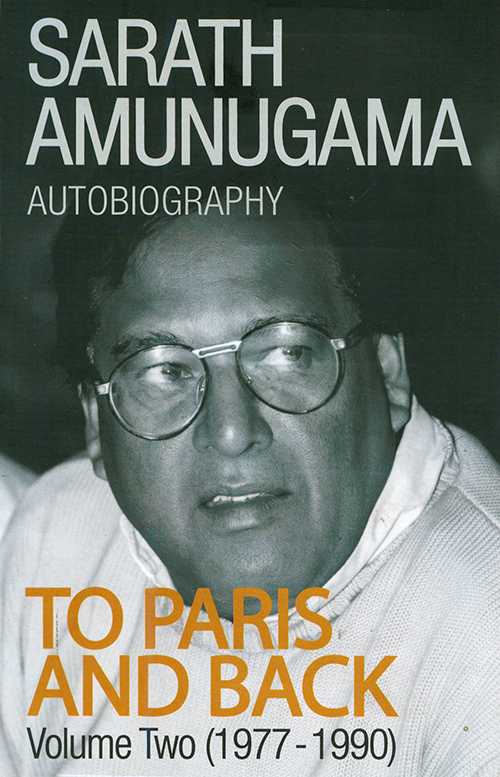
Excerpted from Sarath Amunugama’s autobiography
The appointment of D.B. Wijetunga as Minister of Information and Broadcasting (in 1977) was a surprise. A senior member of the UNP who had been inducted to politics by his mentor A. Ratnayake, Wijetunga was known as a diehard party man who was close to his constituents. When Dudley suffered a humiliating defeat in 1970 Wijetunga was unlucky to lose his Udunuwara seat by a few hundred votes.
For seven years after that he persisted in working for his electors in spite of the many obstacles that he had to face, including economic problems. Fortunately, his wife’s `Walawwe’ was located in the centre of Pilimatalawe town and it was within easy reach of his voters. He was not a person who pushed himself forward and no party bigwig thought he was a threat to their ambitions. Having been Minister Ratnayake’s Private Secretary during the DS and Dudley regimes, Wijetunga had a mastery of public administration and the goodwill of district officials.
The talk in Kandy was that no public official would deny Wijetunga a favour. With a good command of the English language having studied at St Andrew’s College in Gampola [where Thondaman was his classmate] he loved to write official letters in his own hand which his numerous followers took to senior administrators for relief. When I was the Director of Combined Services, I was inundated with his letters seeking redress for clerks and minor staff based in Kandy. I accommodated many of his requests which seemed reasonable.
While JRJ decided on the holders of the main ministries he relied on Menikdiwela, his secretary, for recommendations regarding the other positions. Menik would have recommended Wijetunga without hesitation and he was appointed as Minister of Information and Broadcasting since he was not in any one’s clique. His acceptability to every faction in the UNP carried him far in his political life. Later he was Minister of Finance, Prime Minister and President – a combination of posts that no other UNPer had enjoyed before or after.
For me he was the perfect boss since we were friends and relatives. He trusted me completely to run the Ministry though I was comparatively junior in the CCS. Equally, I made sure that he was well briefed and prompt in his responses to the President and the PM. Usually there were complaints that the media was not covering this or that minister’s activities. But the President was convinced that with Wijetunga who did not belong to any camp, there was no hanky panky or hidden agendas regarding media coverage.

It was Wijetunga who promoted the TV project with gusto as he knew that the President was keeping a watchful eye on it. I briefed him on the state of play before every cabinet meeting so that he could respond to his boss’s queries. His goodwill and courtesy, which fascinated the Japanese, helped in keeping up the momentum of the project. Unlike in the case of some other ministers who were delaying projects while bargaining for `kickbacks’, Wijetunga was scrupulously honest.
However, he refused to go out of the country be it to Japan or any other. Foreign travel never interested him. His only outing was his regular visit to home in Pilimatalawe every weekend. One reason for his reticence for travel was that he would miss his favourite local cuisine. Whenever we visited him in his Paget Road Bungalow, he would insist on our eating a simple homemade meal with him.
My daughter, Varuni, was then attending the lower classes of Sirimavo Bandaranaike College which was next door to the minister’s bungalow. She cheekily used to visit `Wije Aththa’ with her friends and demand cool drinks which the minister happily provided. Once I found Varuni and her friends busy with Wijetunga cutting up his broom sticks because they had forgotten to bring their ‘Li Keli’ sticks from home and were afraid to go to their dancing class without them.
His private staff led by Gamini Ratnayake, and Wilson were all from Kandy and the whole entourage would take off on Friday afternoons and reappear on Monday mornings. Since they were all Kandy boys, I could interact easily with them and get them to work cordially with my ministry staff. When the minister was transferred to the Telecommunications Ministry his whole entourage disappeared into Transworks House.
At that time W.J. Fernando, who was Wijetunga’s friend from his Kandy GA days, was a Director of the Davasa group which was very influential in the media field. This newspaper group supported our minister and that was well known to the President and the Cabinet. He was sought by his cabinet colleagues when they had problems with the Press. I will describe later how we earned much kudos by arranging a supply of newsprint to the Davasa group in an emergency.
Our actions were envied even by then Housing and Local Government Minister Premadasa. WJ Fernando was a pal of Sam Wijesinha, Secretary General of Parliament as both had attended Henry Kissinger’s annual Foreign Policy Seminar at Harvard. This was long before Kissinger became an influential advisor of President Nixon. Kissinger was a great networker and I have seen the letters he wrote to WJ from Harvard.
These two friends -WJ and Sam, were the most trusted advisors of Premadasa and they promoted Wijetunga to him as a counter-weight in the hill country to Gamini Dissanayake. This was the background to Wijetunga’s meteoric rise to several high positions.