
News
Crisis caused by decades of misuse public resources, corruption, kleptocracy – TISL

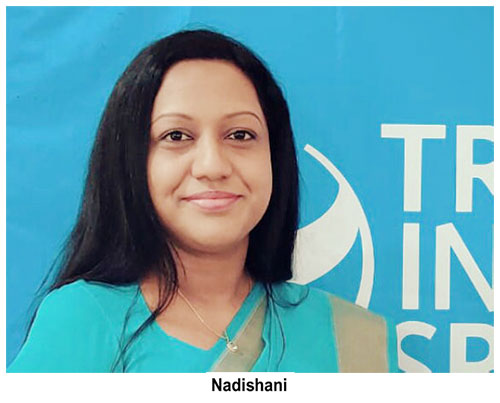
The Transparency International of Sri Lanka has presented a set of 15-point recommendations for anti-corruption law reforms.
The TISL said in a statement: 2022 has so far been a tumultuous year for Sri Lanka. With the country teetering dangerously close to defaulting, economists have noted that the situation will only get worse before it can get better.
TISL says the prevailing crisis has been caused by decades of misuse and mismanagement of public resources, kleptocracy, systemic corruption and an overall lack of transparency and accountability in both governance as well as in the public service sector.
At this important juncture, the decisions taken and the action or inaction of the leaders of the country will determine the uplifting or complete breakdown of the economy, with direct consequences to the lives of citizens. Therefore, ensuring maximum transparency and accountability of decisions at the highest level and taking immediate action to curb ongoing and possible corruption are essential if the country is to effectively implement any economic recovery plan. Hence, it is paramount that loopholes within the Constitution, national policies, laws, structures and systems are addressed in a manner that would minimise opportunities for corruption.
While a robust economic recovery plan is the need of the hour, if the people and systems that are entrusted with implementing such a plan are corrupt or perceived to be corrupt, there will be little to no acceptance from the people, who will have to bear the burden of this recovery plan.
In the light of the above, TISL hereby presents a set of recommendations that lays down the main anti-corruption reforms that are crucial immediately and in the medium / long terms, if Sri Lanka is to rise above the present crisis and bring about a real change:
1. Set the tone from the top – It is paramount that those who take leadership must have a clean track record that demonstrates their integrity and genuine commitment to serve the country, coupled with the required basic knowledge and expertise for their roles. A strong “zero-tolerance policy for corruption” needs to be adopted by the leaders, where they go beyond their word and reflect such principles in their actions.
2. Ensure transparency of all decisions taken with regard to solving the present crisis –Introduce an open digital platform to share all information related to the foreign donations and loans obtained, along with detailed information on how such funds are utilized and on decisions made by the Finance and other relevant Ministries and the Central Bank. It is essential to have frequent and regular press conferences to keep the people informed of the actions being taken on economic recovery and to conduct open consultations with relevant stakeholders prior to making important decisions.
3. Repeal the 20th Amendment –This amendment that removed essential accountability measures in governance should be repealed in order to bring back the checks and balances in governance that were brought in by the 19th Amendment.
4. Introduce provisions to strengthen Parliament’s oversight on Public Finance –It is crucial to tighten the controls on public finance by converting the outdated financial regulations into a comprehensive Finance Law that will cater to the present times and ensure parliamentary oversight as well. In addition, Constitutional recognition and empowerment is required for watch dogs on public finance – the COPE (Committee on Public Enterprise), COPA (Committee on Public Accounts) and CPF (Committee on Public Finance), to enhance their effectiveness.
5. Introduce mandatory accountability measures on public procurement –As public procurement is a process that is heavily targeted for grand corruption, it is essential to convert the existing National Procurement Guidelines to a law, and to establish mandatory procedures to follow in case of unsolicited proposals. Re-establishment and empowerment of the National Procurement Commission to oversee public procurement is also important.
6. Abolish the executive presidency –The Executive Presidency as designed in our Constitution has proven to be an avenue that leads to the concentration of great power on one individual, often leading to the abuse of such entrusted power to the detriment of the country. Therefore, it is important to create a mechanism with a Prime Minister and Cabinet that is accountable to the parliament.
7. Empower the law enforcement authorities and ensure their independence, so that they can take action to end impunity, by fearlessly, proactively and vigorously pursuing the perpetrators of corruption, irrespective of their political power or social status.
8. Begin the process to de-politicize the public service, by introducing required Constitutional amendments that would enhance the independence of the public officials.
9. Act Immediately on the findings of COPE, COPA, COPF, which have continuously unraveled massive abuse of public resources within public institutions.
10. Conduct an immediate audit of all SOEs –A financial audit and an overall review of all State-Owned Enterprises (SOEs) need to be conducted to ascertain losses and misuse of public resources and to take immediate action to stop ongoing corruption. These savings will help the Government to channel more public funds to secure essential goods and services.
11. Recovery of stolen assets –Law enforcement officials need to take steps to immediately commence investigations, asset tracing and the asset recovery process in relation to questionable assets of public representatives and public officials held within and outside of the country.
12. Show us the money – Political parties need to respect the call of the people to demonstrate their commitment to transparency and accountability and make relevant policy decisions to voluntarily disclose their Asset Declarations to the general public, thereby paving way for a social audit of their assets. Steps need to also be taken to Amend the law on Asset Declarations, making public disclosure of asset declarations mandatory and introducing provisions to centralize the record maintenance and for regular review and proactive investigations on discrepancies.
13. Hold the enablers accountable –Public Officials, Big businesses, Banks and Financial Institutions, lawyers, accountants, real estate agents etc. are all part of the kleptocracy circle that pave way for, facilitate, support and benefit from grand corruption. Oversight entities such as the Public Service Commission, Financial Intelligence Unit of the Central Bank, the Chamber of Commerce, The Bar Association, Chartered Institute of Management Accountants etc. and the citizens need to act as watchdogs and demand greater transparency and accountability from these parties as well.
14. Introduce the proposed composite law on Proceeds of Crime –Through this law Sri Lanka could establish an independent Asset Management Authority to manage recovered assets. This law will deal with all matters relating to recovery of stolen assets held overseas.
15. Introduce legislation to regulate election campaign financing, which is a starting point of corruption of public representatives.
Commenting on the current situation, TISL’s Executive Director Nadishani Perera stated “We urge the citizens to continue to actively seek information and knowledge on the types and impact of corruption and to be informed of the essential systemic and cultural changes needed to uplift the country. We stand with the citizens in demanding accountability and corrective action from our public representatives in a peaceful manner. Together we can weather this storm and create the change we thought may not be possible in our lifetime.”




The U.S. Embassy in Colombo welcomed the U.S. Sports Envoys to Sri Lanka, former National Basketball Association (NBA) and Women’s National Basketball Association (WNBA) players Stephen Howard and Astou Ndiaye, from June 8 through 14.
The Public Diplomacy section of the U.S. Embassy said that it would launch a weeklong basketball program intended to harness the unifying power of sports, made possible through collaboration with Foundation of Goodness and IImpact Hoop Lab.
While in Sri Lanka, Howard and Ndiaye, both retired professional basketball players, will conduct a weeklong program, Hoops for Hope: Bridging Borders through Basketball. The Sports Envoys will lead basketball clinics and exhibition matches and engage in leadership sessions in Colombo and Southern Province for youth aged 14-18 from Northern, Uva, Eastern and Western Provinces, offering skills and leadership training both on and off the court. The U.S. Envoys will also share their expertise with the Sri Lanka Basketball Federation, national coaches, and players, furthering the development of basketball in the country. Beyond the clinics, they will collaborate with Sri Lankan schoolchildren to take part in a community service project in the Colombo area.
“We are so proud to welcome Stephen and Astou as our Sports Envoys to Sri Lanka, to build on the strong people-to-people connections between the United States and Sri Lanka,” said U.S. Ambassador Julie Chung. “The lessons that will be shared by our Sports Envoys – communication, teamwork, resilience, inclusion, and conflict resolution – are essential for leadership development, community building, equality, and peace. The U.S. Sports Envoy program is a testament to our belief that sports can be a powerful tool in promoting peace and unity.”
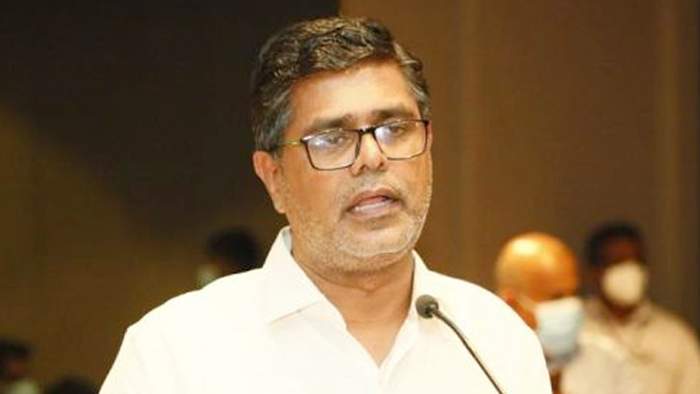
SJB Colombo District MP Mujibur Rahuman in parliament demanded to know from the government the reasons for CEB suspending the leave of all its employees until further notice from Thursday.
MP Rahuman said that the CEB has got an acting General Manager anew and the latter yesterday morning issued a circular suspending leave of all CEB employees with immediate effect until further notice.
“We demand that Minister Kanchana Wijesekera should explain this to the House. This circular was issued while this debate on the new Electricity Amendment Bill was pending. There are many who oppose this Bill. The Minister must tell parliament the reason for the urge to cancel the leave of CEB employees,” the MP said.However, Speaker Mahinda Yapa Abeywardena prevented Minister Wijesekera responding to the query and said that the matter raised by MP Rahuman was not relevant.
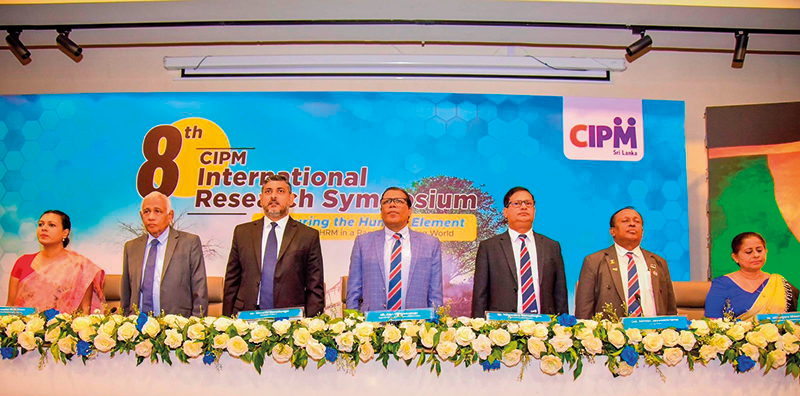
The Chartered Institute of Personnel Management (CIPM) successfully concluded the 8th Annual CIPM Symposium, which took place on 31st May 2024. Themed “Nurturing the Human Element—Redefining HRM in a Rapidly Changing World,” the symposium underscored the pivotal role of human resource management (HRM) in today’s dynamic global landscape. Since its inception in 1959, CIPM has been dedicated to advancing the HR profession through education, professional development, and advocacy, solidifying its position as Sri Lanka’s leading professional body for HRM.
Ken Vijayakumar, the President of the CIPM, graced the occasion as the chief guest. The symposium commenced with the welcome address by the Chairperson, Prof. Arosha Adikaram, followed by the Web Launch of the Symposium Proceedings and Abstract Book by the CIPM President. The event featured distinguished addresses, including a speech by Chief Guest Ken Vijayakumar, President of CIPM, and an address by Guest of Honor Shakthi Ranatunga, Chief Operating Officer of MAS Holdings Pvt. Ltd., Sri Lanka.
The symposium also featured an inspiring keynote address by Prof. Mario Fernando, Professor of Management and Director of the Centre for Cross Cultural Management (CCCM) at the University of Wollongong, Australia.
Vote of Thanks of the inauguration session was delivered by Dr. Dillanjani Weeratunga, Symposium Co-chair.
The symposium served as a comprehensive platform for researchers to present their findings across a wide range of critical topics in HRM. These included Cultural Diversity and Inclusion, Talent Development and Retention, Ethical Leadership and Corporate Social Responsibility, Adapting to Technological Advancements, Mental Health and Well-being at Work, Global Workforce Challenges, Employee Empowerment, and Reskilling and Upskilling.
The plenary session was led by Prof. Wasantha Rajapakse. Certificates were awarded to the best paper presenters during the valedictory session, followed by a vote of thanks delivered by Kamani Perera, Manager of Research and Development.
The annual symposium of CIPM was a truly inclusive event, attracting a diverse audience that spanned undergraduates, graduates, working professionals, research scholars and lecturers. This widespread interest highlights the symposium’s significance in the field of HRM, offering a unique opportunity for everyone to network and learn from scholarly brains.The CIPM International Research Symposium was sponsored by Hambantota International Port, Sri Lanka Institute of Information Technology (SLIIT), E B Creasy & Co. PLC, and Print Xcel Company.



US sports envoys to Lanka to champion youth development

Rahuman questions sudden cancellation of leave of CEB employees


