
Life style
COVID-19: You might be depressed now, but don’t underestimate your resilience


The mental health toll of COVID-19 pandemic is real. But many will recover.
Trauma does not reliably produce illness, which is important to remember when looking at how people are responding to the pandemic as it unfolds. Picture used for illustrative purposes only. Image Credit: Supplied
The emerging data on mental health during the pandemic suggests a troubling future. Surveys show that Americans have become more depressed and anxious, and experts in a variety of fields have argued that COVID-19 has changed society forever.
While the pandemic has undeniably caused extraordinary stress and sadness, research on human resilience suggests that people will recover from the trauma of the pandemic faster than many believe. And while certain groups may need mental health care for the longer term, it’s also true that humans’ ability to overcome adversity is often underestimated and that an overwhelming majority of people who suffer trauma will not develop mental illness but eventually feel better.
As a psychiatrist, I see this firsthand with patients and colleagues. Most of my patients who had clinical depression and anxiety before the pandemic did not deteriorate during the pandemic. Yes, they were stressed and worried, but I was struck by how this group remained pretty stable.
Earlier in the pandemic I also ran a support group for the anesthesiologists at the hospital where I work. Every day this group of men and women would intubate people with severe COVID-19, exposing themselves to the virus and immense patient suffering. But eventually, the support group disbanded because the members felt they could cope without my help.
This is not to suggest that the impact of COVID-19 on mental health isn’t real, nor that it won’t be long-lasting in some cases. It is real, and it will linger for many. But it’s also important to underscore that most people who are exposed to stress and trauma do not necessarily develop clinical depression or post-traumatic stress disorder. Sure, they experience anxiety and sadness, but these mental health states can lift soon after stress abates.
Studies suggest that up to about 90 percent of Americans have experienced a traumatic event, yet the prevalence of PTSD is estimated to be 6.8 percent. So while exposure to traumatic events is common, only a small minority of people develop PTSD as a result. Follow-up studies of trauma victims with PTSD in the general population show that the symptoms decrease significantly within three months after trauma and that about 66 percent of those with PTSD eventually recover.
Trauma does not reliably produce illness, which is important to remember when looking at how people are responding to the pandemic as it unfolds. A recent study conducted by the Centers for Disease Control and Prevention found that from August 2020 to February 2021, the percentage of adults with recent symptoms of anxiety and depression increased to 41.5 percent from 36.4 percent.
Transient and unreliable
But most surveys like this assess symptoms at a given point in time, which could turn out to be transient. These surveys are also conducted online, using rating scales that don’t reliably establish a clinical diagnosis. Other research tracking people with diagnosed mental health conditions haven’t found an increase in symptom severity during the pandemic.
I’ve found that many patients find comfort in learning that most people who are traumatized do not develop psychopathology. The ability to cope with adversity is the essence of resilience – but it doesn’t mean there is no psychological distress. To the contrary, anxiety and sadness are common reactions, but these responses are typically manageable and temporary.
It’s why many people who experience intense stress or trauma go on to live healthy, productive lives. Not all stress is harmful to the brain, and many people cooped up at home during the pandemic largely faced a kind of manageable stress. Once normal life can resume, many people will begin to feel much better.
Chronic unremitting stress that isn’t easily resolved, however, leads to sustained increase of adrenaline and cortisol and can be harmful. Frontline workers were exposed to this type of chronic stress during the pandemic and thus are at much higher risk of developing clinical depression and anxiety. The pandemic also took a disproportionate toll on people of color, who experienced increases in suicide rates in 2020 while overall suicide rates in the country dropped. Making sure these groups have access to care will be critical for their mental and physical health.
Experts have long been interested in why some people are more resilient than others in the face of stress, including after events like wars and natural disasters. Some of it is genetic, and some of it is a person’s life circumstances. Things like having a steady income, family support and access to health care can affect how people handle traumatic events.
Foster emotional and physical resilience
But there are things that people can do to foster emotional and physical resilience, including maintaining social bonds, getting regular exercise and finding ways to reduce stress, among other things. Social support, for example, has been shown to strengthen resilience by increasing self-esteem and the sense of control. Social connectedness also inhibits activation of fear and anxiety circuits in the brain.
There is no question that this has been a stressful and brutal year marked by untold loss and grief. I lost my splendid 94-year-old mother to COVID-19, and I’m still sad. But people should feel a measure of relief at having navigated COVID to this point, and not forget the fact that humans are more resilient than we realize. We can bounce back.( Independent)



Institute of Hospitality Sri Lanka
 The 32nd Annual General Meeting (AGM) of the UK-based Institute of Hospitality’s Sri Lanka Chapter was held recently at the Ramada Hotel Colombo,.The event provided an evening of camaraderie , reflection of the past and present achievements,setting new benchmarks for the future
The AGM had the presence of two distinguished guests, the Chief Guest Opposition Leader Sajith Premadasa, and the Guest of Honour British High Commissioner to Sri Lanka, Andrew Patrick. Their inspiring speeches were lauded by all hoteliers who were present at the occasion
A special thanks was extended to Robert Richardson, CEO of the Institute of Hospitality UK, along with his team, sponsors, committee members, and all attendees for making the event memorable.
Dr. Harsha Jayasingh, Past President of the Institute of Hospitality (UK) Sri Lanka Chapter, emphasised the Institute’s longstanding history and the strength of its Sri Lankan branch. “The Institute of Hospitality (IH) UK has a history of 86 years, and we are proud to be the Sri Lanka Branch. IH Sri Lanka is much stronger now with many members from all areas of the hospitality industry,” he stated.
Dr. Jayasingh highlighted the significant role of tourism in Sri Lanka’s economy,. He said tourism it is the third-largest source of revenue for the country. “Tourism accounts for about 13.3% of total foreign exchange earnings and employs 450,000 people directly and indirectly. The hospitality industry in this island of pearl holds tremendous potential for economic growth, job creations, and cultural exchange,” he added.
He also pointed out more women should be attracted to the industry and advocated for the use of technology in hospitality sector to attract the younger generation.
The newly appointed Chairman Ramesh Dassanayake spoke about the challenges faced by the industry, including the reluctance of youth to join the sector. . Dassanayake expressed concerns over the migration of staff between hotels and the overall ‘brain drain’ in the sector. ” We must maintain high standards in the hotel We must try to attract tourists to Sri Lanka, we must have with many facilities Hence, hotel schools and other professional institutions involved in skills development mustincrease their intakes,” he pointed out.
Chief Guest Sajith Premadasa emphasised the importance of eco tourism and said “We need to have an environmental policy related to tourism in place,” . .
The 32nd AGM of the Institute of Hospitality UK, Sri Lanka Chapter, was a testament to the strength and potential of Sri Lanka’s hospitality industry. The insights and commitments shared during the event set a new benchmark for the future.(ZC)


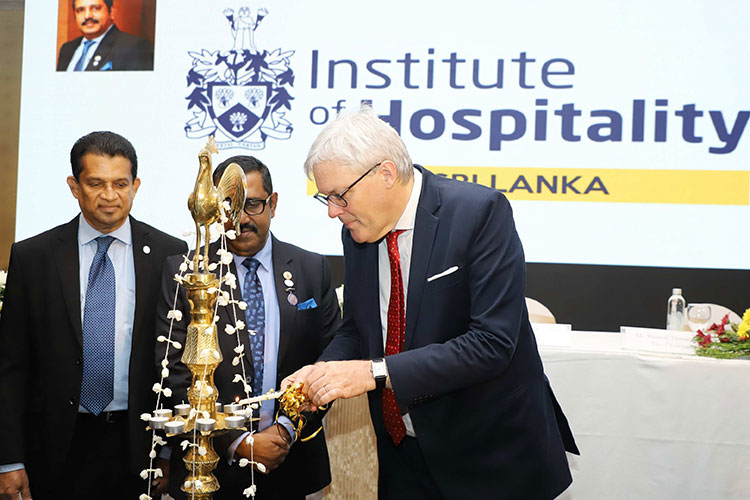
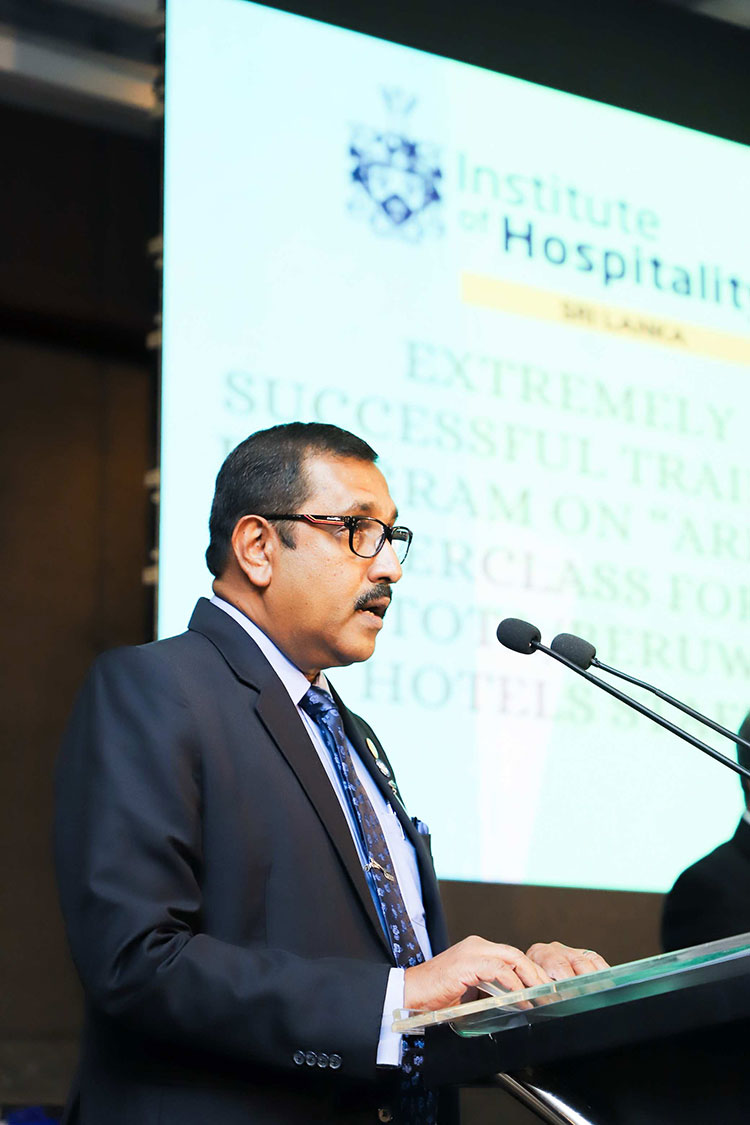

Pix by Thushara Attapathu
Life style
He recognizes human identity beyond boundaries of gender, race, nationality and religion.

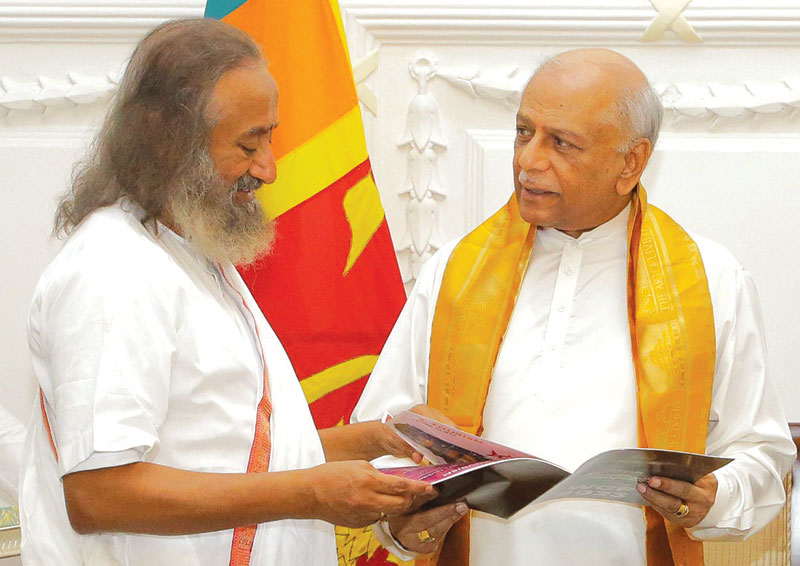
Visit of Sri Gurudev to Sri Lanka
Humanitarian, spiritual leader and Global Ambassador of Peace Gurudev Sri Sri Ravi Shankar (Sri Gurudev) was in Sri Lanka on a three day tour on the invitation of the Prime Minister of Sri Lanka Dinesh Gunewardene. Gurudev who inspired a wave of volunteerism and service to moot one of the largest volunteer-based organisations in the world – The Art of Living – visited the various projects under the aegis of the foundation and launched twelve vocational and technical centers around the island. He was accompanied by thousands of followers from Sri Lanka and around the world.
Gurudev who visited Sri Lanka for the sixth time also had a first day cover launched in honour of his visit. He is a strong proponent of spreading happiness, using the unique Sudarshan Kriya, yoga, meditation and practical wisdom to unite people, empower individuals and transform communities. His programmes provide techniques and tools to live a deeper, more joyous life, while his non-profit organisations recognize the human identity beyond the boundaries of gender, race, nationality and religion.
The Art of Living which has more than 30,000 teachers and over one million volunteers across 180 countries has touched in excess of five hundred million people around the world. CNN called it “Life Changing” and The Washington Post headlined it, “Fresh air to millions”.
In Trincomalee, Gurudev met with war victims and had a heartwarming engagement with the children from the children’s homes run by the Foundation. He also visited the Koneswara Temple in Trincomalee and graced the Kumbhabhishekam at Seetha ecogPnize the human identity beyond the boundaries of gender, race, nationality and religion. Amman temple at Nuwara Eliya. He held discussions with the trustees on the progress of the foundation’s social service projects, while also holding a special event – Ekamuthuwa – attended by a large number of dignitaries and his devotees from around the world.
His time with the Prime Minister was spent discussing the prospects of unity in diversity and uniting Sri Lanka by adding happiness into the formula of living. In addition he had discussions with the Speaker of the Parliament of Sri Lanka Mahinda Yapa Abeywardena, prominent business stewards and civil society leaders.
by Zanita Careem
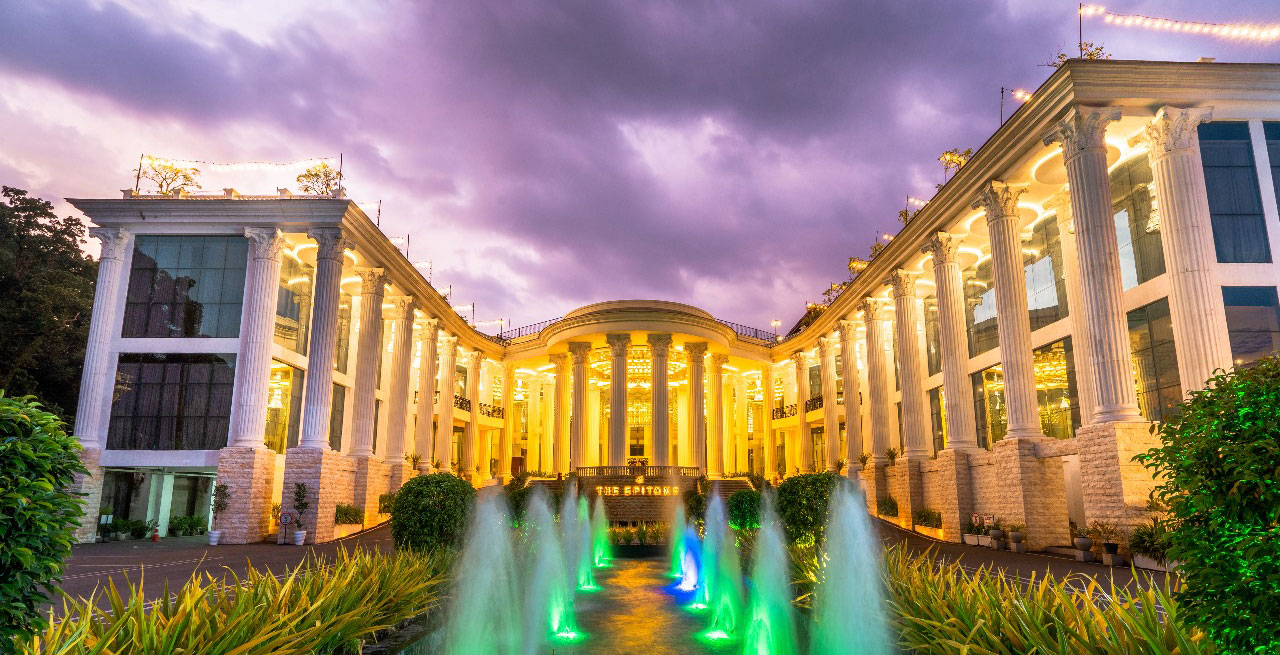
Envison your dream wedding day come to life at the Epitome Hotel, a prestigious city hotel in Kurunegala offering an unrivalled luxury rendors experience for weddings.
The venue is designed to embody opulence and luxury from all quarters for a spectacular wedding in kurunegala,Thier ballroom is the largest banquet facility in Sri Lanka It can be divided into six luxurious pillarless wedding halls on the ground floor and 25pax smaller banquet halls.
It can be easily named as a five star heaven in the heart of the city contributing to a myriad of immense experiences tailored to inspire and delight wedding experiences.
From opulent décor set up to exquisite table decor, lavish food, every detail is meticulously curated to spark your imagination and ignite creativity for a perfect wedding. The previous prestigious wedding shows season one and season two attracted large crowds
were unique events which gave the wedding vendors and potential clients had an opportunity to connect and interact with each other. Beyond being a showcase it was a chance for the wedding vendors to unite and contribute to the vibrancy of the wedding industry. The wedding show covered all area of the bridal industry providing a comprehensive variety of bridal supplies from Sri lanka and became the most popular bridal exhibitions in Kurunegala.This bridal exhibitions allowed brides and grooms to experience first hand the products and services available from suppliers in Sri Lanka
These wedding shows held at The Epitome created a benchmark and gave an opportunity for vendors to create connections to the utmost satisfaction said Harshan Lakshita Executive Director. of the magnificent Hotel
Our wedding shows featured experts and professionals in every field‘ It covered all areas of the bridal industry provided a comprehensive variety of bridal supplies from Sri lanka and became most popular bridal exhibition in this region.We are always open to everyone to join us at our wedding shows in the future. It is an opportunity to discover the incredible talent within our local wedding and bridal vendors to make meaningful relationships and plan thier special day at our breathtaking hotel The Epitome said General Manager Kavinda Caldera
The Epitome Hotel’s bridal show which will be held end of June will buzz with great ideas,advice and inspiration for all those who plan thier dream wedding
…….
The Hotel Epitome’s Wedding Season 3 will marked excellence, celebration and inspiration for those in the wedding industry. The exhibition halls will resonate with ideas on exquisite bridal wear to decor, florists , photography etc and showshowcase the rich tapestry of talent within the local wedding industry. .






US sports envoys to Lanka to champion youth development

Rahuman questions sudden cancellation of leave of CEB employees


