
News
‘Country needs to stop runaway spread of virus to prevent rise of deadlier variants’


By Rathindra Kuruwita
The runaway spread of COVID-19 increased the danger of a new variant of the virus evolving in Sri Lanka, Prof. Suneth Agampodi, founder Professor and Chair – Department of Community Medicine, Faculty of Medicine and Allied Sciences, Rajarata University of Sri Lanka, said yesterday. If vaccines happened to be ineffective against such a variant, the whole vaccination process might become an exercise in futility, they warned.
“Some people think we can just reduce the number of deaths by increasing hospital capacity. They think that since most people don’t show severe symptoms, we could live with the COVID. What they don’t understand is that new variants are created when the virus spreads among a large number of people. That’s how the Alpha variant evolved in the UK and how the Delta variant came into being in India. Right now we are allowing the Delta variant to spread rapidly among the people and by this we are increasing the probability of a new dangerous variant evolving,” he said.
Prof. Agampodi also said that the chance of a COVID patient, over 70 dying, compared to a patient between 30 and 60, was 30 times higher. A person over 60 had a 2000% chance of dying compared to a patient between 30 and 60.
Prof. Agampodi said that during the pandemic, epidemiologists acted as the intelligence services of the state, and the government should listen to their warnings. If the government did nothing, despite the warnings of epidemiologists, it would be indirectly responsible for the deaths.
“We can’t expect people to do the right thing. If people do the right thing, we don’t need leaders or a government. There is no time to develop skills and change attitudes of the people. We are in the middle of a pandemic where there are over 150 daily reported deaths. We have seen how China and other countries have dealt with the pandemic when it was reaching critical stages; we know what to do. We must formulate policies and implement them strictly. If we impose a curfew now people will stop dying in large numbers between two to four weeks,” he said.
The Chair – Department of Community Medicine said it was ridiculous to expect people to follow the health regulations as regards gatherings. Given that there was no hope of self-discipline, people’s behaviour should be governed by law.
“When the government enforced a curfew in March 2020, I was in Yale. I was critical of the move then because I thought it was overkill. But after coming back I realised that curfew was the only way to put a stop to this. We can have a curfew but still maintain economic activity in vital sectors, through proper planning,” he said.
Dr. Chandima Jeewandara of the Allergy, Immunology and Cell Biology Unit, Department of Immunology Molecular and Molecular Medicine of the University of Sri Jayewardenepura, said that the number of new COVID-19 cases were at least 10 times the number of reported cases.
Dr. Jeewandara said that people should receive vaccines against COVID-19 as soon as possible. Sri Lanka already used the best vaccines in the world such as AstraZeneca, Sinopharm, Moderna, Pfizer and Sputnik-V, but he regretted that fewer than 20% of the people had been double jabbed.
“Getting one dose of a vaccine is not enough, at all. To get enough protection, you need to take both doses and wait two weeks. Jabs will prevent you from dying of Covid-19. But can still get infected and spread the disease to others. So don’t let your guard down,” he said.
Dr. Jeewandara added that there were 11,000 people over the age of 60 who had not received a single dose of the vaccine. It was a high risk group and anecdotal evidence suggested that most of them had not been inoculated because they feared that the vaccine would exacerbate existing conditions. Some people were afraid of vaccination.
“My advice is that if you are over 60 and have existing conditions, you must get vaccinated. You are in a highly vulnerable group. If you contract Covid-19, your lives will be in danger. Some people think that there is no need to vaccinate their elderly parents because they are always home. The elderly might be at home but the others go out every day. Most people show no symptoms, and they can easily bring the disease home.”
Dr. Jeewandara said that a number of people had contacted him about getting a booster shot and almost all of them were those in positions of influence. Given that 80% of Sri Lankans had not received their second dose, the main goal of the government was to give both doses to everyone, especially to those in the vulnerable groups.
“New variants are created in countries that have a lot of cases. The best examples are the UK and India. In Sri Lanka we can already see there are mutations of the Delta variant. When we do gene sequencing, we upload our data to a global database. Our international colleagues have told us that there are mutations in Delta samples we have submitted and there is a risk of these developing into dominant variants. Given that there are a large number of cases in the country, Sri Lanka needs to stop the spread of the virus as soon as possible,” he said.
Dr. Jeewandara added that Sri Lanka had not changed rules and regulations to meet changing circumstances. Although the current need was to test as many people as possible, the government had still not changed a circular issued in June banning the private sector from carrying out antigen tests.



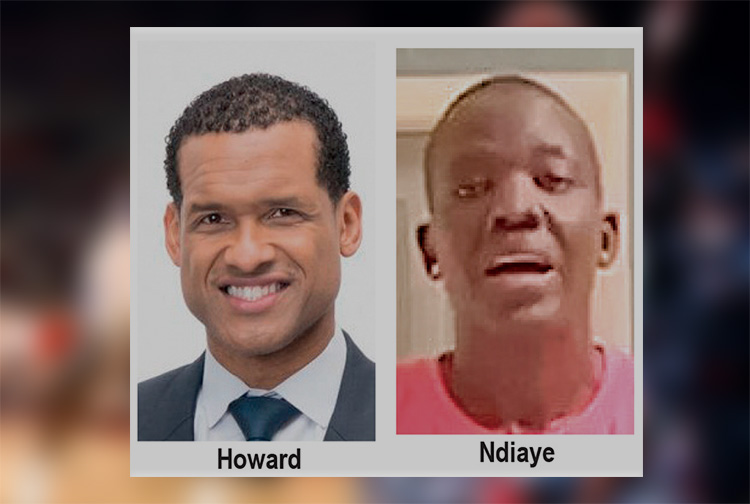
The U.S. Embassy in Colombo welcomed the U.S. Sports Envoys to Sri Lanka, former National Basketball Association (NBA) and Women’s National Basketball Association (WNBA) players Stephen Howard and Astou Ndiaye, from June 8 through 14.
The Public Diplomacy section of the U.S. Embassy said that it would launch a weeklong basketball program intended to harness the unifying power of sports, made possible through collaboration with Foundation of Goodness and IImpact Hoop Lab.
While in Sri Lanka, Howard and Ndiaye, both retired professional basketball players, will conduct a weeklong program, Hoops for Hope: Bridging Borders through Basketball. The Sports Envoys will lead basketball clinics and exhibition matches and engage in leadership sessions in Colombo and Southern Province for youth aged 14-18 from Northern, Uva, Eastern and Western Provinces, offering skills and leadership training both on and off the court. The U.S. Envoys will also share their expertise with the Sri Lanka Basketball Federation, national coaches, and players, furthering the development of basketball in the country. Beyond the clinics, they will collaborate with Sri Lankan schoolchildren to take part in a community service project in the Colombo area.
“We are so proud to welcome Stephen and Astou as our Sports Envoys to Sri Lanka, to build on the strong people-to-people connections between the United States and Sri Lanka,” said U.S. Ambassador Julie Chung. “The lessons that will be shared by our Sports Envoys – communication, teamwork, resilience, inclusion, and conflict resolution – are essential for leadership development, community building, equality, and peace. The U.S. Sports Envoy program is a testament to our belief that sports can be a powerful tool in promoting peace and unity.”
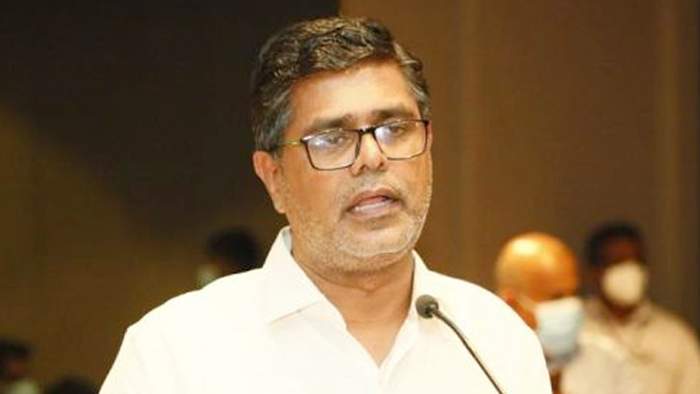
SJB Colombo District MP Mujibur Rahuman in parliament demanded to know from the government the reasons for CEB suspending the leave of all its employees until further notice from Thursday.
MP Rahuman said that the CEB has got an acting General Manager anew and the latter yesterday morning issued a circular suspending leave of all CEB employees with immediate effect until further notice.
“We demand that Minister Kanchana Wijesekera should explain this to the House. This circular was issued while this debate on the new Electricity Amendment Bill was pending. There are many who oppose this Bill. The Minister must tell parliament the reason for the urge to cancel the leave of CEB employees,” the MP said.However, Speaker Mahinda Yapa Abeywardena prevented Minister Wijesekera responding to the query and said that the matter raised by MP Rahuman was not relevant.
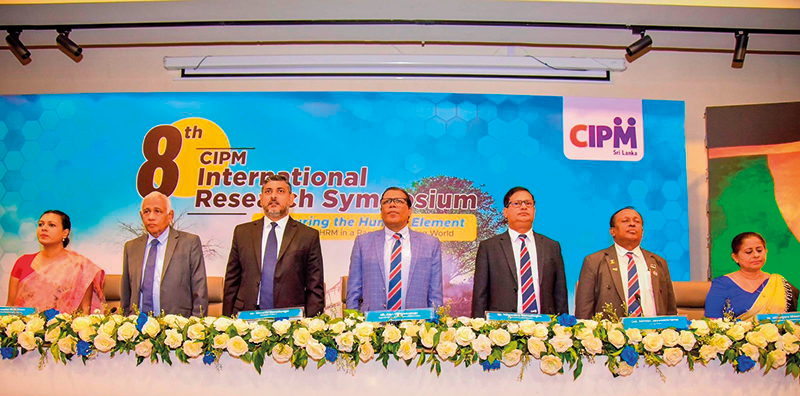
The Chartered Institute of Personnel Management (CIPM) successfully concluded the 8th Annual CIPM Symposium, which took place on 31st May 2024. Themed “Nurturing the Human Element—Redefining HRM in a Rapidly Changing World,” the symposium underscored the pivotal role of human resource management (HRM) in today’s dynamic global landscape. Since its inception in 1959, CIPM has been dedicated to advancing the HR profession through education, professional development, and advocacy, solidifying its position as Sri Lanka’s leading professional body for HRM.
Ken Vijayakumar, the President of the CIPM, graced the occasion as the chief guest. The symposium commenced with the welcome address by the Chairperson, Prof. Arosha Adikaram, followed by the Web Launch of the Symposium Proceedings and Abstract Book by the CIPM President. The event featured distinguished addresses, including a speech by Chief Guest Ken Vijayakumar, President of CIPM, and an address by Guest of Honor Shakthi Ranatunga, Chief Operating Officer of MAS Holdings Pvt. Ltd., Sri Lanka.
The symposium also featured an inspiring keynote address by Prof. Mario Fernando, Professor of Management and Director of the Centre for Cross Cultural Management (CCCM) at the University of Wollongong, Australia.
Vote of Thanks of the inauguration session was delivered by Dr. Dillanjani Weeratunga, Symposium Co-chair.
The symposium served as a comprehensive platform for researchers to present their findings across a wide range of critical topics in HRM. These included Cultural Diversity and Inclusion, Talent Development and Retention, Ethical Leadership and Corporate Social Responsibility, Adapting to Technological Advancements, Mental Health and Well-being at Work, Global Workforce Challenges, Employee Empowerment, and Reskilling and Upskilling.
The plenary session was led by Prof. Wasantha Rajapakse. Certificates were awarded to the best paper presenters during the valedictory session, followed by a vote of thanks delivered by Kamani Perera, Manager of Research and Development.
The annual symposium of CIPM was a truly inclusive event, attracting a diverse audience that spanned undergraduates, graduates, working professionals, research scholars and lecturers. This widespread interest highlights the symposium’s significance in the field of HRM, offering a unique opportunity for everyone to network and learn from scholarly brains.The CIPM International Research Symposium was sponsored by Hambantota International Port, Sri Lanka Institute of Information Technology (SLIIT), E B Creasy & Co. PLC, and Print Xcel Company.



US sports envoys to Lanka to champion youth development

Rahuman questions sudden cancellation of leave of CEB employees


