Features
Confronting Dadayama : Some Reflections on Sinhala Feminity

By Uditha Devapriya

Combing through my essay on Dadayama from two weeks back, I realise I reflected less on the film and more on the middle-cinema space it occupied. To be sure, the one cannot be written about in isolation from the other. But there is no point talking about the middle-cinema, and more generically about the shifts in taste and attitude that characterised the Sinhala popular culture of the 1980s, without dwelling at some length on Obeyesekere’s film. That is what I intend to do in this essay.
In my column I noted how, throughout Dadayama, the director presents us with one trope of mainstream Sinhala film after another, and then proceeds to shatter them. One example stands out in particular: Irangani Serasinghe, who by the time of the film’s release had been firmly established as a “hitha honda ammandi” – to invoke a famous epithet hurled at her by the press – playing a chain-smoking brothel owner.
At this point Serasinghe was at the peak of her career. She had become a permanent fixture, so to speak, in Sinhala pop culture, embodying all the qualities associated with the Sinhala mother: warmth, empathy, protectiveness, and above all the assurance that she can never be or never do wrong. By the time of her entrance, the protagonist, Rathmalie (Swarna Mallawarachchi) has lost all hope: she has been raped and abandoned not once, but twice. Serasinghe, who introduces herself as her tormentor’s mother, exudes the warmth and the protectiveness that Rathmalie, and her family, so desperately want.
In undermining these archetypes in that rather unforgettable scene where Irangani smokes behind a table – “What a scandal that provoked!” she told me when I interviewed her 10 years ago – Obeyesekere deprives Rathmalie of the last possible emotional resort she had: the kindly mother-figure. In a way, this signals a turnaround in the film. Until that moment, she had been nursing hopes of reconciling with her tormentor (Ravindra Randeniya). The sequence at the brothel convinces her that she has no choice but to confront him. From the naïve idealist girl, she turns into a hard, harsh woman of the world.
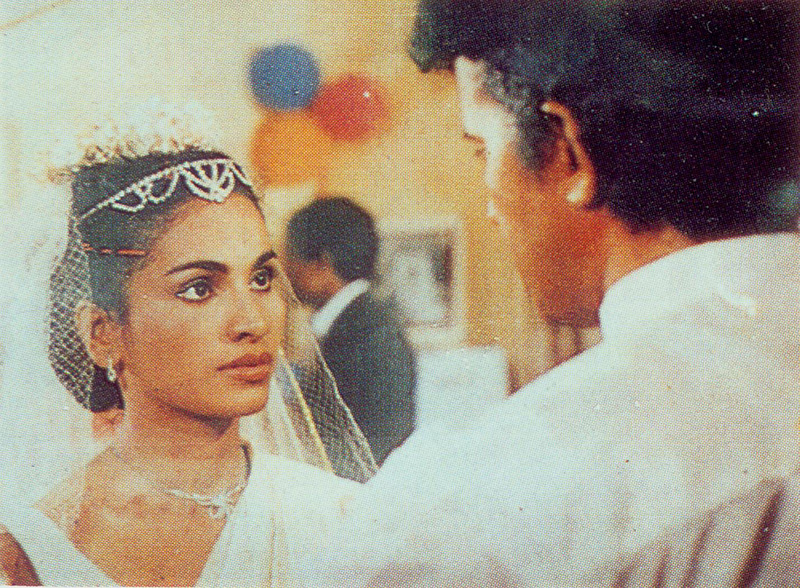
Kadapathaka Chaya (1989)
It is against this backdrop that she writes the man, Priyankara, a letter requesting him to meet her at once. Interestingly, the confrontation that unfolds thereafter, at a small beachside resort, was the first scene to be filmed. When I sat down and talked with Swarna a year or so ago, she explained its importance in the story.
“Obeyesekere advised Ravindra to appear unsettled and told me to act calm. Until then it was my character who was romantic, full of dreams, emotional, while he was the cool, calculating figure. Now the roles reverse, the tables turn.”
I don’t think this scene has been appreciated enough by critics or scholars of the Sinhala cinema. In his review of the film, Regi Siriwardena observes correctly that “the heroine grows with her experience, that by the end she is no longer the naïve romantic of the early scenes, that she is no resigned victim.” It is that confrontation which sets in motion that transformation and paves the way for the tragic finale, in which, to quote Siriwardena, “she dies protesting and resisting in an assertion of her human dignity.”
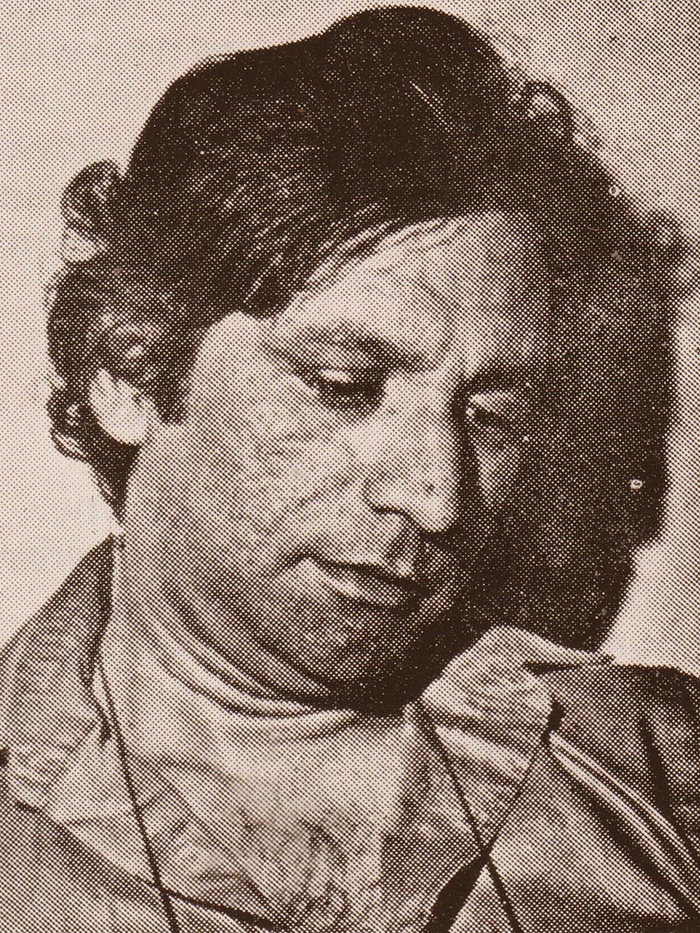
Vasantha
In my previous column, I noted that the landmark Sinhala middle-cinema films of the 1970s – Sikuruliya and Duhulu Malak in particular – presented a different kind of woman, rebelling if not raging against tradition. Yet, nonconformist as they were, the women of these stories could not extricate themselves completely from a patriarchal order. Thus, in Duhulu Malak, the woman chooses her husband over her lover. In Obeyesekere’s Palagetiyo and, to an extent, Dharmasiri Bandaranayake’s Hansa Vilak, the “amoral” girl is somehow “punished” for her “loose morals”: in both films, the male lover – played by Bandaranayake – murders her after discovering that she has fallen in love with another man.
Dadayama inverts this trajectory by first telling us everything from the woman’s perspective and then immersing us in her transformation from naïve idealist to harsh realist. One can argue that both Sikuruliya and Duhulu Malak do this too. Yet the transformations the women in these films undergo do not entirely free them from the social order that has subjugated them. In Duhulu Malak, the sympathy the woman, played by Nita Fernando, elicits from the audience is contingent on the choice she has to make. We are willing to sympathise with her situation and dilemma, but not to the extent of condoning her affair. After all, “good” Sinhala women don’t leave their husbands for other men.
Sumitra Peries’s Gehenu Lamayi is another case in point. The film explores another trope in mainstream Sinhala cinema and popular literature, the good sister versus bad sister. The good sister, played by Vasanthi Chathurani, stands as a contrast to her rebellious sibling, who wants to become a famous actress and unashamedly begins an affair with a director. When that director abandons her with a child, she is condemned to a life of indignity. Interestingly, unlike most Sinhala films or popular novels, where the “good” girl emerges triumphant, Sumitra offers her heroine a fate no different to her sister’s: her cousin, who had promised to marry her, abandons her when class compulsions come into play.
The point I am trying to make is that there were at least half a dozen films before Dadayama which prefigured, presaged, and predicted the heroine in Dadayama. Yet crucially, none of the women in those stories resist their fates. Some, like Dhammi Fonseka from Palagetiyo, do attempt to fight their fate. Eventually, however, they succumb to it. Others, like Sabeetha Perera from Devani Gamana, overcome their situation through the intervention of a male hero. What distinguishes Dadayama, and makes it the landmark it is, is how its heroine rises above these limitations to confront her circumstances – and her oppressor.
This calls for a footnote. In my previous column, I argued that Obeyesekere’s next film, Kedapathaka Chaya felt like a pale replica of Dadayama. Responding to my piece, a keen observer of Sri Lankan art and culture contended that Kedapathaka Chaya took Dadayama’s trajectory forward and completed the circle. In Dadayama, the woman dies resisting her fate. In Kedapthaka Chaya, she resists – by throwing acid on her tormentor – and survives her act of resistance. The tormentor himself is a much darker persona than his predecessor in Dadayama: not just a rapist, but a proto-paedophile.
These are valid points, and I agree with them. Perhaps I should qualify my earlier argument. Dadayama’s achievement was that it ruptured popular conceptions of femininity in the Sinhala cinema. Having ruptured it, it enabled Sinhala filmmakers – including Obeyesekere himself – to explore these conceptions, to question, challenge, and then undermine them. Kadapathaka Chaya completes this circle, so to speak. But the circle could not have been completed if it weren’t for Dadayama, and for the possibilities it opened Sinhala directors to. That achievement cannot be emphasised enough.
Uditha Devapriya is a writer, researcher, and analyst who writes on topics such as history, art and culture, politics, and foreign policy. He is one of the two leads in U & U, an informal art and culture research collective. He can be reached at .