
Life style
Chai is tea, tea is Chai: India’s favorite hot drink

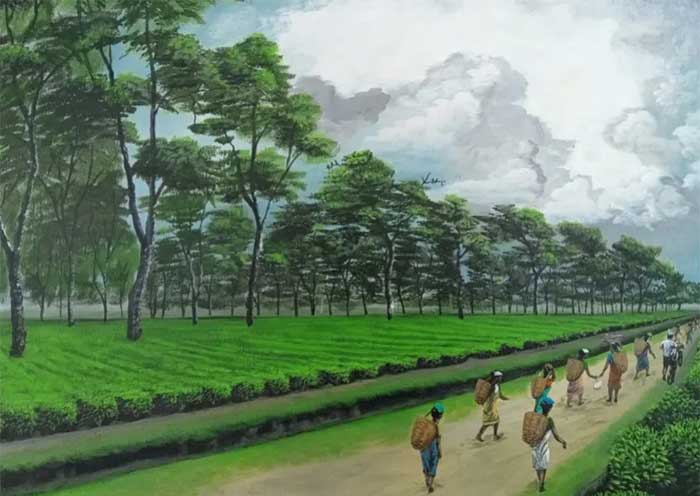
Indians took the tea the British were marketing to them, added spices, milk and sugar, and transformed it forever.
Chai can be enjoyed alone, but it excels in company
By Nupur Roopa
I remember jumping up to sit on the kitchen counter one afternoon. My five-year-old self wants to watch my mother making chai. She pushes me away from the gas stove but I am indignant and refuse to hop down, although I do move away a bit.The water bubbles. She adds sugar, then takes a flat steel grater, balances it on the edge of the pot and grates in adrak (ginger).
“Why do we add this?” I ask, watching the shreds fall into the bubbling water.
“Child, I have to hurry I don’t have time for your questions,” she says. I sulk but I know that, being a doctor, she has to get to the hospital on time. I will ask grandma, I tell myself.
The ginger threads dance in the water. Then she adds the tea leaves, turning the contents of the pot brown. Stirring, she adds milk and lets it simmer over a low flame, still stirring. After a few minutes, she removes it from the heat and covers it. I hop down to watch the next step. She strains it in cups, puts them on a tray, and carries it to the dining table.
I run out. I have no interest in tasting it but am proud, boasting to my friends: “I know how to make chai.” By the end of the day, I have memorized the process forever.I don’t want to ask to taste it because I know if I do, she will dilute it with more milk. “Children should not drink tea,” she would say. I hated that pale milky liquid.
The first time I tasted real chai, I was in grade three. I had scored good marks on a maths test and ran home that August afternoon to share the news with my mother and grandparents as they were having their chai. Basking in the appreciation and pats on my back, I asked if I could have chai. Mother refused, but grandfather smiled and poured some into a cup. I took it and breathed the aroma in deeply. I took one sip, then the second. The creamy, rich beverage warmed my heart and spirit and at that precise moment, I became a chai lover.
I yearned to make chai but wasn’t allowed. “What if you spill the boiling water and get burned,” my grandmother would fret. Finally, when I was in grade five, she reluctantly allowed me to make it under her supervision and soon I was making it alone.

Prerna Kumar and her family enjoy a mug of steaming chai on a chilly day
I felt so accomplished, measuring water, grating ginger, and scooping sugar and tea leaves to add to the boiling water. Watching the tea leaves spinning with the ginger. Then adding the milk and watching it lighten the chai and simmer, steeping the flavours. “A good cup of chai needs a slow fire,” I was told, something I follow to this day.
Fast forward a few years, and I am on my way home on a bitterly cold January evening in Indore. The sun is on leave and the wind drills into my bones. I enter a silent, cold apartment – my mother isn’t back from the hospital yet and my grandmother has moved to live with my uncle since my grandfather passed away.
I need chai. Soon, I’m sitting with a hot, steaming cup, sipping it slowly. I close my eyes, savouring the sweet milk, sharp ginger and cinnamon. By then, I was experimenting with spices and adding what felt right at the moment – cinnamon, fennel, green cardamom and more. I would add lemongrass, holy basil and peppercorns if I had a cold or sore throat.

Chai can be enjoyed alone,but it excels in company
Chai is tea, tea is chai
Chai in India is a drink for no reason and for every reason, morning, afternoon, evening and night. It lifts your spirits while studying for the maths paper or learning chemistry formulas. It spices college gossip and fans rumours. A welcoming or parting drink, to convince friends and family to stay longer to share more stories.
It brings everyone together. It is served in homes, board meetings, college canteens, cafes and at weddings. “Chalo chai ho jaye,” (Let’s have tea) is heard every day.
Tea is chai in India. When, where, and how the first cup of chai was brewed is still up for debate, it is our elders who gives us an idea about the evolution of this delicious, addictive beverage.
Prerna Kumar, founder of ChaiVeda and purveyor of medicinal blends, says: “The early reference to tea is found in the Buddhist texts where the monks drank some kind of tea while fasting and meditating.
“They made tea from foraged tea leaves and perhaps added certain flowers to the decoction to help them feel calmer.”
But how did tea become chai and give birth to chaiwallahs (chai sellers) and chai drinkers?
I remember sitting with my grandfather and a history book in grade 10. He could make history dance in front of your eyes but I wasn’t enthusiastic about that day’s lesson. It wasn’t about kings or queens or battles, but the dull history of the everyday drink. How interesting could it be?
Grandfather pushes the book away and tells me to just listen.
“Tea,” he began, “comes from China.”
With that, he launched a history
lesson replete with scenes of Britishers drinking tea, tea traders at seaports and expansive green tea plantations in Assam.
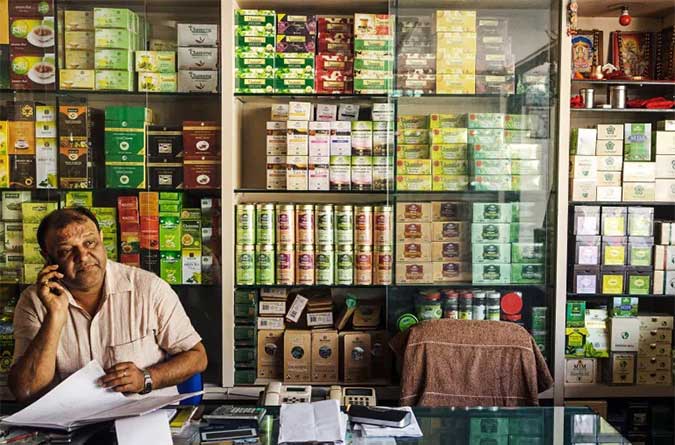
India is the largest consumer of tea in the world, the second-largest producer and the fourth-largest exporter – about 80 percent of its production is for domestic consumption
The English were introduced to tea when the Dutch East India Company began to import it into Europe in the 17th century, and its popularity gradually grew. By the 18th century, the English East India Company was importing enough tea from China that it was considered one of the company’s main assets. But there was worry over China refusing to renew the English trade
monopoly and a search for alternatives began.
English botanist Sir Joseph Banks suggested that the English in Assam grow tea there in 1778 after it was discovered that the Singpho tribe in Assam and Arunachal Pradesh drank a wild tea plant. But there was little interest until China broke the monopoly in 1833; two years later, tea growing in Assam began, food historian Mohsina Mukadam from Mumbai elaborates.
The Assam Tea Company was formed in 1839 and started marketing in Europe. Tea wasn’t a widely known beverage in India and it wasn’t until the start of the Great Depression in 1929 that the company looked at the Indian market to move its perishable stock, Mukadam added.
They started mandatory tea breaks in factories; tea-making demonstrations in markets and in homes where women could watch from the purdah (a screened enclosure); film screenings in villages to dole out free tea samples. Free tea on the purchase of saris. Tea sold at railway stations. But tea still wasn’t becoming as popular as hoped.
“The British were overconfident about changing our food habits,” grandfather smiled. Indians were wary of this new beverage. “We took it, added spices, milk, and sugar, transforming tea-making forever.”
Now I’m completely fascinated with the tea lesson.
Author and chef Sadaf Hussain, a lover of food history and stories, tells me later: “Britishers gave us the habit of tea but … we Indianised the recipe to suit our taste.
“We were used to drinking ‘kadha’ [herbal decoctions] for ages and we innovated tea into something similar by using spices, milk, and sugar. The addition of milk was … to increase the quantity as tea leaves were expensive and, India being an agricultural country, milk was easily available.”
Today, India is the largest consumer of tea in the world, the second-largest producer and the fourth-largest exporter. According to Tea Board India, the country produced 1.34 million tonnes of tea in 2021, about 80 percent of it for domestic consumption.

The best chai is inspired by the masala dabba, a quintessential presence in Indian kitchens
Masala chai
Basic masala chai is tea boiled in a mixture of milk, water, sugar, and any or all spices, like cardamom, cinnamon, clove, ginger or black pepper.
Every family has a special chai recipe. “Some like a mild version, others enjoy it strong,” chai-making is personal, Sadaf says. Some like ginger or cardamom, or both or neither, he explains.”There are around 20,000 ingredients that have been added to tea around the world,” shares Prerna. “It is mind-boggling … Anything that can be added to food can be added to tea.”
Masala chai can include herbs, spices and flowers – black pepper, cardamom, cinnamon, cloves, fennel, ginger, holy basil, liquorice, nutmeg, rose petals and more. The best chai is inspired by the masala dabba (box of spices), a quintessential presence in Indian kitchens. Ginger and black pepper are good for digestion and warming. Cloves, with their antiseptic properties, are good for sore throats and cardamom can elevate your mood.
I will never forget my Mumbai neighbour Sumathy Aunty’s masala chai. A new bride, I had reached Mumbai early that morning and was taking my stuff upstairs when the apartment next door opened and a lady draped in a sari dashed out, smiling over her shoulder in the way people in Mumbai do when they need to get somewhere.
I was new to Mumbai and wasn’t aware of what a feat it was to catch the trains crisscrossing the city. Every second counted and could delay you. That evening around seven, Sumathy Aunty knocked and asked me over for tea. What blossomed thereafter was a unique friendship between me, recently married and in my early twenties, and Sumathy Aunty, who was in her late fifties.
We would sip chai with farsan or chivda (fried lentil and flat rice spiced snacks) and sometimes, on rainy days, I would make mangodis (spiced lentil fritters), a speciality of central India, where I’m from. We exchanged recipes and cooking tips from our home states and she shared life skills to survive in Mumbai, a city that, for a small-town girl like me, was quite stressful.
Her chai was a caramel brew that always made me crave more. It had ginger, fennel seeds, cardamom and lemongrass, but there was more to it. When asked how she got it to taste this way, she attributed it to a mantra she chanted.
No two chais are the same, even the process and the mindset of the person making chai play a huge role, according to Prerna. “My husband is able to discern a difference if I am unhappy with him for some reason while making tea,” she laughs.
‘If you’re Indian, you must like tea’
South India has been a coffee stronghold for many years but things are starting to change as the humble chai made its way into people’s hearts and chai shops serving a variety ranging from ginger to masala and lemon hold pride of place along with “Kumbakonam coffee” houses, writer Chandrika R Krishnan shares.Every day is Chai Day. May 21 was declared International Tea Day in 2019 by the United Nations, but every day is Chai Day in India.
– Al Jazeera



Institute of Hospitality Sri Lanka
 The 32nd Annual General Meeting (AGM) of the UK-based Institute of Hospitality’s Sri Lanka Chapter was held recently at the Ramada Hotel Colombo,.The event provided an evening of camaraderie , reflection of the past and present achievements,setting new benchmarks for the future
The AGM had the presence of two distinguished guests, the Chief Guest Opposition Leader Sajith Premadasa, and the Guest of Honour British High Commissioner to Sri Lanka, Andrew Patrick. Their inspiring speeches were lauded by all hoteliers who were present at the occasion
A special thanks was extended to Robert Richardson, CEO of the Institute of Hospitality UK, along with his team, sponsors, committee members, and all attendees for making the event memorable.
Dr. Harsha Jayasingh, Past President of the Institute of Hospitality (UK) Sri Lanka Chapter, emphasised the Institute’s longstanding history and the strength of its Sri Lankan branch. “The Institute of Hospitality (IH) UK has a history of 86 years, and we are proud to be the Sri Lanka Branch. IH Sri Lanka is much stronger now with many members from all areas of the hospitality industry,” he stated.
Dr. Jayasingh highlighted the significant role of tourism in Sri Lanka’s economy,. He said tourism it is the third-largest source of revenue for the country. “Tourism accounts for about 13.3% of total foreign exchange earnings and employs 450,000 people directly and indirectly. The hospitality industry in this island of pearl holds tremendous potential for economic growth, job creations, and cultural exchange,” he added.
He also pointed out more women should be attracted to the industry and advocated for the use of technology in hospitality sector to attract the younger generation.
The newly appointed Chairman Ramesh Dassanayake spoke about the challenges faced by the industry, including the reluctance of youth to join the sector. . Dassanayake expressed concerns over the migration of staff between hotels and the overall ‘brain drain’ in the sector. ” We must maintain high standards in the hotel We must try to attract tourists to Sri Lanka, we must have with many facilities Hence, hotel schools and other professional institutions involved in skills development mustincrease their intakes,” he pointed out.
Chief Guest Sajith Premadasa emphasised the importance of eco tourism and said “We need to have an environmental policy related to tourism in place,” . .
The 32nd AGM of the Institute of Hospitality UK, Sri Lanka Chapter, was a testament to the strength and potential of Sri Lanka’s hospitality industry. The insights and commitments shared during the event set a new benchmark for the future.(ZC)


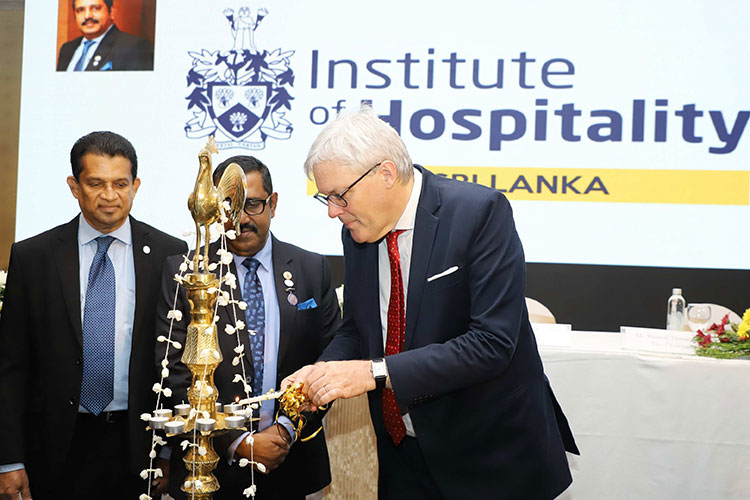
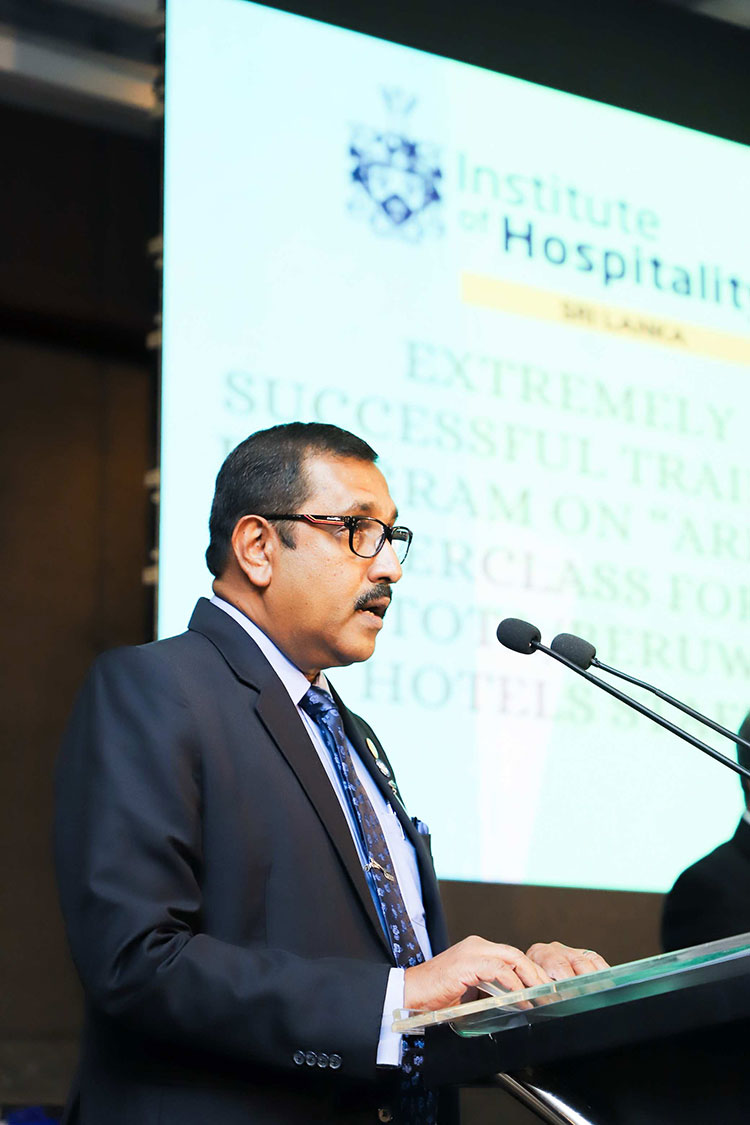

Pix by Thushara Attapathu
Life style
He recognizes human identity beyond boundaries of gender, race, nationality and religion.
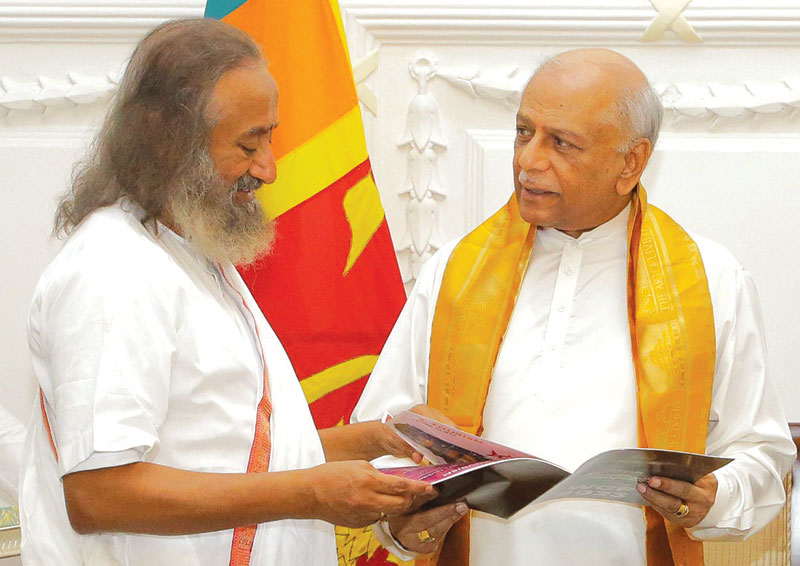
Visit of Sri Gurudev to Sri Lanka
Humanitarian, spiritual leader and Global Ambassador of Peace Gurudev Sri Sri Ravi Shankar (Sri Gurudev) was in Sri Lanka on a three day tour on the invitation of the Prime Minister of Sri Lanka Dinesh Gunewardene. Gurudev who inspired a wave of volunteerism and service to moot one of the largest volunteer-based organisations in the world – The Art of Living – visited the various projects under the aegis of the foundation and launched twelve vocational and technical centers around the island. He was accompanied by thousands of followers from Sri Lanka and around the world.
Gurudev who visited Sri Lanka for the sixth time also had a first day cover launched in honour of his visit. He is a strong proponent of spreading happiness, using the unique Sudarshan Kriya, yoga, meditation and practical wisdom to unite people, empower individuals and transform communities. His programmes provide techniques and tools to live a deeper, more joyous life, while his non-profit organisations recognize the human identity beyond the boundaries of gender, race, nationality and religion.
The Art of Living which has more than 30,000 teachers and over one million volunteers across 180 countries has touched in excess of five hundred million people around the world. CNN called it “Life Changing” and The Washington Post headlined it, “Fresh air to millions”.
In Trincomalee, Gurudev met with war victims and had a heartwarming engagement with the children from the children’s homes run by the Foundation. He also visited the Koneswara Temple in Trincomalee and graced the Kumbhabhishekam at Seetha ecogPnize the human identity beyond the boundaries of gender, race, nationality and religion. Amman temple at Nuwara Eliya. He held discussions with the trustees on the progress of the foundation’s social service projects, while also holding a special event – Ekamuthuwa – attended by a large number of dignitaries and his devotees from around the world.
His time with the Prime Minister was spent discussing the prospects of unity in diversity and uniting Sri Lanka by adding happiness into the formula of living. In addition he had discussions with the Speaker of the Parliament of Sri Lanka Mahinda Yapa Abeywardena, prominent business stewards and civil society leaders.
by Zanita Careem
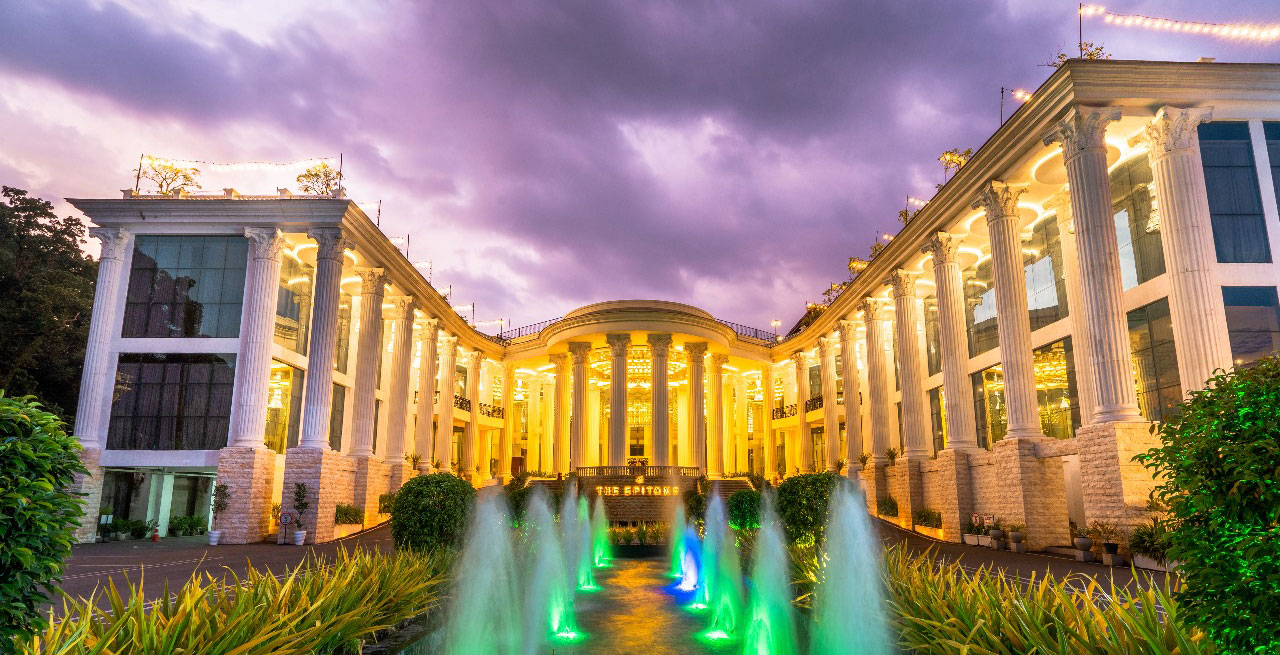
Envison your dream wedding day come to life at the Epitome Hotel, a prestigious city hotel in Kurunegala offering an unrivalled luxury rendors experience for weddings.
The venue is designed to embody opulence and luxury from all quarters for a spectacular wedding in kurunegala,Thier ballroom is the largest banquet facility in Sri Lanka It can be divided into six luxurious pillarless wedding halls on the ground floor and 25pax smaller banquet halls.
It can be easily named as a five star heaven in the heart of the city contributing to a myriad of immense experiences tailored to inspire and delight wedding experiences.
From opulent décor set up to exquisite table decor, lavish food, every detail is meticulously curated to spark your imagination and ignite creativity for a perfect wedding. The previous prestigious wedding shows season one and season two attracted large crowds
were unique events which gave the wedding vendors and potential clients had an opportunity to connect and interact with each other. Beyond being a showcase it was a chance for the wedding vendors to unite and contribute to the vibrancy of the wedding industry. The wedding show covered all area of the bridal industry providing a comprehensive variety of bridal supplies from Sri lanka and became the most popular bridal exhibitions in Kurunegala.This bridal exhibitions allowed brides and grooms to experience first hand the products and services available from suppliers in Sri Lanka
These wedding shows held at The Epitome created a benchmark and gave an opportunity for vendors to create connections to the utmost satisfaction said Harshan Lakshita Executive Director. of the magnificent Hotel
Our wedding shows featured experts and professionals in every field‘ It covered all areas of the bridal industry provided a comprehensive variety of bridal supplies from Sri lanka and became most popular bridal exhibition in this region.We are always open to everyone to join us at our wedding shows in the future. It is an opportunity to discover the incredible talent within our local wedding and bridal vendors to make meaningful relationships and plan thier special day at our breathtaking hotel The Epitome said General Manager Kavinda Caldera
The Epitome Hotel’s bridal show which will be held end of June will buzz with great ideas,advice and inspiration for all those who plan thier dream wedding
…….
The Hotel Epitome’s Wedding Season 3 will marked excellence, celebration and inspiration for those in the wedding industry. The exhibition halls will resonate with ideas on exquisite bridal wear to decor, florists , photography etc and showshowcase the rich tapestry of talent within the local wedding industry. .







US sports envoys to Lanka to champion youth development

Rahuman questions sudden cancellation of leave of CEB employees


