
Foreign News
Biden and Modi pledge to deepen ties in talks ahead of G20 summit


US President Joe Biden and Indian Prime Minister Narendra Modi have pledged to deepen ties between their two countries, as the leaders held direct talks ahead of a Group of 20 summit in New Delhi at the weekend.
In a joint statement on Friday, shortly after Biden landed in the Indian capital, the US and India reaffirmed their support for “a free, open, inclusive, and resilient Indo-Pacific” as members of the Quad alliance, which also includes Australia and Japan.
The talks marked the second in-person meeting between Biden and Modi since June, when the Indian leader made an official state visit to the White House as part of the countries’ push to bolster their alliance in the face of China’s growing influence.
“Many say that right now, it’s really a kind of golden age when it comes to the ties between the US and India. Things have almost never been better,” Al Jazeera’s Katrina Yu reported from New Delhi on Friday ahead of the Biden-Modi meeting.
“Undoubtedly, what’s bringing these two sides together is their bonding over their shared concern over China’s rising influence in the region,” she said.
The US is hoping to boost India “as a possible counterweight” to China, Yu said, as Washington views Beijing as its top global competitor and ties between the pair have been tested in recent years over a number of issues.
For his part, Modi is hoping “to project India as an alternative leader of the Global South, a title really that Beijing – arguably – currently holds”, Yu added.
India late last month lodged an objection through diplomatic channels with Beijing over China’s new standard map that lays claim to India’s territory along their shared border.
The map was released just days after Modi and Chinese President Xi Jinping met on the sidelines of a summit of the BRICS bloc of developing economies — Brazil, Russia, India, China and South Africa — and agreed to work to de-escalate tensions at their disputed border.
On Friday, Modi and Biden also discussed a number of deals that were reached during their June talks in Washington, DC.
Biden welcomed a deal to allow General Electric to produce jet engines in India to power Indian military aircraft, according to the joint statement, as well as an agreement for India to purchase US drones.
Biden and Modi also “re-emphasized the shared values of freedom, democracy, human rights, inclusion, pluralism, and equal opportunities for all citizens are critical to the success our countries enjoy and that these values strengthen our relationship”, the statement said.
But the Biden administration has faced criticism from rights advocates who say it is ignoring the Modi government’s targeting of minorities, as well as an erosion of democracy and human rights in India.
For the fourth straight year, an independent US commission in May recommended adding the Indian government to a religious freedom blacklist, saying that conditions for religious minorities in the country “continued to worsen” throughout 2022.
India has rejected previous reports by the panel and accused senior US officials of making “ill-informed” and “biased” comments.
Speaking to reporters on Thursday, White House National Security Adviser Jake Sullivan said the Biden-Modi talks would be a follow-up to the discussions they had in June.
“Of course, President Biden will also speak on critical, fundamental values that the United States stands for, as he does in all of his engagements,” he added.
Sullivan as well as US Secretary of Treasurey Janet Yellen joined the Biden-Modi meeting on Friday, the White House said in an earlier statement. Indian government attendees included External Affairs Minister Subrahmanyam Jaishankar and security adviser Ajit Doval.
Biden is also hoping that his presence at the G20 summit on Saturday and Sunday will demonstrate that the US and its like-minded allies are better economic and security partners than China.
White House officials said the US president will use the gathering as an opportunity for Washington to highlight a proposition for developing and middle-income countries that would increase the lending power of the World Bank and International Monetary Fund by some $200bn.
That is an attempt to offer a significant, albeit smaller, alternative to China’s massive Belt and Road infrastructure initiative.
China, which is also a member of the G20, has said that Xi will not attend the G20 summit and is instead dispatching Premier Li Qiang to represent the country.
Xi’s absence “affords the Biden administration even more of a chance to go on the offensive in terms of stepping up and showing what their value proposition is to the Global South”, Colleen Cottle, deputy director at the Atlantic Council’s Global China Hub, told The Associated Press news agency.
(Aljazeera)








Apollo 8 astronaut Bill Anders, who snapped one of the most famous photographs taken in outer space, has died at the age of 90.
Officials say a small plane he was flying crashed into the water north of Seattle, Washington.
Anders’ son Greg confirmed that his father was flying the small plane, and that his body was recovered on Friday afternoon. “The family is devastated. He was a great pilot. He will be missed,” a statement from the family reads.
Anders – who was a lunar module pilot on the Apollo 8 mission – took the iconic Earthrise photograph, one of the most memorable and inspirational images of Earth from space.
Taken on Christmas Eve during the 1968 mission, the first crewed space flight to leave Earth and reach the Moon, the picture shows the planet rising above the horizon from the barren lunar surface.
Anders later described it as his most significant contribution to the space programme.
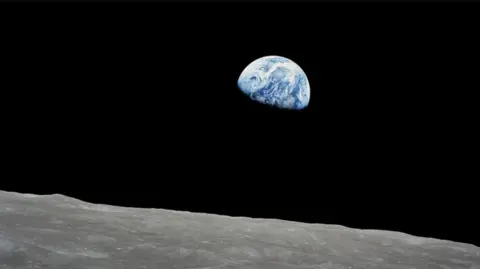
The image is widely credited with motivating the global environmental movement and leading to the creation of Earth Day, an annual event to promote activism and awareness of caring for the planet.
Speaking of the moment, Anders said: “We came all this way to explore the Moon, and the most important thing that we discovered was the Earth.”
Officials said on Friday that Anders crashed his plane around 11:40PDT (1940BST).
The US National Transportation Safety Board (NTSB) said the 90-year-old was flying a Beechcraft A A 45 – also known as a T-34. The agency said that the plane crashed about 80ft (25m) from the coast of Jones Island.
Anders also served as the backup pilot to the Apollo 11 mission, the name of the effort that led to the first Moon landing on July 24, 1969.
Following Anders’ retirement from the space programme in 1969, the former astronaut largely worked in the aerospace industry for several decades. He also served as US Ambassador to Norway for a year in the 1970s.
But he is best remembered for the Apollo 8 mission and the iconic photograph he took from space.
“In 1968, during Apollo 8, Bill Anders offered to humanity among the deepest of gifts an astronaut can give. He traveled to the threshold of the Moon and helped all of us see something else: ourselves,” Nasa Administrator Bill Nelson said in a statement.
Mark Kelly, a former astronaut who now serves as a US Senator for the state of Arizona, said in a post on X, formerly Twitter, that Anders “inspired me and generations of astronauts and explorers. My thoughts are with his family and friends”.
[BBC]

A Chinese spacecraft carrying rock and soil samples from the far side of the Moon has lifted off from the lunar surface to start its journey back to Earth, according to state media.
The achievement on Tuesday is a world first and the latest leap for Beijing’s decades-old space programme, which aims to send a crewed mission to the Moon by 2030.
The Xinhua News Agency, citing the China National Space Administration (CNSA), said that the ascender of the Chang’e-6 probe took off at 7:38am local time on Tuesday (23:38 GMT) and entered a preset orbit around the moon.
It described the move as “an unprecedented feat in human lunar exploration history”.
The Chang’e-6 probe was launched last month and its lander touched down on the far side of the Moon on Sunday. It used a drill and robotic arm to dig up soil on and below the Moon’s surface, according to Xinhua.
After successfully gathering its samples, the Chang’e-6 unfurled China’s national flag for the first time on the far side of the Moon, it said.
The agency cited the CNSA as saying that the spacecraft stowed the samples it had gathered in a container inside the ascender of the probe as planned.
[Aljazeera]

China says its uncrewed craft has successfully landed on the far side of the Moon – an unexplored place almost no-one tries to go.
The Chang’e 6 touched down in the South Pole-Aitken Basin at 06:23 Beijing time on Sunday morning (22:23 GMT Saturday), the China National Space Administration (CNSA) said.
Launched on 3 May, the mission aims to collect precious rock and soil from this region for the first time in history. The probe could extract some of the Moon’s oldest rocks from a huge crater on its South Pole.
The landing was fraught with risks, because it is very difficult to communicate with spacecraft once they reach the far side of the Moon. China is the only country to have achieved the feat before, landing its Chang’e-4 in 2019.
After launching from Wenchang Space Launch Center, the Chang’e 6 spacecraft had been orbiting the Moon waiting to land. The lander component of the mission then separated from the orbiter to touch down on the side of the Moon that faces permanently away from Earth.
During the descent, an autonomous visual obstacle avoidance system was used to automatically detect obstacles, with a visible light camera selecting a comparatively safe landing area based on the brightness and darkness of the lunar surface, the CNSA was quoted as saying by state-run Xinhua news agency.
The lander hovered about 100m (328ft) above the safe landing area, and used a laser 3D scanner before a slow vertical descent. The operation was supported by the Queqiao-2 relay satellite, the CNSA said.
Chinese state media described the successful landing as an “historic moment”. The state broadcaster said “applause erupted at the Beijing Aerospace Flight Control Center” when the Chang’e landing craft touched down on the Moon early on Sunday morning.
The lander should spend up to three days gathering materials from the surface in an operation the CNSA said would involve “many engineering innovations, high risks and great difficulty”. “Everyone is very excited that we might get a look at these rocks no-one has ever seen before,” explains Professor John Pernet-Fisher, who specialises in lunar geology at the University of Manchester.
He has analysed other lunar rock brought back on the American Apollo mission and previous Chinese missions. But he says the chance to analyse rock from a completely different area of the Moon could answer fundamental questions about how planets form.
Most of the rocks collected so far are volcanic, similar to what we might find in Iceland or Hawaii. But the material on the far side would have a different chemistry . “It would help us answer those really big questions, like how are planets formed, why do crusts form, what is the origin of water in the solar system?” the professor says.
The mission aims to collect about 2kg (4.4lb) of material using a drill and mechanical arm, according to the CNSA.
The South Pole–Aitken basin, an impact crater, is one of the largest known in the solar system.
From there, the probe could gather material that came from deep inside the lunar mantle – the inner core of the Moon – Prof Pernet-Fisher says.
The Moon’s South Pole is the next frontier in lunar missions – countries are keen to understand the region because there is a good chance it has ice.
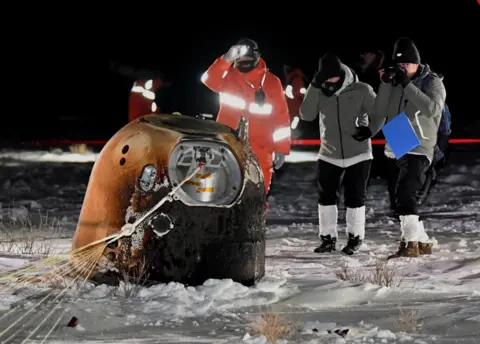
The capsule in the last Chinese moon mission, Chang’e 5, brought back soil and rocks in 2020 (BBC)
Access to water would significantly boost the chances of successfully establishing a human base on the Moon for scientific research.
If the mission succeeds, the craft will return to Earth with the precious samples on board a special return capsule.
The material will be kept in special conditions to try to keep it as pristine as possible.
Scientists in China will be given the first chance to analyse the rocks, and later researchers around the world will be able to apply for the opportunity too.
This is the second time China has launched a mission to collect samples from the Moon.
In 2020 Chang’e 5 brought back 1.7kg of material from an area called Oceanus Procellarum on the Moon’s near side.
China is planning three more uncrewed missions this decade as it looks for water on the Moon and investigates setting up a permanent base there.
Beijing’s broader strategy aims to see a Chinese astronaut walk on the moon by around 2030.
The US also aims to put astronauts back on the moon, with Nasa aiming to launch its Artemis 3 mission in 2026.
(BBC)



US sports envoys to Lanka to champion youth development

Rahuman questions sudden cancellation of leave of CEB employees


