Opinion
‘Bad Boy Billionaires’ of Sri Lanka

By UPALI COORAY
This headline quotation in part, is the title of a Netflix series “Bad Boy Billionaires”. This Netflix series brings out some of the epoch-making financial scams in India. The documentary film exposes the truth in an investigation in major corruption scandals, money laundering in India involving Vijay Mallaya (Kingfisher Airlines) Subrata Roy (Sahara India) Nirav Modi (Gitanjali group) Ramalinga Raju (Sathyamgani computers)
Among these scammers Subrata Roy has done something which has parallels in Sri Lanka.
India’s market regulator petitioned the Supreme Court to direct tycoon Subrata Roy to an immediate payment of 626 billion rupees ($8.4 billion) meant for poor investors.
The Securities and Exchange Board of India said the outstanding liability of the Sahara India Parivar group’s two companies and the conglomerate’s chief Roy stand at 626 billion rupees, including interest, according to court filings.
India’s Supreme Court in 2012 ruled that Sahara group of companies violated securities laws and illegally raised over $3.5 billion. The companies said monies were raised in cash from millions of poorest of the poor of Indians who could not avail banking facilities. SEBI could not trace the investors and when Sahara firms failed to pay up, the court sent Roy to jail.
Roy, who at different times owned an airline, Formula one team, cricket team, plush hotels in London and New York, and financial companies, stayed in jail for over two years and has been out on parole since 2016.
The Sahara story, almost a decade after the final judgment, is far from over. Roy has so far deposited over 150 billion rupees, SEBI said in the court filing, while the Sahara group said it had deposited 220 billion rupees.
Financial scams in our country have increased in recent times and not a day passes without news of customers being cheated by finance companies, etc. Let’s start with the oldest of Sri Lankan con- artistes Emil Savundra or Emil Savundranayagam, who was a Sri Lankan who settled down in Britain in 1960, a born cheat. The collapse of his Fire, Auto and Marine Insurance Company left about 400,000 motorists in the United Kingdom without cover.
As a post-war bootlegger, Savundra committed bribery and fraud on an international scale before settling down in the UK to sell low-cost insurance in the fast-growing automotive market. By defaulting on mandatory securities, he funded a lavish lifestyle and travelled in fashionable circles even with the famous Christine Keeler and Mandy Rice-Davies. He was into power boat racing too.
This drew scrutiny by the press, which discovered major frauds. In a TV interview with David Frost, Savundra demonstrated contempt for his defrauded customers. The police had been investigating him, and he was soon arrested and sentenced to eight years imprisonment. Released after six, Savundra died two years later as a drug addict.
Piyadasa Ratnayaka alias Danduvam Mudalali of Hungama, Southern province, had allegedly accepted deposits from over 20,000 investors in a pyramid scheme. He was on bail for the alleged financial scam. Mudalali was killed by an unknown armed gang in Pusallawatte, Kuruwita.
Hideki Finance and Investments, which went bust in 1987, had over 4,000 depositors. The Central Bank had to intervene and pay the depositors their dues in instalments.

Kingsley de Silva, an ex-naval rating suffering from a chronic kidney ailment, has been robbed of Rs. 1.2 million — money he had saved for a life-saving surgery. This money, the 65-year-old Mr. Silva said, included payment he received from the Navy on retirement and the rest from the part-sale of ancestral land in Maharagama. He did not know what to do or whom to turn to.
Dulanjan Atapattu, a retired government teacher was due to undergo heart surgery. He needed extra money for the operation and medication, and invested his savings in what he thought would be an income-generating scheme.
“I invested Rs. 2 million after selling my house. Initially, I got a monthly interest, and was impressed with the return. But I was soon to be proved wrong,”
With a self-esteem as philanthropists, embracing the word of God, the very name Deshamanya Dr. Lalith Kotelawala and Lady Dr. Sicille Kotelawala evoked respect, trust and above all a sense of security. That was why 9,054 people in this country, trusted the duo with millions of rupees, in some cases tens of millions of rupees in life savings. Maybe part of those millions belonging to some depositors was black money. Perhaps, some of them invested their money to evade paying tax to the government, or they were just plain greedy or a mixture of both. After all, why did they not invest the monies with financially stable banks?
Whatever the case, they were confident that their savings/loot would be safe in the hands of two human beings held in the highest esteem. There were leading businessmen, civil servants, Buddhist monks, Christian clergy and world-renowned Sri Lanka cricketers, who would never have resorted to money laundering, were also deceived.
When Golden Key collapsed like a pack of cards in December in the year 2008, and as the unsavoury details unraveled in staggered scenes of drama, horrified, dismayed depositors who had been earning as much as 30 and 32 percent on their investments at Golden Key, were forced to come to grips with the fact that soon their monies would be confined to mere numbers on a piece of paper. Soon to be identified as one of the biggest white-collar frauds.
Held in esteem by those who claimed to be his friends and say they trusted him wholeheartedly. Today, these same people spit his name out with vilification. Thousands of families robbed of a monthly interest amounting from thousands to millions of rupees, earned off their capital investment with Golden Key.
At least one depositor from this list, Lady Dr. Sicille Kotelawala will have no such qualms. Her investment in Golden Key was to the tune of Rs. 10.6 million only. A paltry sum by her standards. Even that most likely is what she skimmed off from the company itself. After all, according to court documents she was paid a staggering Rs. 3.5 million a month for being the Deputy Chairperson was just peanuts. She was rich enough not to have to worry about paying for groceries or medicines.
From lower middle-class families to upper, from the rich to the superrich there was no class distinction between the 9,054 people who entrusted their monies with Golden Key.
The strange thing is that most of the big depositors are businessmen who understand finance. They would have known that the unrealistically high interest rates paid by Golden Key could not be sustained. They would have also known that it was not registered with the Central Bank. But then again, the company had been in existence since 1978, and the collapse of the Ceylinco Empire had been predicted for more than a decade. You can run a pyramid scheme for so long, only if new depositors keep depositing money in.
After 10 years of agitation the depositors were paid by the Central Bank with funds from liquidated assets of the collapsed venture.
What is important to note is that most of these company founders were well-respected businessmen in Sri Lanka.
Justin Kotalawala the founder of Ceylinco insurance was a well-respected businessman in the country. He was related to one-time prime minister Sir John Kotalawala.
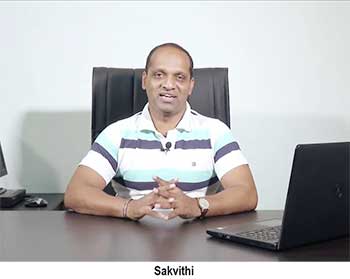
Sakvithi Ranasingha was a private tuition master highly respected by his students and their parents. He abused his reputation to deceive the unsuspecting depositors and lived a lavish life. In fact, he taught English to prisoners while in jai.
Late E.A.P Edirisinghe and his spouse Late Soma Edirisinghe – Desha Bandu Desha Shakthi and a Honorary Doctorate from Open University of Sri Lanka, an unparalleled feat of being awarded the “Lion of the year” on four occasions and many more, were entrepreneurs who would never have resorted to deception. They were pawn brokers, jewellers, film producers, cinema and TV channel owners and philanthropists. The ETI finance matter is sub judice and, therefore, will not be discussed any further.
Late Kattar Aloysius, the founder of Free Lanka Trading company, a well-known businessman in the country who was initially a major exporter of dried fish, but subsequently diversified into industrial products, granite, indenting agent for importing commodities to Sri Lanka, agents for alcoholic beverages such as cognac, Dewar’s whisky, etc. He was respected among the business circles here and abroad.
Now, the name of Aloysius is synonymous with the Treasury bond scams.
As you sow so shall you reap.