Life style
Back pain- a lifestyle disease

Back pain is common and is prevalent even among young children in this pandemic situation triggered by prolonged sitting before screens. While most cases of back pain episodes improve with self-care and lifestyle modifications, in certain rare cases they could signal a serious medical problem. In an interview with the Sunday Island, Consultant Rheumatologist and Specialist in Sports Medicine from Nawaloka Hospital, Dr. Harindu Wijesinghe throws light on multiple causes of back pain and management strategies.
BY RANDIMA ATTYGALLE
The human back is made of a complex structure of bones, muscles, ligaments, tendons and disks which work together to support the body and enable us to move around. Problems with any of these components can lead to back pain. Although back pain could be felt anywhere along the spine- from the neck down to the hips, pain in the lower back or lumbago is the commonest.


Commonest cause of back pain is what is known as ‘non-specific’ back pain which occurs when the muscles and ligaments which surround the spine are overstretched. Next comes back pain caused by the disc bulging or herniation in the spine. In between the bones of the spine (vertebrae) is the intervertebral disc. The gel-like substance inside the disk can sometimes come out of the disk and press on the nerves in the spine which causes back pain and a pain down the leg called ‘sciatica’.
Fractures in people with osteoporosis could also lead to back pain says the Rheumatologist. “Although osteoporosis per se doesn’t cause back pain, a fracture could trigger a back pain.”
Certain types of arthritis (where the immune system starts attacking the spine) could damage the spine. ‘Ankylosing spondylitis’ is such a condition. This condition, Dr. Wijesinghe explains, causes back pain which is worst upon waking up in the morning and mainly occurs in young people below the age of 40 years. “Very often this condition is missed and unless treated on time, one could end up with a fixed immobile spine and a stooped posture due to the calcium formation around the spine,” he warns.
Infections of the spine such as tuberculosis and cancers in the spine too can cause back pain, although they are not common.

Risk factors
*Ageing –
wear and tear of cartilage and weakness of muscles is common in old age
*Being overweight
*Weak core muscles
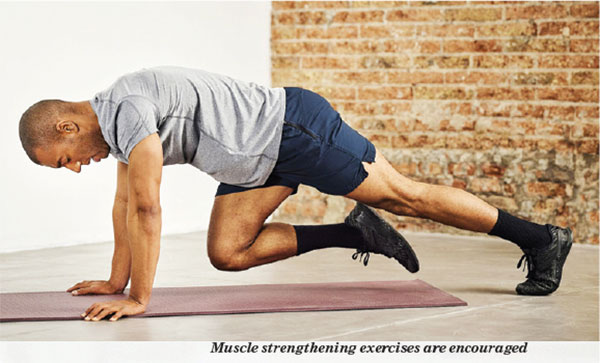
“If your muscles in the stomach are weak, you are more prone to wear and tear of the disk. Exercises which are done while keeping the spine in the neutral position are encouraged.”
*Wrong posture
Sitting or standing in a wrong posture for prolonged hours is one of the most significant risk factors for back pain. “Sometime ago there was an issue with heavy school bags children carried. Today in this pandemic situation even in young children back pain is very common as they tend to spend a considerable time before screens. A lot of children and adults also tend to work in beds and sofas which is a bad habit,” remarks Dr. Wijesinghe.


Neutral Spine position or correct spine posture
Neutral spine is the position in which your back and neck are placed under the least amount of stress and strain. In this position, the natural curves of the spine are maintained. “Try to maintain this position while sitting, standing, lifting or doing exercise. There are many methods to find the exact neutral position. However the easiest way is to maintain your ears, shoulders and hips in one line.”
When sitting for prolonged hours, make sure:
*
You sit in a proper ergonomically designed chair- preferably an office chair
*
When using laptops, that the top of the screen is at eye level.
*
Your ears, shoulders and hips are in one line
*
Your feet touch the ground and your knee and hip are in 90
degrees
*
You take a break every 15 -20 minutes. Standup for a few minutes or walk a short distance. Use an alarm or a computer programme which reminds you to take breaks.
Lifting objects
Avoid lifting heavy objects. You should always be assisted by someone and also use proper lifting techniques (such as bending the knees while lifting heavy objects) or using machinery meant for lifting such objects.
*Smoking
*Regular use of high heels
“These could be worn once in a way but not recommended for daily wear as they could alter the posture. Shoes with a good ‘arch support’ are recommended and whenever you need a raised shoe to wear on a regular basis, a platform shoe is recommended so the angle between the heel and the ball of the foot is reduced and your posture is not changed that much,” explains the physician.


When to see a doctor
*
When back pain is not settled in a few weeks
*
When the pain is severe and doesn’t improve with rest
*
When there is a feelings of numbness tingling going into legs
You need to see your doctor urgently when there is
*
Back pain with fever or weight loss.
*
Causes new bowel or bladder problems
*
weakness of legs
How to treat back pain
Although back pain is common, the good news is that more than 90% of them can be managed with certain short-term drugs, injections and local applications for pain relief. This is followed by posture correction, weight reduction, core strengthening exercise and low impact cardiovascular exercise to prevent recurrence.
Back pain is a lifestyle disease which can be managed with a healthy routine, observes Dr. Wijesinghe. “There are no quick fixes here. It is important that one religiously and diligently does core strengthening exercises which helps in strengthening the muscles in the back, stomach and buttocks. Combine these with low impact cardiovascular exercises such as walking, cycling, swimming and elliptical training. We don’t encourage too much of bending, twisting and jumping when a person is over 40 or in someone with back pain because such vigorous movements could cause damage to the spine.”


Maintaining a healthy weight could also ease the load on the spine for which dietary discipline is required, he says. “Exercise alone can’t help one maintain body weight, one need to be conscious of the diet as well.”
Other lifestyle changes such as using proper chairs, a firm mattress and a soft pillow which enable the spine to be kept in the neutral position are also recommended by the physician. “We encourage people to sleep looking up so that the spine is kept straight and if at all they sleep to a side, it is important not to curl up.”
Myths to be busted
Since back pain is so common there are so many products in the market claiming to cure back pain and consumers should be cautious of these, warns Dr.
Wijesinghe. “Many believe that local applications, medicine and certain milk powders and formulas can bring your cartilage back to normal. It is like asking a person to reverse his age which cannot be done,” he remarks.
A lot of women think that the epidural given in pregnancy causes back pain. “This too is false. The reason for back pain after delivery or later is usually due to weak muscles, weight gain and poor posture.”