
News
AUKUS threat to countries like Sri Lanka, says China’s Ambassador

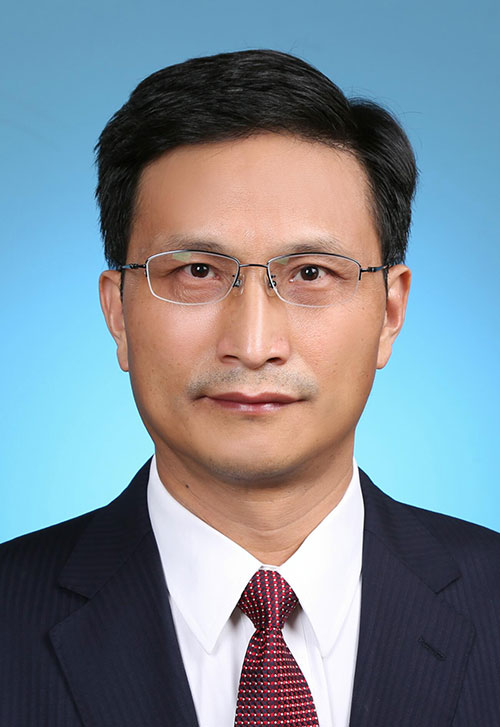
AUKUS, a trilateral security pact among Australia, the United Kingdom and the United States, would create a security risk for Sri Lanka and others in the region, Qi Zhenhong, Chinese Ambassador to Sri Lanka said in a statement.
He added that this move was a violation of the Non-Proliferation of Nuclear Weapons Treaty (NPT) which many countries entered into in the 1970s.
Zhenhong said that Australia’s construction of nuclear submarines violated the commitments it made when signing the South Pacific Nuclear Free Zone Treaty, and also will cause serious breaches in the efforts of ASEAN countries to build a nuclear weapon-free zone and the Indian Ocean to create a “Zone of Peace”. In addition, AUKUS attempts to engage in maritime hegemony, might lead to a new round of regional arms race, thus undermining the precious peace situation in the region and casting a shadow over the security, stability and prosperity in the region
“Nuclear submarines frequently entering the Indian Ocean will escalate the nuclear arms race or some hegemonies ganging up in clique and forcing small and medium-sized countries to take sides, will inevitably bring huge security risks to Sri Lanka. Therefore, the international community, especially regional countries, should pay serious attention to and resolutely oppose this bad behaviour, which seriously undermines regional peace and stability, accelerate the arms race, and undermines international nuclear non-proliferation efforts. We should bring the hanging Sword of Damocles back into its sheath, and jointly safeguard international peace, security and stability,” he said.
Given below are excerpts of his statement: “Recently, the United States, Britain and Australia announced the establishment of AUKUS, a trilateral security pact which will provide Australia with at least eight nuclear-powered submarines. This is like holding up a “Sword of Damocles” on the heads of countries in the Pacific-Indian Ocean regional countries, which has aroused widespread doubts and deep concerns from the international community, and a great threat of nuclear proliferation, arms race and more unstable regional and international security situation.
“Firstly, the move is a serious violation of the spirit of the Treaty on the Non-Proliferation of Nuclear Weapons (NPT) which brings great risks of nuclear proliferation. The NPT which entered into effect in 1970 is regarded as the cornerstone of the global nuclear non-proliferation regime by the international community. However, the Treaty lacks clear provisions regarding the transfer of nuclear reactors for submarines, and the safeguards system of the International Atomic Energy Agency (IAEA) is unable to verify whether the relevant materials are used to develop nuclear weapons. The United States, Britain, and Australia had exploited these weaknesses. In addition, the American and British nuclear submarines use weapons-grade highly enriched uranium with an abundance of over 90%. Exporting nuclear submarines to Australia means that a large number of highly sensitive nuclear materials and technologies are transferred without the effective safeguard of IAEA, which will inevitably bring the risk of proliferation of nuclear technologies and nuclear materials. On September 17th, the Indonesian government issued a statement stressed the importance of Australia’s commitment to continue meeting all of its nuclear non-proliferation obligations, and called on Australia to maintain its commitment towards regional peace, stability and security.
“Secondly, this move may induce a new round of arms race, which will undermine regional prosperity and stability. As a country straddling the Indian Ocean and the Pacific Ocean, Australia’s construction of nuclear submarines in defiance of the world completely violates the commitments it made when signing the South Pacific Nuclear Free Zone Treaty, and also will cause serious breaches in the efforts of ASEAN countries to build nuclear weapon-free zone and the Indian Ocean to create a “Zone of Peace”. In addition, AUKUS attempts to engage in maritime hegemony, which may introduce a new round of regional arms race, thus undermining the precious peace situation in the region and casting a shadow over the security, stability and prosperity in the region. Russian President Vladimir Putin said the AUKUS, a security partnership between Australia, Britain and the United States, “undoubtedly” undermines regional stability. Indonesian Foreign Minister Retno Marsudi said that Indonesia does not want an escalating arms race and power projection in the region that will threaten security and stability. Meanwhile, Malaysian Prime Minister Datuk Seri Ismail Sabri Yaakob expressed Malaysia’s stance on AUKUS when he received a telephone call from Australian Prime Minister Scott Morrison, saying it would be a “catalyst for a nuclear arms race in the Indo-Pacific region. As a country within ASEAN, Malaysia holds the principle of maintaining ASEAN as a Zone of Peace, Freedom and Neutrality, and urges all parties to avoid any provocation and arms competition in the region.”
“Thirdly, this move promotes a barefaced “double-standard” and forms racist “small clique”. The United States and Britain launched the notorious Iraq War on the unwarranted charge of suspecting the development of weapons of mass destruction, and do not allow Iran and North Korea to possess nuclear weapons, but turn a blind eye to the development of nuclear weapons by their ally Israel and provide nuclear submarines to another ally Australia. Under the barefaced “double-standard”, they piece together the “Anglo-Saxon” military cooperation clique with racism and cold war color, and wantonly played and trampled on international rules. According to the Atlantic Monthly, AUKUS is in effect a new “Anglo” military alliance. “The three nations have fought together for most of the past 100 years and are core members of the Five Eyes intelligence-sharing alliance. The announcement (of AUKUS) only reinforces its belief in the difference between Europe and the Anglo-Saxon world.”
“China believes that nuclear weapons, the Sword of Damocles hanging over mankind, should be completely prohibited and thoroughly destroyed over time to make the world free of nuclear weapons. China has always maintained its nuclear power at the lowest level required by national security, and has always made every effort to maintain the international non-proliferation system and actively promoted the multilateral arms control process. The establishment of a small security clique by the United States, Britain and Australia, frantically probing at the edge of nuclear proliferation, opening the Pandora’s Box of the arms race, and undermining peace and stability in the Pacific and Indian Ocean regions, is a reversal of history trend, which has already been widely questioned and condemned by the international community including its own country and neighboring countries.
“Recently, an American nuclear submarine crashed in the South China Sea and went unreported, a hit and run accident sending out a very realistic warning. Although no nuclear leakage caused by this accident has been confirmed yet, its nature is very serious, and there are great hidden dangers in nuclear proliferation and nuclear safety, which will lead to a nuclear disaster if it is not done well. Sri Lanka is located at the center of Indian Ocean. No matter, its nuclear submarines frequently entering the Indian Ocean, the nuclear arms race escalating, or some hegemonies ganging up in clique and forcing small and medium-sized countries to take sides, it will inevitably bring huge security risks to Sri Lanka. Therefore, the international community, especially regional countries, should pay serious attention to and resolutely oppose this bad behavior, which seriously undermines regional peace and stability, accelerate the arms race, and undermines international nuclear non-proliferation efforts. We should bring the hanging Sword of Damocles back into its sheath, and jointly safeguard international peace, security and stability.”




The U.S. Embassy in Colombo welcomed the U.S. Sports Envoys to Sri Lanka, former National Basketball Association (NBA) and Women’s National Basketball Association (WNBA) players Stephen Howard and Astou Ndiaye, from June 8 through 14.
The Public Diplomacy section of the U.S. Embassy said that it would launch a weeklong basketball program intended to harness the unifying power of sports, made possible through collaboration with Foundation of Goodness and IImpact Hoop Lab.
While in Sri Lanka, Howard and Ndiaye, both retired professional basketball players, will conduct a weeklong program, Hoops for Hope: Bridging Borders through Basketball. The Sports Envoys will lead basketball clinics and exhibition matches and engage in leadership sessions in Colombo and Southern Province for youth aged 14-18 from Northern, Uva, Eastern and Western Provinces, offering skills and leadership training both on and off the court. The U.S. Envoys will also share their expertise with the Sri Lanka Basketball Federation, national coaches, and players, furthering the development of basketball in the country. Beyond the clinics, they will collaborate with Sri Lankan schoolchildren to take part in a community service project in the Colombo area.
“We are so proud to welcome Stephen and Astou as our Sports Envoys to Sri Lanka, to build on the strong people-to-people connections between the United States and Sri Lanka,” said U.S. Ambassador Julie Chung. “The lessons that will be shared by our Sports Envoys – communication, teamwork, resilience, inclusion, and conflict resolution – are essential for leadership development, community building, equality, and peace. The U.S. Sports Envoy program is a testament to our belief that sports can be a powerful tool in promoting peace and unity.”
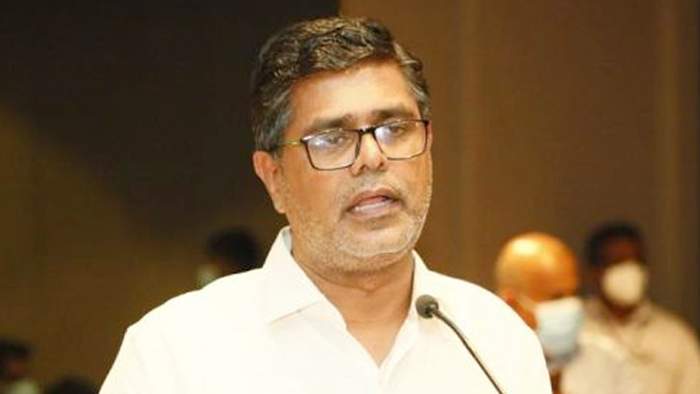
SJB Colombo District MP Mujibur Rahuman in parliament demanded to know from the government the reasons for CEB suspending the leave of all its employees until further notice from Thursday.
MP Rahuman said that the CEB has got an acting General Manager anew and the latter yesterday morning issued a circular suspending leave of all CEB employees with immediate effect until further notice.
“We demand that Minister Kanchana Wijesekera should explain this to the House. This circular was issued while this debate on the new Electricity Amendment Bill was pending. There are many who oppose this Bill. The Minister must tell parliament the reason for the urge to cancel the leave of CEB employees,” the MP said.However, Speaker Mahinda Yapa Abeywardena prevented Minister Wijesekera responding to the query and said that the matter raised by MP Rahuman was not relevant.
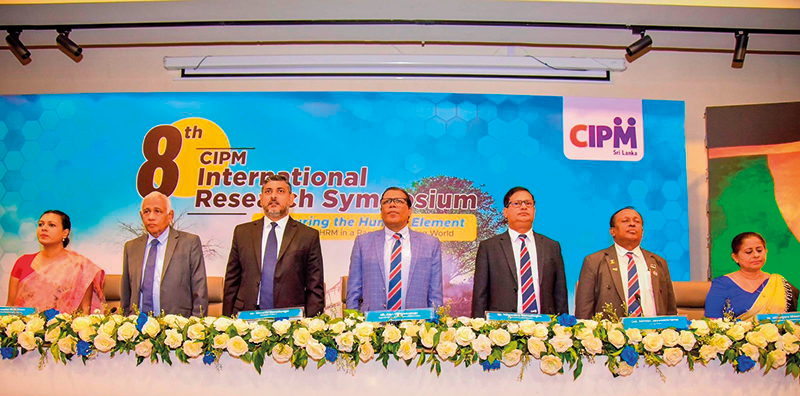
The Chartered Institute of Personnel Management (CIPM) successfully concluded the 8th Annual CIPM Symposium, which took place on 31st May 2024. Themed “Nurturing the Human Element—Redefining HRM in a Rapidly Changing World,” the symposium underscored the pivotal role of human resource management (HRM) in today’s dynamic global landscape. Since its inception in 1959, CIPM has been dedicated to advancing the HR profession through education, professional development, and advocacy, solidifying its position as Sri Lanka’s leading professional body for HRM.
Ken Vijayakumar, the President of the CIPM, graced the occasion as the chief guest. The symposium commenced with the welcome address by the Chairperson, Prof. Arosha Adikaram, followed by the Web Launch of the Symposium Proceedings and Abstract Book by the CIPM President. The event featured distinguished addresses, including a speech by Chief Guest Ken Vijayakumar, President of CIPM, and an address by Guest of Honor Shakthi Ranatunga, Chief Operating Officer of MAS Holdings Pvt. Ltd., Sri Lanka.
The symposium also featured an inspiring keynote address by Prof. Mario Fernando, Professor of Management and Director of the Centre for Cross Cultural Management (CCCM) at the University of Wollongong, Australia.
Vote of Thanks of the inauguration session was delivered by Dr. Dillanjani Weeratunga, Symposium Co-chair.
The symposium served as a comprehensive platform for researchers to present their findings across a wide range of critical topics in HRM. These included Cultural Diversity and Inclusion, Talent Development and Retention, Ethical Leadership and Corporate Social Responsibility, Adapting to Technological Advancements, Mental Health and Well-being at Work, Global Workforce Challenges, Employee Empowerment, and Reskilling and Upskilling.
The plenary session was led by Prof. Wasantha Rajapakse. Certificates were awarded to the best paper presenters during the valedictory session, followed by a vote of thanks delivered by Kamani Perera, Manager of Research and Development.
The annual symposium of CIPM was a truly inclusive event, attracting a diverse audience that spanned undergraduates, graduates, working professionals, research scholars and lecturers. This widespread interest highlights the symposium’s significance in the field of HRM, offering a unique opportunity for everyone to network and learn from scholarly brains.The CIPM International Research Symposium was sponsored by Hambantota International Port, Sri Lanka Institute of Information Technology (SLIIT), E B Creasy & Co. PLC, and Print Xcel Company.



US sports envoys to Lanka to champion youth development

Rahuman questions sudden cancellation of leave of CEB employees


