Sat Mag
Around and about in Kurunegala

By Uditha Devapriya
Photographs by Manusha
Lakshan and Uditha Devapriya
Covering 65 kilometres, the road from Colombo to Ambepussa is fairly straight. From there it turns left and right, up and down. To get to Kurunegala via Ambepussa, you have to pass Alawwa and Polgahawela. Between these regions, the terrain rises, offering you a passing if fleeting glimpse of the hill country. Then the mountains recede from view, the mist settles, and the helter-skelter of urban life returns. The shops teem with life, the clock-tower looms over drivers and pedestrians, and the heat rises. From afar, the faintest outline of Ethagala catches your eye. This is your first glimpse of Kurunegala.
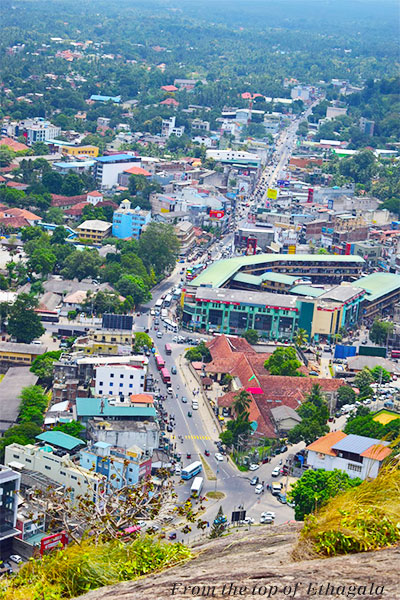

There was no special reason for our sudden sojourn to Kurunegala. Part of my family hails from there, but the connection was interrupted very early on. Kurunegala entranced me for other reasons: The history, the culture, the literature, and perhaps more than any of these, the people. There were the rocks, many of them inviting onlookers to climb them, even in the heat of the hottest days. There were the temples, too many to list out, and a great many unexplored. How could I resist these temptations?
Kurunegala’s importance has not been fully appreciated by scholars. It was the last of the Wayamba kingdoms after Dambadeniya and Yapahuwa, perhaps the weakest among them. Their rise coincided with the expansion of the Jaffna kingdom under the Aryacarkravartis. In the 13th and 14th centuries, Sri Lanka’s irrigation civilisation was on the verge of collapse. Having stamped out particularism and unified the country under his rule, Parakramabahu I, the most resolute of the Sinhala kings, ironically ensured the deterioration of the polity after his demise. His most illustrious predecessor, Vijayabahu I, had been much more pragmatic in matters of state; for him discretion remained the better part of valour.

The historian describes these monarchs as ambitious, ruthless, and reckless. It is in the interests of scholarship not to pass arbitrary judgement on the past, and yet it cannot be denied that in Parakramabahu’s time, the state concentrated its powers to itself. Not only did it stamp out any and all particularist tendencies on the part of Ruhuna, it also diverted tax revenues to the construction of agricultural works that justified its centralisation; these more or less provided the raison d’etre for its entrenchment. But in entrenching itself, it undermined its existence, it weakened severely any regional power it could have relied on in the event of an external invasion. Without these powers, no resort was possible.
The expansion of the Aryacakravarti dynasty in the north proved two facts: One, that the defeat of Kalinga Magha had not led to the recovery of Sinhalese power, and two, that the growth of an adversary in the north meant the kingdom had to shift elsewhere. Even before the Aryacakravartis solidified their position, it was very clear that the days of the tanks and irrigation networks in the Sinhala heartland had passed by. The result was to push the kings further to the south-west. Not that their enemies to the north stopped pursuing them once they made this shift: Even in Gampola, there were Tamil tax collectors at work, extracting if not forcing tributes from the land. According to an inscription at Madawala, in Harispattuwa, one collector, Ariyan of Singai Nagar or Mathandan Perumal, “cause[d] tribute to be brought from the hill country.” He had taxes from no fewer than five villages.

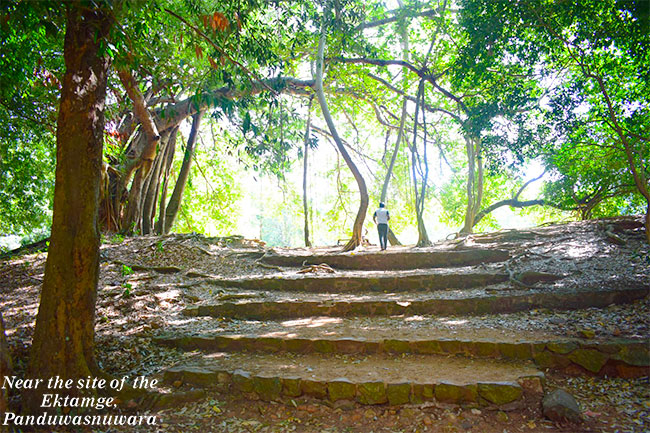
Yet Kurunegala did not just come into prominence with the shift of the Sinhala heartland there. This was a place teeming with history even before that shift. The number of temples, caves, dwelling places, and ruins attest to the fact that monarchs patronised these places long before the collapse of Anuradhapura. These temples, caves, and ruins stand out perhaps more in the Vanni Hatpattuwa than they did elsewhere. The ruins at Toniyagala and Padigala date back to the first century BC and first century AD respectively, while the Torava Mahilava Viharaya traces its origins even earlier, to the second century BC.
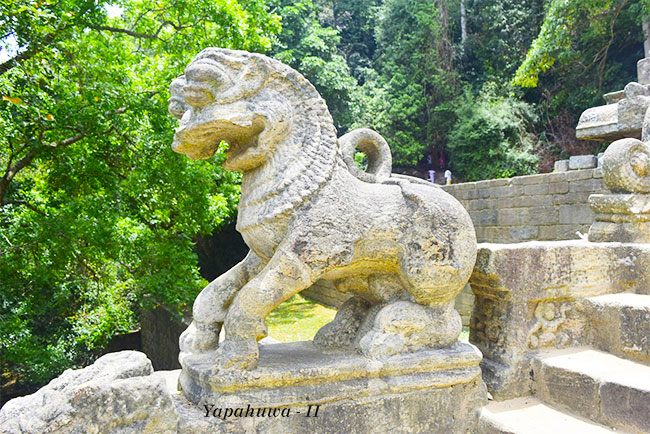
Kurunegala, in fact, bore witness to some of the more peripherally important events in the history of the land. Mogallana, who rebelled against Sanghatissa in the seventh century AD, set up camp at Nikawaratiya, then known as Mahagalla; it was from there that he made his advance towards Anuradhapura. Its reputation for rocky outcrops came in handy as kings, and chieftains, turned those outcrops into formidable fortresses. Yapahuwa, for instance, was chosen as a fortress centre not by a king but by a local chieftain. It was the site of the Janavese king Candabhanu’s defeat. Climbing Yahaphuwa is, of course, not as tough as one might be led to believe from this piece of historical information, but back then, an army of invaders, marching hundreds of miles from Salavata (Halawata, Chilaw), and Puttalam, may have exhausted their energies ascending its steps.
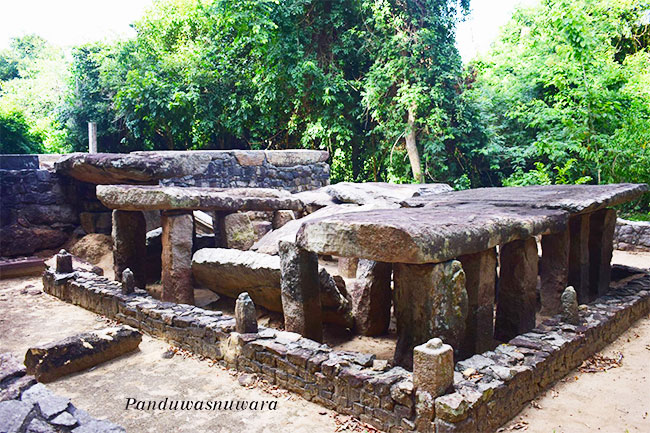

As such the cultural and religious renaissance that swept through Kandy made its presence felt in these parts too. Perhaps the most enduring tribute to the influence on Kandyan culture on Kurunegala is the Ridi Viharaya. BSuilt in the second century BC and rebuilt, repainted, and reconstructed on the orders of Kirti Sri Rajasinghe in the 18th century AD, it attests to a revival of the arts in the kanda uda rata.
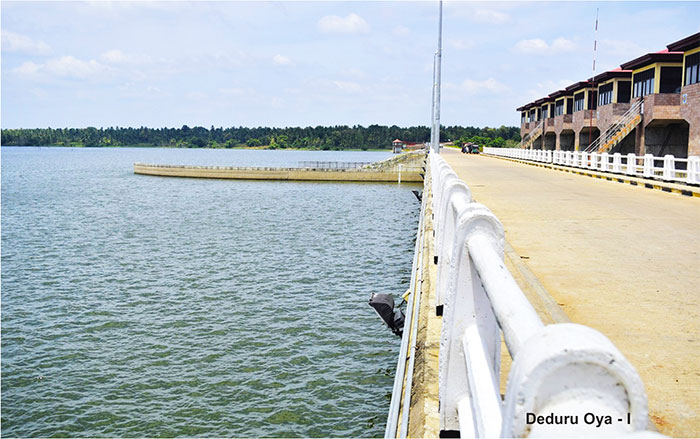

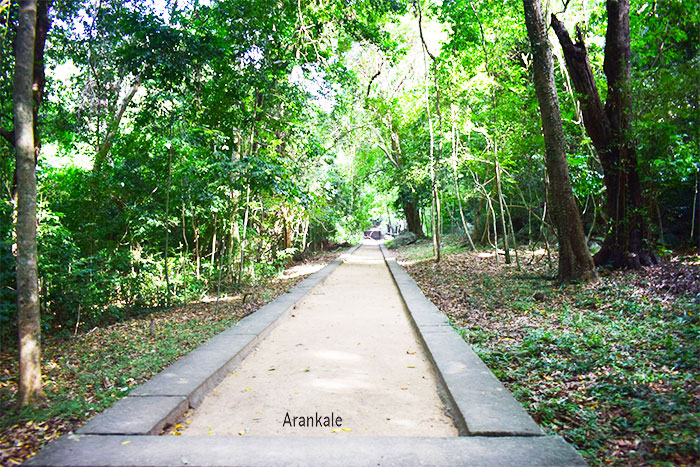
Friendly and open, the people of Kurunegala are hospitable. There is an aura of abundance in almost every corner. Agriculture remains, for many, a peripheral pursuit, but also a part-time occupation. It is difficult to escape the past here, because the past lingers everywhere; in the temples, caves, ruins, and rivers. Starting our journey out in the town, we made our way across Tittawella, Wasiwewa, Panduwasnuwara, Yapahuwa, Deduru Oya, and Arankale. This is a journey one trip can never hope to complete. A land of history, Kurunegala belongs the past. In a big way, it belongs to the present too.
The writer can be reached at udakdev1@gmail.com