
News
‘Aragalaya’ will emerge with a new momentum, say protest leaders

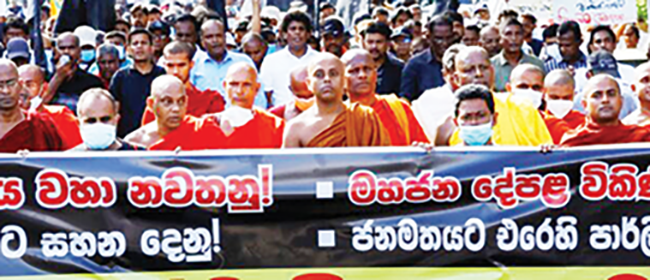
UN experts condemn Govt’s ‘extensive, prolonged and repeated’ use of emergency laws to crackdown on protesters
(Al Jazeera) The United Nations and several prominent international human rights organisations have condemned the repeated use of emergency regulations against peaceful protesters by the Sri Lanka government.They have urged the newly appointed President Ranil Wickremesinghe to end the crackdown against the months-long protests over the island nation’s worst economic crisis in decades.
Several protest leaders have been arrested since as police continue to chase and intimidate others. Some protest leaders are hiding to avoid “the witchhunt”.
In a statement, United Nations human rights experts condemned the crackdown, calling it a “misuse of emergency measures”.
“We condemn the recent and continued abuse of such measures to infringe on the legitimate exercise of the rights to freedom of peaceful assembly and expression,” they said.
Protesters say Wickremesinghe is on a mission to intimidate them to prevent further protests against his government.Last week, Joseph Stalin, a prominent trade union leader whom the UN recognises as a human rights defender, was arrested. As an international outcry and a legal battle followed, he was released on bail on Monday.
“Governments use rules, procedures, court orders and other tactics and methods to prevent peaceful protests and to prevent criticism when they are in a hotspot,” Mary Lawlor, the UN Special Rapporteur on human rights defenders, told Al Jazeera.
“I know Joseph Stalin’s work as a human rights defender. So for me, he should not have been arrested.”
Janaka Tennakoon, a chartered accountant in Colombo, said he was threatened with arrest for providing water to the protesters. He said he received a phone call from a police officer who described himself as an officer attached to the presidential investigation unit.
“The officer told me that my name is on a list of persons to be arrested as I had provided water bottles to ‘aragalaya’ [the Sinhala word for ‘struggle’]. Like many others, I did donate water bottles several months ago. What was wrong about it?” he told Al Jazeera.
“Saying that police have the power to even fabricate charges if they wanted, the officer asked for a bribe and even provided me with an account number,” he said.
Tennakoon, who shared with Al Jazeera a recording of his conversation with the police officer, said he confirmed through his sources that the caller was, in fact, a police officer.On Tuesday, as hundreds of people protested in several places to mark four months since the launch of the mass protests, the remaining protesters also decided to move out.
“The ‘aragalaya’ will emerge with a new momentum, a new round with and for all Sri Lankans,” the protest leaders said in a statement.
Meanwhile, New York-based Human Rights Watch (HRW) has issued several statements since Wickremesinghe imposed the state of emergency.
“President Wickremesinghe faces immense challenges, but imposing draconian emergency regulations, politically motivated arrests of protest leaders, and heightened surveillance of activist groups will not solve Sri Lanka’s dire problems,” said Meenakshi Ganguly, South Asia director at HRW.
“Sri Lanka’s partners have been clear that international economic assistance will only be effective if the government adheres to human rights and the rule of law and addresses the root causes of the crisis.
“Instead of trying to silence the protesters, President Wickremesinghe should listen to them.”
Echoing similar concerns, the International Commission of Jurists, together with 13 organisations including Amnesty International and Front Line Defenders, condemned the increasing reprisals against peaceful protesters in Sri Lanka.
“As a State party to the International Covenant on Civil and Political Rights (ICCPR), Sri Lanka has an obligation not merely to respect and protect the rights to freedom of peaceful assembly and expression, but also to actively facilitate and promote their exercise. Under international law, to be lawful, any restrictions on these rights must meet the principles of legality, legitimate aim, necessity and proportionality,” the statement said.
Recently, more than 150 scholars from the world’s leading universities in the United States, the United Kingdom, Europe, Asia and Australia called on the Sri Lankan government to guarantee people’s freedom of expression and the right to protest.
“Wickremesinghe was elected by parliament to take on the presidency, which was vacated due to the non-violent pro-democracy movement against authoritarianism and failed governance. His decision to follow in the footsteps of his predecessors is deeply alarming and does not offer the prospect of Sri Lanka progressing beyond the current crisis it is in,” said a statement issued by the scholars.
The statement criticised Wickremesinghe for calling the protesters “fascist”, adding that it was “totally inaccurate, inappropriate and damaging” and weaponised the term to provide an excuse for the use of extreme force.The protesters say they will continue their struggle for a “complete system change” in Sri Lanka.
“There is no people’s mandate for this government. Ranil Wickremesinghe knows that very well and the government is expected to take some hard economic decisions, too. So he is creating the background for an outright oppression,” Ranhiru Subhawickrama, a protest leader, told Al Jazeera.
“But we wouldn’t stop our ‘aragalaya’. We will fight until we create a new country, until we put a new system in place. Ranil will unleash violence on us and use oppressive methods. We are ready to face any oppression. We aren’t afraid of any oppression.”


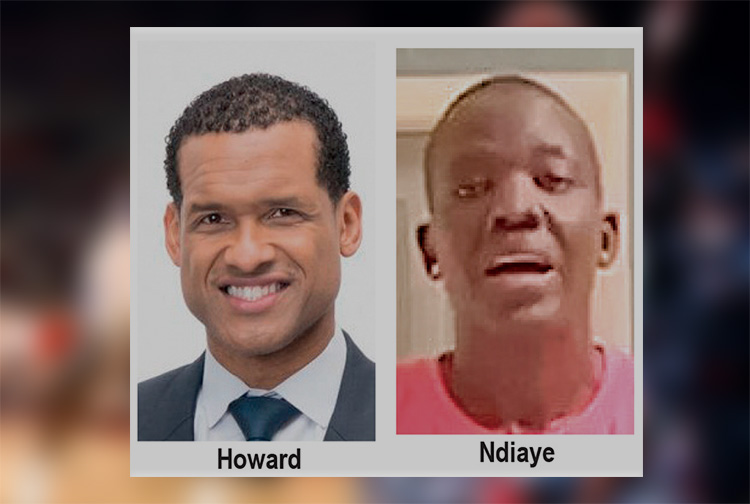
The U.S. Embassy in Colombo welcomed the U.S. Sports Envoys to Sri Lanka, former National Basketball Association (NBA) and Women’s National Basketball Association (WNBA) players Stephen Howard and Astou Ndiaye, from June 8 through 14.
The Public Diplomacy section of the U.S. Embassy said that it would launch a weeklong basketball program intended to harness the unifying power of sports, made possible through collaboration with Foundation of Goodness and IImpact Hoop Lab.
While in Sri Lanka, Howard and Ndiaye, both retired professional basketball players, will conduct a weeklong program, Hoops for Hope: Bridging Borders through Basketball. The Sports Envoys will lead basketball clinics and exhibition matches and engage in leadership sessions in Colombo and Southern Province for youth aged 14-18 from Northern, Uva, Eastern and Western Provinces, offering skills and leadership training both on and off the court. The U.S. Envoys will also share their expertise with the Sri Lanka Basketball Federation, national coaches, and players, furthering the development of basketball in the country. Beyond the clinics, they will collaborate with Sri Lankan schoolchildren to take part in a community service project in the Colombo area.
“We are so proud to welcome Stephen and Astou as our Sports Envoys to Sri Lanka, to build on the strong people-to-people connections between the United States and Sri Lanka,” said U.S. Ambassador Julie Chung. “The lessons that will be shared by our Sports Envoys – communication, teamwork, resilience, inclusion, and conflict resolution – are essential for leadership development, community building, equality, and peace. The U.S. Sports Envoy program is a testament to our belief that sports can be a powerful tool in promoting peace and unity.”
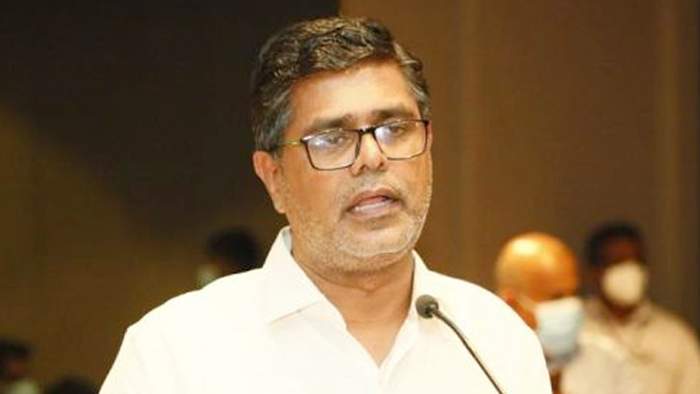
SJB Colombo District MP Mujibur Rahuman in parliament demanded to know from the government the reasons for CEB suspending the leave of all its employees until further notice from Thursday.
MP Rahuman said that the CEB has got an acting General Manager anew and the latter yesterday morning issued a circular suspending leave of all CEB employees with immediate effect until further notice.
“We demand that Minister Kanchana Wijesekera should explain this to the House. This circular was issued while this debate on the new Electricity Amendment Bill was pending. There are many who oppose this Bill. The Minister must tell parliament the reason for the urge to cancel the leave of CEB employees,” the MP said.However, Speaker Mahinda Yapa Abeywardena prevented Minister Wijesekera responding to the query and said that the matter raised by MP Rahuman was not relevant.
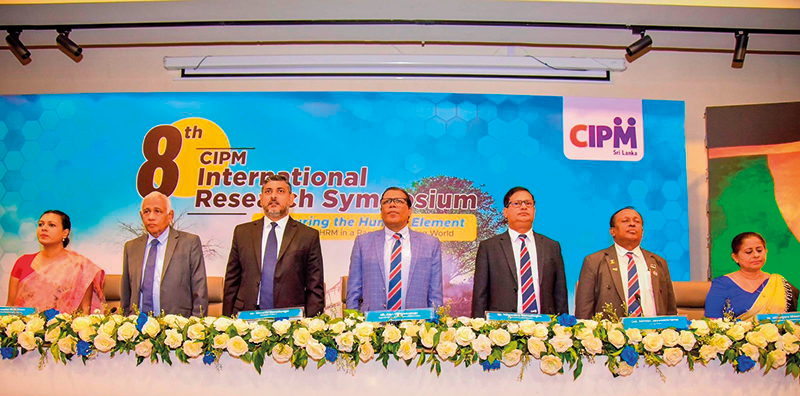
The Chartered Institute of Personnel Management (CIPM) successfully concluded the 8th Annual CIPM Symposium, which took place on 31st May 2024. Themed “Nurturing the Human Element—Redefining HRM in a Rapidly Changing World,” the symposium underscored the pivotal role of human resource management (HRM) in today’s dynamic global landscape. Since its inception in 1959, CIPM has been dedicated to advancing the HR profession through education, professional development, and advocacy, solidifying its position as Sri Lanka’s leading professional body for HRM.
Ken Vijayakumar, the President of the CIPM, graced the occasion as the chief guest. The symposium commenced with the welcome address by the Chairperson, Prof. Arosha Adikaram, followed by the Web Launch of the Symposium Proceedings and Abstract Book by the CIPM President. The event featured distinguished addresses, including a speech by Chief Guest Ken Vijayakumar, President of CIPM, and an address by Guest of Honor Shakthi Ranatunga, Chief Operating Officer of MAS Holdings Pvt. Ltd., Sri Lanka.
The symposium also featured an inspiring keynote address by Prof. Mario Fernando, Professor of Management and Director of the Centre for Cross Cultural Management (CCCM) at the University of Wollongong, Australia.
Vote of Thanks of the inauguration session was delivered by Dr. Dillanjani Weeratunga, Symposium Co-chair.
The symposium served as a comprehensive platform for researchers to present their findings across a wide range of critical topics in HRM. These included Cultural Diversity and Inclusion, Talent Development and Retention, Ethical Leadership and Corporate Social Responsibility, Adapting to Technological Advancements, Mental Health and Well-being at Work, Global Workforce Challenges, Employee Empowerment, and Reskilling and Upskilling.
The plenary session was led by Prof. Wasantha Rajapakse. Certificates were awarded to the best paper presenters during the valedictory session, followed by a vote of thanks delivered by Kamani Perera, Manager of Research and Development.
The annual symposium of CIPM was a truly inclusive event, attracting a diverse audience that spanned undergraduates, graduates, working professionals, research scholars and lecturers. This widespread interest highlights the symposium’s significance in the field of HRM, offering a unique opportunity for everyone to network and learn from scholarly brains.The CIPM International Research Symposium was sponsored by Hambantota International Port, Sri Lanka Institute of Information Technology (SLIIT), E B Creasy & Co. PLC, and Print Xcel Company.



US sports envoys to Lanka to champion youth development

Rahuman questions sudden cancellation of leave of CEB employees


