
Life style
Amunugama’s book on Anagarika captures international review interest

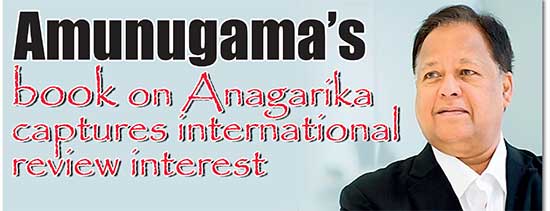
SARATH AMUNUGAMA: The Lion’s Roar: Anagarika Dharmapala and the Making of Modern Buddhism. Oxford: Oxford University Press, 2019; pp. ix + 556.
Sarath Amunugama’s The Lion’s Roar: Anagarika Dharmapala and the Making of Modern Buddhism offers a comprehensive yet very readable account of the life and influence of Anagarika Dharmapala (1864–1933). In Sri Lanka, Dharmapala is revered for reviving Sinhalese Buddhism and for restoring Sri Lankan pride during a period of colonial domination. He is also admired for his lifelong struggle to establish Buddhist management of Buddhist sacred sites in India. Scholars of religion have tended to identify Dharmapala as the founder of “Protestant Buddhism,” that is to say, of a form of Buddhism heavily influenced by “Protestant” thinking in its doctrines and forms and thus rendered acceptable to the modern mentality.
Dharmapala has also been branded as an early proponent of the kind of chauvinistic and nationalistic Buddhism evident in Sri Lanka in the recent conflict between Sinhalese Buddhists and Tamil Hindus. A great merit of Amunugama’s book is that 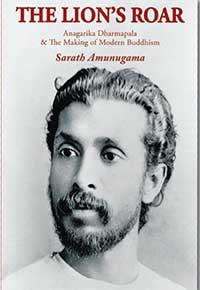 it provides a sound basis to arrive at a more complete picture of Dharmapala than has been heretofore possible. The author first locates Dharmapala (born Don David Hewavitarne) in the context of social and economic changes in Sri Lanka during the colonial period, particularly as these relate to the revival of Buddhism in the late nineteenth century. Dharmapala’s family belonged to the new merchant class who had prospered through the opening of commercial plantations by the British. Elements of this new nativist elite, with Dharmapala’s father at the forefront, formed strong bonds with the Buddhist sangha and laid the foundations for the early Sinhala-Buddhist revival and resistance to missionary influence and colonial paternalism.
Although educated in missionary schools (which gave him deep knowledge of Christian scripture and Western thought), Dharmapala was given special instruction in Buddhism and Sinhala language at home. When the Theosophical delegation headed by Madame Blavatsky and Colonel Olcott arrived in Colombo in 1880, the young Dharmapala was present along with his father and uncle to welcome them. (Olcott and Blavatsky publicly adopted the Buddhist faith soon after their arrival in Sri Lanka.) Dharmapala’s relationship with the Theosophists and the influence they had on him is an important and very interesting aspect of Amunugama’s book. It was Madame Blavatsky who encouraged Dharmapala to master Pali. (He was later instrumental in establishing a department of Pali at Calcutta University.) Blavatsky also encouraged him to make a pilgrimage to Bodhgaya, the site of the Buddha’s Great Awakening (mahabodhi) in northern India.
The 19-year-old Dharmapala travelled through southern Sri Lanka as Olcott’s translator and learnt the art of public speaking and the importance of education and role of the printing press in spreading the message. The importance these aspects assumed in Dharmapala’s “mission” is covered in detail in the book. It was also under the influence of the Theosophists that Dharmapala envisioned a new role for himself as a celibate “homeless one” (anagarika): neither a layperson pursuing worldly goals nor a monk enmeshed in rituals and cultural prescriptions, limited by the caste and other restrictions on the Sri Lankan clergy of his day. Fortunately, his wealthy parents supported his new vocation.
The book provides insight into Dharmapala’s thinking and motivation through detailed attention to his diaries and hitherto unpublished letters. Surprisingly, Dharmapala spent the greater part of his life in India. His first visit came about because of his involvement in the Theosophical Society, which had established its headquarters in Madras (Chennai). A substantial portion of the book considers Dharmapala’s establishment of the Mahabodhi Society and his efforts to return the sacred site in Bodhgaya and the site of the Buddha’s first teaching in Sarnath to Buddhist hands. It also details his relationship with the Bengali intelligentsia (the bhadralok) and discusses the impact of nascent Hindu nationalism on his thinking and his links with Hindu revivalists. (Swami Vivekananda and Dharmapala were both prominent figures at the world Parliament of Religions in Chicago in 1893.)
Dharmapala’s international connections with Japan, Britain, and the United States are explored in some detail. Readers interested in the broader influence of Dharmapala and his ideas on political and social movements beyond his lifetime will also find much of value in this book. Amunugama suggests that Dharmapala was more of an internationalist than a nationalist. He argues that Dharmapala’s Sri Lankan nationalism needs to be seen in the context of colonial oppression and British condescension to Sri Lankan cultural and spiritual values. One of Dharmapala’s goals was the restoration of Sinhalese selfrespect. More broadly, he believed that Buddhism had a message for all humanity.
After his first visit to Bodhgaya in 1891, Dharmapala committed himself to work towards the re-establishment of Buddhism in aryavarta (northern India) and the propagation of the word of the Buddha in Asia and the West. It is evident that Dharmapala’s mastery of Pali and his study of original Buddhist texts were as much responsible for the direction of his moral and religious thinking, as was Protestant influence. Amunugama makes clear that Dharmapala’s position did not involve a repudiation of traditional Buddhism. It was also the reading of original Buddhist texts that led Dharmapala to reject Theosophy. Certainly, he was critical of the laxity of monks and encouraged lay religiosity, but he aspired to be a bodhisattva working for the good of humanity in all his future lives.
Dharmapala died in Sarnath a fully ordained monk. There is value in the detailed analysis provided by Amunugama, but the book is longer than it needs to be. Considerable repetition could have been avoided by some reorganisation. Some sections of the book would perhaps have been better left to journal articles, for example, the chapter on John de Silva and the Sinhala Nationalist Theatre and the chapter on the role of the printing press in the Buddhist revival.



Institute of Hospitality Sri Lanka
 The 32nd Annual General Meeting (AGM) of the UK-based Institute of Hospitality’s Sri Lanka Chapter was held recently at the Ramada Hotel Colombo,.The event provided an evening of camaraderie , reflection of the past and present achievements,setting new benchmarks for the future
The AGM had the presence of two distinguished guests, the Chief Guest Opposition Leader Sajith Premadasa, and the Guest of Honour British High Commissioner to Sri Lanka, Andrew Patrick. Their inspiring speeches were lauded by all hoteliers who were present at the occasion
A special thanks was extended to Robert Richardson, CEO of the Institute of Hospitality UK, along with his team, sponsors, committee members, and all attendees for making the event memorable.
Dr. Harsha Jayasingh, Past President of the Institute of Hospitality (UK) Sri Lanka Chapter, emphasised the Institute’s longstanding history and the strength of its Sri Lankan branch. “The Institute of Hospitality (IH) UK has a history of 86 years, and we are proud to be the Sri Lanka Branch. IH Sri Lanka is much stronger now with many members from all areas of the hospitality industry,” he stated.
Dr. Jayasingh highlighted the significant role of tourism in Sri Lanka’s economy,. He said tourism it is the third-largest source of revenue for the country. “Tourism accounts for about 13.3% of total foreign exchange earnings and employs 450,000 people directly and indirectly. The hospitality industry in this island of pearl holds tremendous potential for economic growth, job creations, and cultural exchange,” he added.
He also pointed out more women should be attracted to the industry and advocated for the use of technology in hospitality sector to attract the younger generation.
The newly appointed Chairman Ramesh Dassanayake spoke about the challenges faced by the industry, including the reluctance of youth to join the sector. . Dassanayake expressed concerns over the migration of staff between hotels and the overall ‘brain drain’ in the sector. ” We must maintain high standards in the hotel We must try to attract tourists to Sri Lanka, we must have with many facilities Hence, hotel schools and other professional institutions involved in skills development mustincrease their intakes,” he pointed out.
Chief Guest Sajith Premadasa emphasised the importance of eco tourism and said “We need to have an environmental policy related to tourism in place,” . .
The 32nd AGM of the Institute of Hospitality UK, Sri Lanka Chapter, was a testament to the strength and potential of Sri Lanka’s hospitality industry. The insights and commitments shared during the event set a new benchmark for the future.(ZC)


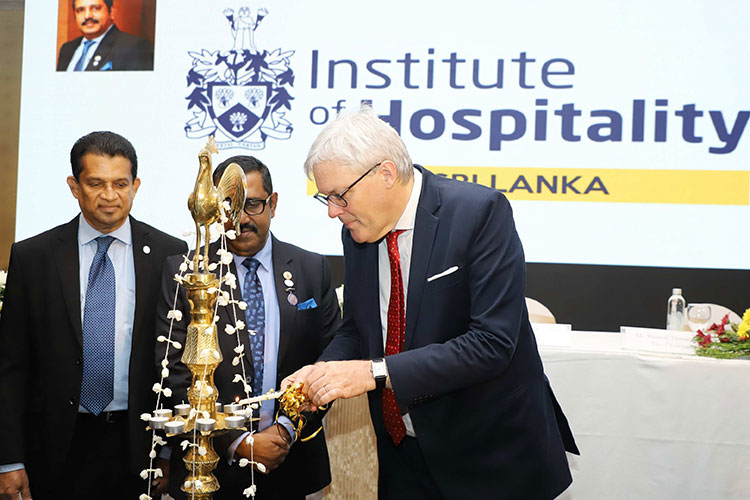
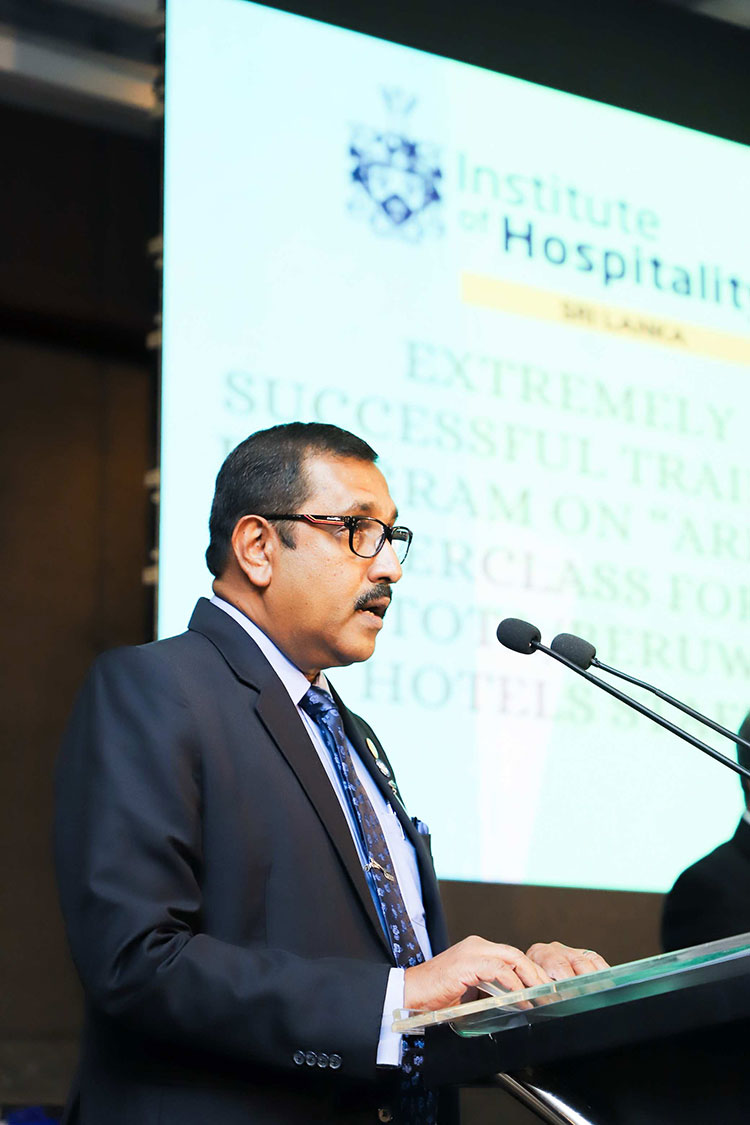

Pix by Thushara Attapathu
Life style
He recognizes human identity beyond boundaries of gender, race, nationality and religion.

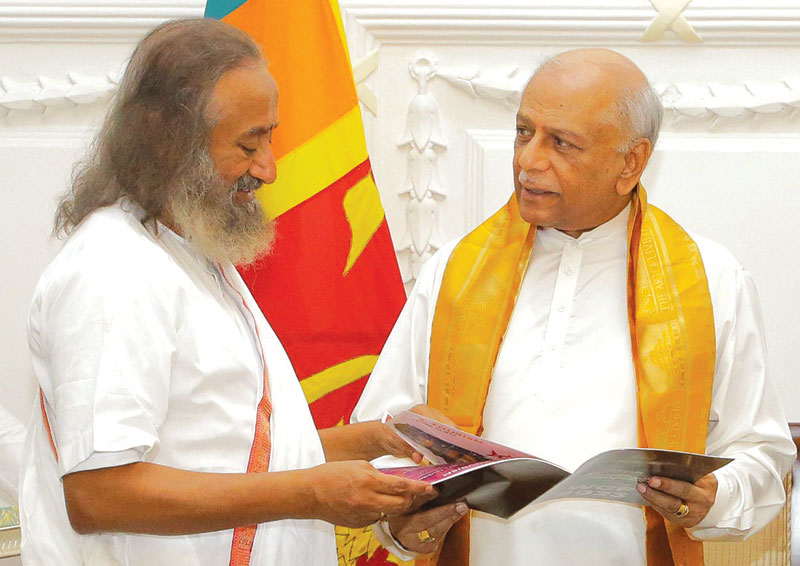
Visit of Sri Gurudev to Sri Lanka
Humanitarian, spiritual leader and Global Ambassador of Peace Gurudev Sri Sri Ravi Shankar (Sri Gurudev) was in Sri Lanka on a three day tour on the invitation of the Prime Minister of Sri Lanka Dinesh Gunewardene. Gurudev who inspired a wave of volunteerism and service to moot one of the largest volunteer-based organisations in the world – The Art of Living – visited the various projects under the aegis of the foundation and launched twelve vocational and technical centers around the island. He was accompanied by thousands of followers from Sri Lanka and around the world.
Gurudev who visited Sri Lanka for the sixth time also had a first day cover launched in honour of his visit. He is a strong proponent of spreading happiness, using the unique Sudarshan Kriya, yoga, meditation and practical wisdom to unite people, empower individuals and transform communities. His programmes provide techniques and tools to live a deeper, more joyous life, while his non-profit organisations recognize the human identity beyond the boundaries of gender, race, nationality and religion.
The Art of Living which has more than 30,000 teachers and over one million volunteers across 180 countries has touched in excess of five hundred million people around the world. CNN called it “Life Changing” and The Washington Post headlined it, “Fresh air to millions”.
In Trincomalee, Gurudev met with war victims and had a heartwarming engagement with the children from the children’s homes run by the Foundation. He also visited the Koneswara Temple in Trincomalee and graced the Kumbhabhishekam at Seetha ecogPnize the human identity beyond the boundaries of gender, race, nationality and religion. Amman temple at Nuwara Eliya. He held discussions with the trustees on the progress of the foundation’s social service projects, while also holding a special event – Ekamuthuwa – attended by a large number of dignitaries and his devotees from around the world.
His time with the Prime Minister was spent discussing the prospects of unity in diversity and uniting Sri Lanka by adding happiness into the formula of living. In addition he had discussions with the Speaker of the Parliament of Sri Lanka Mahinda Yapa Abeywardena, prominent business stewards and civil society leaders.
by Zanita Careem
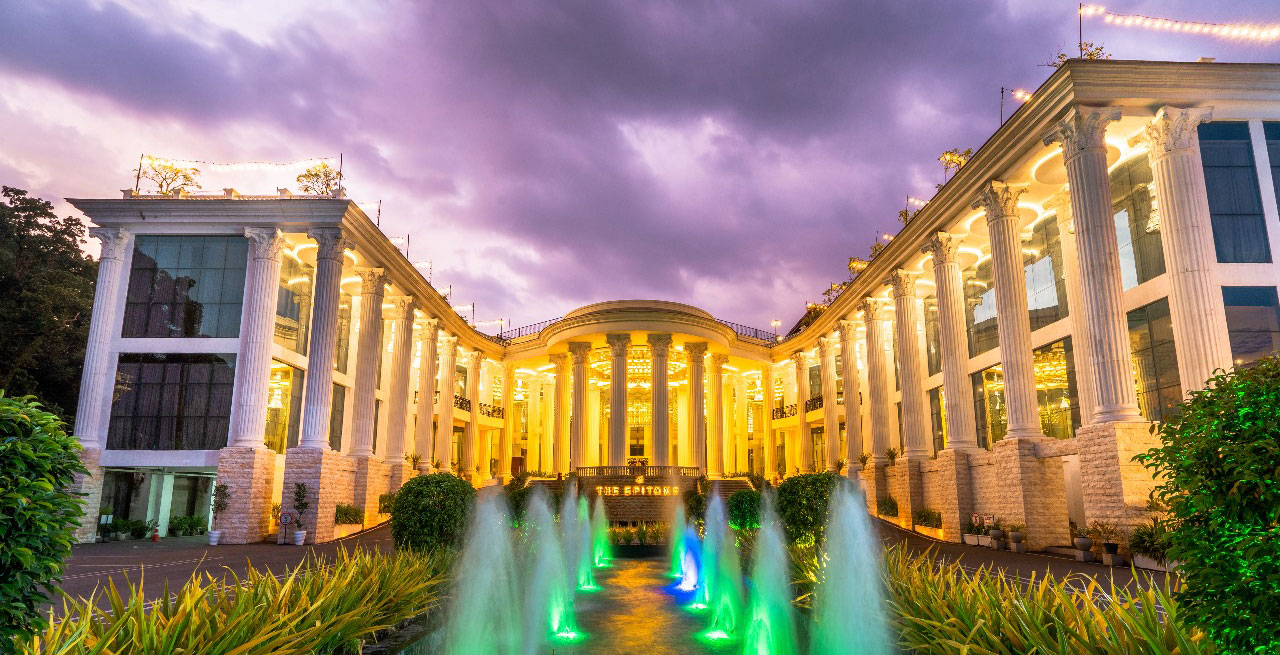
Envison your dream wedding day come to life at the Epitome Hotel, a prestigious city hotel in Kurunegala offering an unrivalled luxury rendors experience for weddings.
The venue is designed to embody opulence and luxury from all quarters for a spectacular wedding in kurunegala,Thier ballroom is the largest banquet facility in Sri Lanka It can be divided into six luxurious pillarless wedding halls on the ground floor and 25pax smaller banquet halls.
It can be easily named as a five star heaven in the heart of the city contributing to a myriad of immense experiences tailored to inspire and delight wedding experiences.
From opulent décor set up to exquisite table decor, lavish food, every detail is meticulously curated to spark your imagination and ignite creativity for a perfect wedding. The previous prestigious wedding shows season one and season two attracted large crowds
were unique events which gave the wedding vendors and potential clients had an opportunity to connect and interact with each other. Beyond being a showcase it was a chance for the wedding vendors to unite and contribute to the vibrancy of the wedding industry. The wedding show covered all area of the bridal industry providing a comprehensive variety of bridal supplies from Sri lanka and became the most popular bridal exhibitions in Kurunegala.This bridal exhibitions allowed brides and grooms to experience first hand the products and services available from suppliers in Sri Lanka
These wedding shows held at The Epitome created a benchmark and gave an opportunity for vendors to create connections to the utmost satisfaction said Harshan Lakshita Executive Director. of the magnificent Hotel
Our wedding shows featured experts and professionals in every field‘ It covered all areas of the bridal industry provided a comprehensive variety of bridal supplies from Sri lanka and became most popular bridal exhibition in this region.We are always open to everyone to join us at our wedding shows in the future. It is an opportunity to discover the incredible talent within our local wedding and bridal vendors to make meaningful relationships and plan thier special day at our breathtaking hotel The Epitome said General Manager Kavinda Caldera
The Epitome Hotel’s bridal show which will be held end of June will buzz with great ideas,advice and inspiration for all those who plan thier dream wedding
…….
The Hotel Epitome’s Wedding Season 3 will marked excellence, celebration and inspiration for those in the wedding industry. The exhibition halls will resonate with ideas on exquisite bridal wear to decor, florists , photography etc and showshowcase the rich tapestry of talent within the local wedding industry. .







US sports envoys to Lanka to champion youth development

Rahuman questions sudden cancellation of leave of CEB employees


