Opinion
Alternative methods to enhance tree cover at national level

by Eng. Mahinda Panapitiya
M Sc, (Department of Agriculture and Biological Engineering) Utah State University, Utah, USA,
When we talk about new forestry programs we think planting trees only in isolated locations in rural areas. However reservations along streams and roads in urban areas are also potential locations for planting trees. Following pictures show how similar interventions were done in Mahaweli Areas in 80s.
Concept behind the Proposal
Road Reservations & Stream corridors which extend to about 10 to 20 Meters in either side are not actively protected in Sri Lanka though it is very common in other countries. Reservations of roads and streams are owned by the government. Therefore public use of this land can be considered as a fair use of the land. Main purpose of this proposal is to introduce an intervention to connect the Forest Patches in urban areas using the reservations of streams and roads by planting trees so that those strips act also as Bio Corridors while enhancing the tree cover at national level.
Hidden Benefits
In addition to forest cove at national level, other ecological benefits are as follows
1. It serves as a roof for pedestrians using public roads while adding aesthetic value. In developed countries this is a specialised job done professionals called Arborist
2. It is also possible to develop stream banks as cycle tracks to use as Environmental Sustainable Transport (EST) system. This is very relevant to Sri Lanka because our road designs have not included such tacks in their design.
3. Those tree belts also play the role of corridors connecting isolated forest patches in urban areas supporting enhancement of urban wild life which is being badly detonated due to unplanned Land Use practices
4. It is also possible to develop stream banks as nature trails for people who enjoy the nature. Those tracks could be developed even to attract eco tourists like in other countries.
Historical Background of similar interventions
In Sri Lanka, the concept of Bio Corridor was introduced in 1988 under a Project called Mahaweli Agriculture and Rural Development project implemented in System B under an USAID funded program. Similar to highways which connect main cities, in this case the Bio Corridors were introduced as “Bio Highways” connecting fragmented forest patches (“Bio Cities”). At the same time those corridors were improved as Cycle Tracks for local farmers. In 2010, similar intervention was introduced in Gampaha District in parallel with a 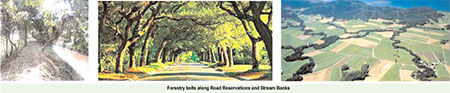

Costing
Based on measurement from Google Maps indicated above the Total Length of selected streams and roads are about 36 KM. Data available with the PRDA in implementing already completed similar interventions in 2010 was used for estimation. Assuming 500 Trees / KM, Planting & Maintaining a tree including fertilizing at least for 1 year till it reaches a height of at least 8 Ft is 3000. Therefore the Rough cost estimate is about 1.5 MRs/ KM.
References
Mahinda Panapitiya – Envisioning Respect for Natural Environment – Published under Member Profile in the Monthly Journal of American Society of Agriculture Engineers. May 1995 edition
Widyarathna. H.M.P.B, Dr. Hemanthi Ranasinghe, M.Sc Dissertation submitted to University of Sri Jayawardenepura, 1996 Survey of existing bank reservations of major natural streams in System B of Mahaweli Project
“
Establishment of Urban Recreational areas with Flood Mitigation Programs, presented at IESL Authors: Suniil Bnadaranayak (GM of PRDA of WP_
Hidden benefits related to Bio Diversity aspects of jogging track project
http://youtu.be/qWISFspNB74