
News
Academics rise to challenge with sustainable solutions

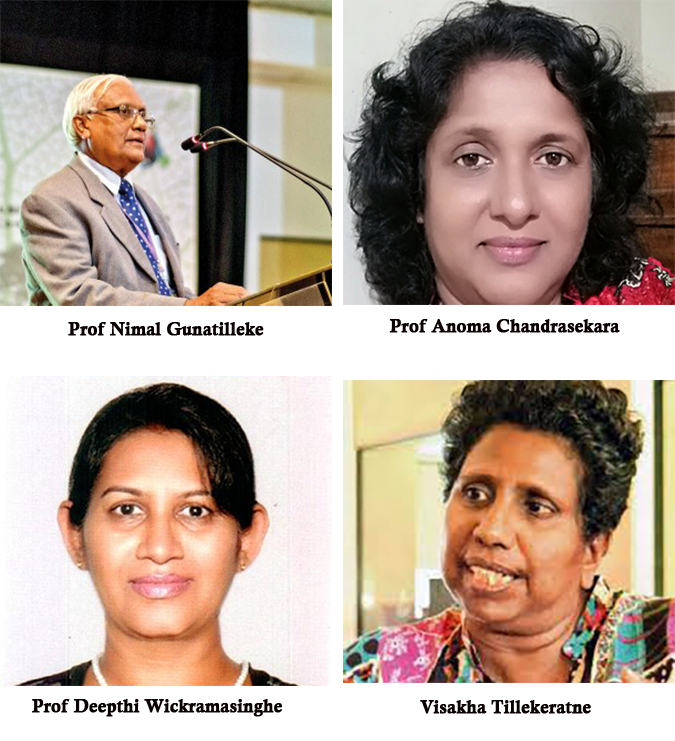
Sri Lanka’s worst post-war economic crisis represents a major blow to the country’s progress towards achieving the United Nations’ Sustainable Development Goals (SDGs), efforts that were already hobbled by the COVID pandemic. However, the situation is also providing impetus to the work of academics that are using their knowledge to tackle the immediate fallout from the crisis, in addition to longer-term sustainability goals, says a report published by the University World News, an online publication that reports on higher education news and developments from a global perspective. It quotes Deepthi Wickramasinghe, conservation biologist and professor at the University of Colombo, having said that university students, from rural areas, studying at the University of Colombo, were cutting down on their food intake to make ends meet.
“In September, Sri Lanka’s cost of living index climbed to a new high over 70%, up from 66.2% in 2020.
“Students from rural areas cannot afford the higher food and living prices in Colombo city.
“With poverty increasing in the country, Sri Lanka will certainly not be able to make progress to achieve its targets by 2030,” she said.
“The [economic] crisis has raised the importance of assessing regional SDG progress, rather than relying on national statistics,” she said.
“Against looming poverty and hunger, the priority in Sri Lanka’s SDG activities should be on support for vulnerable populations – children and the elderly, especially in the low-income sectors,” said Prof Anoma Chandrasekara, at the Department of Applied Nutrition of Faculty of Livestock, Fisheries and Nutrition at the Wayamba University.
Worldwide, SDG progress has been dented as a result of the COVID-19 pandemic. But Wickramasinghe said the toll on Sri Lanka, saddled with a huge debt and political uncertainty, is heavy. Imports are restricted to save foreign exchange, and fuel shortages have created major problems, including pushing up public transportation prices, directly affecting poorer populations.
Human rights violations, especially recent arrests of peaceful protesters, in Colombo, have also caused Sri Lanka to deteriorate in terms of SDG 16, ‘Peace, justice and strong institutions’.
A report from an Amnesty International researcher on economic, social and cultural rights, released this month, entitled We Are Near Total Breakdown, also pointed to life-threatening shortages of medicine, such as antibiotics and insulin, and essential equipment.
“To survive we need to eat, and with increasing prices, growing our own food that can provide the necessary proteins and other nutrients is the way forward,” said Visakha Tillekeratne, a nutrition expert involved in a research project started with Wayamba University, in 2019.
“The aim is to encourage people to cultivate a home garden that will provide a good diet. This is a concept [that has] grown out of the pandemic and economic crisis,” said Tillekeratne, who supports rural communities.Supported by the UN’s Food and Agriculture Organization, Chandrasekara and her team spearheaded a study on guidelines for a new home garden model, based on technical and dietary reviews.
Chandrasekara has researched the bioactivities, such as antioxidant and glucose response actions of phenolic compounds to ascertain the nutritional value of under-utilised tropical foods, including cereals, legumes, roots and tubers, herbs and condiments.
Nimal Gunatilleke, emeritus professor and a forest biologist, conducting conservation research at the University of Peradeniya, is also a promoter of home-grown funding models to support rural livelihoods.
His research backs the promotion of ‘green labelling’ for local, organically grown foods which contribute to sustainability and improvement of rural livelihoods through traditional cottage industries. ‘Green labelling’ helps smallholder farmers to compete against large plantations that also damage local biodiversity.
Based on his research, he is a leading advocate of additional green financing options beyond Sri Lanka’s traditional approach of loans, grants and national spending measures, which, he said, can reduce the day-to-day impact of the debt crisis. He pointed to the need to rely on other sources of income, apart from a bail-out by the International Monetary Fund currently being discussed by the government.
Gunatilleke has played a role in the development of Sri Lanka’s Biodiversity Finance Plan established by the Central Bank of Sri Lanka, in 2018, to promote green financing as a sustainable financing solution for agriculture, land use and conservation. He advocates the design and development of innovative ways of green financing, such as green bonds, sustainable bonds, climate bonds, etc., that can bring direct benefits to smallholders who are the lifeblood of the Sri Lankan economy.
Gunatilleke contends that ecological schemes are an innovative financial solution to the twin crises of climate change and debt distress in Sri Lanka. “It is a means to mobilise a large amount of financial resources and represents a new source of financing,” he told University World News. Sri Lanka has in place most of its key development strategies and plans for the next several years in conformity with the major global conventions on biodiversity, he explained. “The current [economic] adversity is an opportunity to gain the interest of donor agencies in entering green financing partnerships,” he said.



The U.S. Embassy in Colombo welcomed the U.S. Sports Envoys to Sri Lanka, former National Basketball Association (NBA) and Women’s National Basketball Association (WNBA) players Stephen Howard and Astou Ndiaye, from June 8 through 14.
The Public Diplomacy section of the U.S. Embassy said that it would launch a weeklong basketball program intended to harness the unifying power of sports, made possible through collaboration with Foundation of Goodness and IImpact Hoop Lab.
While in Sri Lanka, Howard and Ndiaye, both retired professional basketball players, will conduct a weeklong program, Hoops for Hope: Bridging Borders through Basketball. The Sports Envoys will lead basketball clinics and exhibition matches and engage in leadership sessions in Colombo and Southern Province for youth aged 14-18 from Northern, Uva, Eastern and Western Provinces, offering skills and leadership training both on and off the court. The U.S. Envoys will also share their expertise with the Sri Lanka Basketball Federation, national coaches, and players, furthering the development of basketball in the country. Beyond the clinics, they will collaborate with Sri Lankan schoolchildren to take part in a community service project in the Colombo area.
“We are so proud to welcome Stephen and Astou as our Sports Envoys to Sri Lanka, to build on the strong people-to-people connections between the United States and Sri Lanka,” said U.S. Ambassador Julie Chung. “The lessons that will be shared by our Sports Envoys – communication, teamwork, resilience, inclusion, and conflict resolution – are essential for leadership development, community building, equality, and peace. The U.S. Sports Envoy program is a testament to our belief that sports can be a powerful tool in promoting peace and unity.”
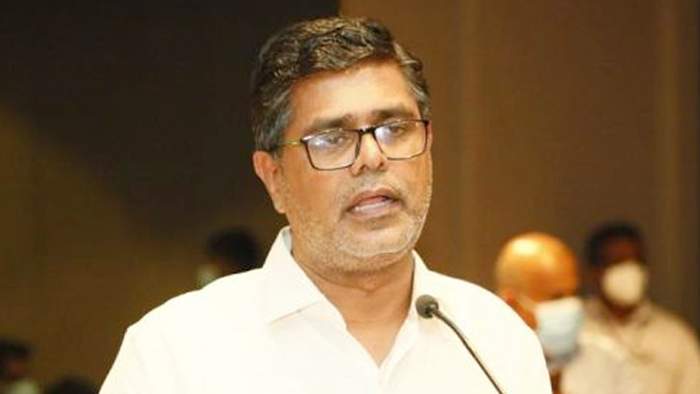
SJB Colombo District MP Mujibur Rahuman in parliament demanded to know from the government the reasons for CEB suspending the leave of all its employees until further notice from Thursday.
MP Rahuman said that the CEB has got an acting General Manager anew and the latter yesterday morning issued a circular suspending leave of all CEB employees with immediate effect until further notice.
“We demand that Minister Kanchana Wijesekera should explain this to the House. This circular was issued while this debate on the new Electricity Amendment Bill was pending. There are many who oppose this Bill. The Minister must tell parliament the reason for the urge to cancel the leave of CEB employees,” the MP said.However, Speaker Mahinda Yapa Abeywardena prevented Minister Wijesekera responding to the query and said that the matter raised by MP Rahuman was not relevant.
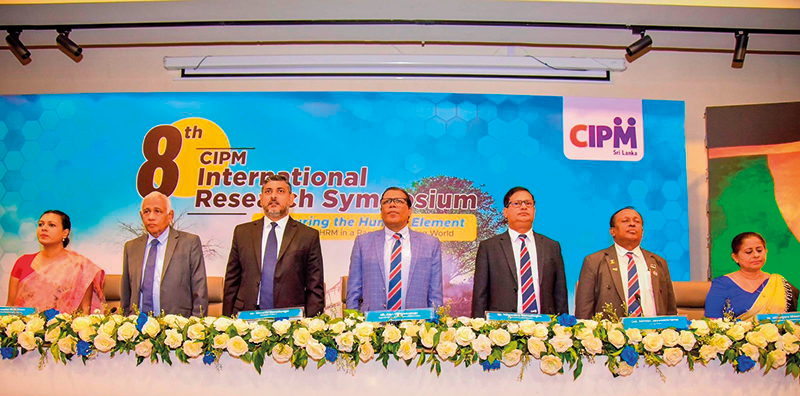
The Chartered Institute of Personnel Management (CIPM) successfully concluded the 8th Annual CIPM Symposium, which took place on 31st May 2024. Themed “Nurturing the Human Element—Redefining HRM in a Rapidly Changing World,” the symposium underscored the pivotal role of human resource management (HRM) in today’s dynamic global landscape. Since its inception in 1959, CIPM has been dedicated to advancing the HR profession through education, professional development, and advocacy, solidifying its position as Sri Lanka’s leading professional body for HRM.
Ken Vijayakumar, the President of the CIPM, graced the occasion as the chief guest. The symposium commenced with the welcome address by the Chairperson, Prof. Arosha Adikaram, followed by the Web Launch of the Symposium Proceedings and Abstract Book by the CIPM President. The event featured distinguished addresses, including a speech by Chief Guest Ken Vijayakumar, President of CIPM, and an address by Guest of Honor Shakthi Ranatunga, Chief Operating Officer of MAS Holdings Pvt. Ltd., Sri Lanka.
The symposium also featured an inspiring keynote address by Prof. Mario Fernando, Professor of Management and Director of the Centre for Cross Cultural Management (CCCM) at the University of Wollongong, Australia.
Vote of Thanks of the inauguration session was delivered by Dr. Dillanjani Weeratunga, Symposium Co-chair.
The symposium served as a comprehensive platform for researchers to present their findings across a wide range of critical topics in HRM. These included Cultural Diversity and Inclusion, Talent Development and Retention, Ethical Leadership and Corporate Social Responsibility, Adapting to Technological Advancements, Mental Health and Well-being at Work, Global Workforce Challenges, Employee Empowerment, and Reskilling and Upskilling.
The plenary session was led by Prof. Wasantha Rajapakse. Certificates were awarded to the best paper presenters during the valedictory session, followed by a vote of thanks delivered by Kamani Perera, Manager of Research and Development.
The annual symposium of CIPM was a truly inclusive event, attracting a diverse audience that spanned undergraduates, graduates, working professionals, research scholars and lecturers. This widespread interest highlights the symposium’s significance in the field of HRM, offering a unique opportunity for everyone to network and learn from scholarly brains.The CIPM International Research Symposium was sponsored by Hambantota International Port, Sri Lanka Institute of Information Technology (SLIIT), E B Creasy & Co. PLC, and Print Xcel Company.



US sports envoys to Lanka to champion youth development

Rahuman questions sudden cancellation of leave of CEB employees


