
Opinion
A tribute to one of the greatest singers ever on her birth anniversary

By Sunil Dharmabandhu
Retired visiting Mental Health Act Commissioner
UK
sunilrajdharm@yahoo.co.uk
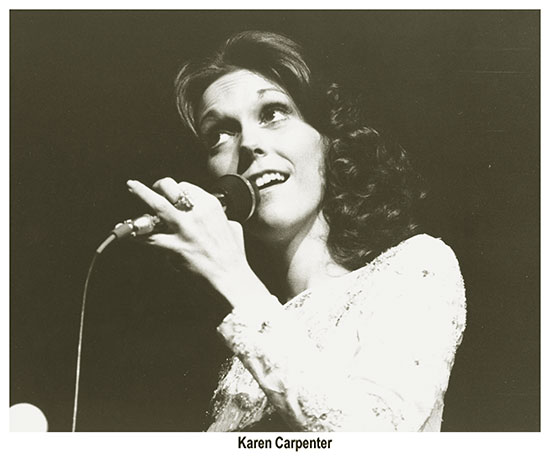
Karen Anne Carpenter was an American singer and drummer who, along with her elder brother Richard, was part of the duo the Carpenters. Supremely talented and blessed with a distinctive three-octave contralto range, she was praised by her peers as one of the greatest singers ever. Her struggle with and eventual death from anorexia later raised awareness of eating disorders and body dysmorphia.
I am a regular ardent listener to Sri Lanka’s Gold FM in the U.K. and often get emotional when it plays Karen’s beautiful “Sing, sing a song”! This has its roots through a stage in my career working under the then medical director, Dr Mark Tattersall, a specialist in Eating Disorders at a private hospital in the U.K. where I learned first-hand how difficult and challenging it is to treat and look after adolescents, predominantly females suffering from typical and atypical eating disorders, some even having to be detained under Section 3 of the Mental Health Act which legally allowed force feeding through nasogastric tubes as such interventions are deemed to be lifesaving!
Background information
Karen was born on 02 March 1950 in New Haven, Connecticut and moved to Downey, in California, in 1963, with her family and died on Sri Lanka’s Independence Day in 1983. She began to study the drums in high school and joined the Long Beach State choir after graduating. After several years of touring and recording, Carpenters were signed to A & M Records in 1969, achieving enormous commercial and critical success throughout the 1970s. Initially, Karen Carpenter was the band’s full-time drummer, but gradually took the role of frontwoman as drumming was reduced to a handful of live showcases or tracks on albums. While the Carpenters were on hiatus in the late 1970s, she recorded a solo album, which was released years after her death.
At the age of 32, Carpenter died of heart failure due to complications from anorexia nervosa which was sadly little-known at the time even in the States and her death led to increased visibility and awareness of eating disorders. Interest in her life and death has spawned numerous documentaries and movies. Her work continues to attract praise, including appearing on Rolling Stones 2010 list of the 100 greatest singers of all time!
Karen was the daughter of Agnes Reuwer (née Tatum, March 5, 1915 – November 10, 1996) and Harold Bertram Carpenter (November 8, 1908 – October 15, 1988). Harold was born in Wuzhou in China, where his parents were missionaries. He was educated at boarding schools in England before finding work in the printing business.
Karen’s only sibling, Richard, the elder by three years, developed an interest in music at an early age, becoming a piano prodigy. Karen’s first words were “bye-bye” and “stop it”, the latter spoken in response to Richard. She enjoyed dancing and by age four was enrolled in tap dancing and ballet classes.
Family moves
The family moved in June 1963 to the Los Angeles suburb of Downey after Harold was offered a job there by a former business associate. Karen entered Downey High School in 1964 at age 14 and was a year younger than her classmates. She joined the school band, initially to avoid gym classes. Earliest symptom of an eating disorder? She graduated from Downey High School in the spring of 1967, receiving the John Philip Sousa Band Award, and enrolled as a music major at Long Beach State where she performed in the college choir with Richard. The choir’s director, Frank Pooler said that Karen had a good voice that was particularly suited to pop and gave her lessons in order for her to develop a three-octave range.
Karen Carpenter had a complicated relationship with her parents. They had hoped that Richard’s musical talents would be recognied and that he would enter the music business, but were not prepared for Karen’s success. She continued to live with them until 1974. In 1976, Carpenter bought two Century City apartments that she combined into one; the doorbell chimed the opening notes of “We’ve Only Just Begun”. She collected Disney Memorabilia and liked to play softball and baseball! Growing up, she played baseball with other children on the street and was picked before her brother for games. She studied baseball statistics carefully and became a fan of the New York Yankees. In the early 1970s she became the pitcher on a celebrity all-star softball team.
Petula Clark, Olivia Newton-John and Dionne Warwick were her close friends. While she was enjoying success as a female drummer in what was primarily an all-male occupation, Carpenter was not supportive of the women’s liberation movement, saying she believed a wife should cook for her husband and that when married, this was what she planned to do.
No interest in marriage
In early interviews, Carpenter showed no interest in marriage or dating, believing that a relationship would not survive constant touring, adding “as long as we’re on the road most of the time, I will never marry”. In 1976, she said the music business made it hard to meet people and that she refused to just marry someone for the sake of it. Carpenter admitted to Olivia Newton-John that she longed for a happy marriage and family. She later dated several notable men of the day.
After a whirlwind romance, she married real-estate developer Thomas James Burris on August 31, 1980, in the Crystal Room of The Beverly Hills Hotel. Burris, divorced with an 18-year-old son, was nine years her senior. A few days prior to the ceremony, Karen was taped singing a new song, “Because We Are in Love”, and the tape was played for guests during the wedding ceremony. The song, written by her brother and John Bettis, was released in 1981. The couple settled in Newport Beach. Carpenter desperately wanted children, but Burris had undergone a vasectomy and refused to undergo an operation to reverse it. Their marriage did not survive this disagreement and ended after 14 months. Burris was living beyond his means, borrowing up to $50,000 (the equivalent of $142,000 in 2020) at a time from his wife, to the point where reportedly she had only stocks and bonds left. Karen’s friends also indicated he was impatient.
A close friend, recounted an incident in which she and Karen went to their normal hangout, Hamburger Hamlet and Carpenter appeared to be distant emotionally, sitting not at their regular table but in the dark, wearing large dark sunglasses, unable to eat and crying. According to Kamon, the marriage was “the straw that broke the camel’s back. It was absolutely the worst thing that could have ever happened to her.”
In September 1981, Karen revised her will and left her marital home and its contents to Burris, but left everything else to her brother and parents, including her fortune estimated at $ 5 to 10 million (between $14,000,000 and $28,000,000 in 2020). Two months later, following an argument after a family dinner in a restaurant, Karen and Burris broke up. Carpenter filed for divorce on October 28, 1982, while she was in Lenox Hill Hospital.
Carpenter begins dieting
Karen began dieting while in high school. Under a doctor’s guidance, she began the Stillman diet eating lean foods, drinking eight glasses of water a day, (tantamount to water loading, a common tactic in eating disorders) and avoiding fatty foods. She reduced her weight to 120 pounds (54 kg) and stayed approximately at that weight until around 1973, when the Karens’ career reached its peak.That year, she saw a concert photo of herself in which her outfit made her appear heavy. She hired a personal trainer, who advised her to change her diet. The new diet caused her to build muscle, which made her feel heavier instead of slimmer. Carpenter fired the trainer and began her own weight-loss programme using exercise equipment and counting calories. She lost about 20 pounds (9 kg) and intended to lose another five pounds. Her eating habits also changed around this time; she would try to remove food from her plate by offering tastes to others with whom she was dining, typical tactics anorexics adopt in a sly manner!
By September 1975, Karen weighed 91 pounds (41 kg). At live performances, fans reacted with gasps to her gaunt appearance, and many wrote to the pair to ask what was wrong. She refused to declare publicly that she was in ill health; on her 1981 Nationwide appearance, she simply said she was “pooped”. Richard later stated that he and his parents did not know how to help Karen.
In 1981, she told Richard that there was a problem and that she needed help with it. Karen spoke with Cherry Boone who had recovered from anorexia, and contacted Boone’s doctor for help. She was hoping to find a quick solution to her problem, as she had performing and recording obligations, but the doctor told her treatment could take from one to three years.
Visit to psychotherapist
She then chose to be treated in New York City by a psychotherapist. By late 1981, Karen was using thyroid replacement medication, which she obtained using the name of Karen Burris, to increase her metabolism. She used the medication in conjunction with increased consumption of the laxatives (up to 80–90 tablets per night) upon which she had long relied, which caused food to pass quickly through her digestive tract. Despite Psychotherapist Levenkron’s treatment, including confiscation of medications that Karen had misused, her condition continued to deteriorate, and she lost more weight. Karen told Levenkron that she felt dizzy and that her heart was beating irregularly. Finally, in September 1982, she was admitted to Lenox Hill Hospital in New York, where she was placed on intravenous parenteral nutrition. The procedure was successful, and she gained some weight in a relatively short time, but this put a strain on her heart, which was already weak from years of improper diet. How different treatment approaches are today when patients are prescribed strictly controlled diets, starting with the lowest at A gradually increasing to B, C etc., with weekly weight charts and physical exercise programmes too gradually increased after multidisciplinary team meetings involving nursing staff, dietitian, art therapist, psychologist, key worker and chaired by the Consultant. I recall the fiasco when the private hospital I was working at recruited an Australian chef who had worked at the Sydney Opera House: he prepared tasty dishes rich in calories which created an immediate uproar amongst the patients! Dietitian got involved quickly to diffuse the situation teaching him how to prepare prescribed calorie-controlled diets! The clinical practice was all the multidisciplinary team sit with patients at lunch time playing a supportive role and giving them set times to finish their meals under close supervision to stop “smearing, hiding, dropping bits of food etc.!
Determination to reinvigorate career
In Karen’s case, she was not able to receive such individual care plans though she maintained a relatively stable weight for the rest of her life and returned to California in November 1982, determined to reinvigorate her career, finalise her divorce and begin a new album with Richard. On December 17, 1982, she gave her last singing performance in the multi-purpose room of the Buckley School in Sherman Oaks in California, singing Christmas carols for her godchildren, their classmates and other friends. On January 11, 1983, she made her last public appearance at a gathering of past Grammy Award winners, who were commemorating the awards show’s 25th anniversary. She seemed somewhat frail and worn out, but according to Dionne Warwick was vibrant and outgoing, exclaiming, “Look at me! I’ve got an ass!” She had also begun to write songs after returning to California and told Warwick that she had “a lot of living left to do”.
Plans for resuming tour
On February 1, 1983, Karen saw her brother for the last time and discussed new plans for the Carpenters and resuming touring. Three days later, on February 4, Karen was scheduled to sign final papers making her divorce official. Shortly after waking up on that day, she collapsed in her bedroom at her parents’ home in Downey. Paramedics found her heart beating once every 10 seconds (6 bpm). She was pronounced dead at Downey Community Hospital at 9.41 am.
Carpenter’s funeral was held on February 8, 1983, at Downey United Methodist Church. Approximately one thousand mourners attended, including her friends. Her estranged husband, Thomas Burris, also attended and placed his wedding ring into her casket. Carpenter was buried at the Forest Lawn Memorial Park in Cypress, California. In 2003 her body was moved along with her parents to a private mausoleum at the Pierce Brothers Valley Oaks Memorial Park in Westlake Village in California.
An autopsy released on March 11, 1983, ruled out drug overdose, attributing death to “emetine cardio toxicity due to or as a consequence of anorexia nervosa. Karen was discovered to have abnormal blood sugar levels. Two years later, the coroner told colleagues that Carpenter’s heart failure was caused by repeated use of ipecac syrup, an over the counter emetic often used to induce vomiting in cases of overdosing or poisoning. This was disputed by Levenkron, who said that he had never known her to use ipecac and that he had not seen evidence that she had been vomiting. Karen’s friends were convinced that she had abused laxatives and thyroid medication to maintain her low body weight and thought this had started after her marriage began to crumble.
Eating disorders common
Eating disorders are one of the most common issues experienced by people all over the world, but often the least talked about. An estimated 30 million people are currently in the throes of an eating disorder, in the United States alone. Anorexia is one of many eating disorders, affecting people of all ages, backgrounds, and genders. But with the proper knowledge of the statistics behind anorexia, early intervention, and treatment, people with anorexia can get back to leading healthy and happy lives.
However, for teenagers and young adults, anorexia and other eating disorders can increase the odds of suicide by up to 32 times. Many anorexics feel hopeless and as the number one fatal mental illness in young people, eating disorders maintain a mortality rate that is 12 times higher than the mortality rate of all other causes of death within that age group. Regardless of age, every 1 in 5 anorexia deaths is a result of suicide. Without treatment, up to 20 percent of all eating disorder cases result in death. Ironically, it’s similar in prognosis to alcoholism- once an alcoholic, always an alcoholic, though one is an addiction and the other far more complicated. In addition to having an eating disorder, some patients have:
Underlying anxiety
Depression
Mood disorders
Personality disorders
Even self-harm issues
The prevalence of eating disorders in non-Western countries is lower than that of the Western countries but appears to be increasing, according to Maria Makino, MD, PhD and Lorriaine Dennerstein, MBBS, PhD in her thesis “Prevalence of Eating Disorders: A comparison of Western and Non-Western Countries



 by Dr B.J.C.Perera
MBBS(Cey), DCH(Cey), DCH(Eng), MD(Paed), MRCP(UK), FRCP(Edin),
FRCP(Lon), FRCPCH(UK), FSLCPaed, FCCP, Hony FRCPCH(UK), Hony. FCGP(SL)
Specialist Consultant Paediatrician and Honorary Senior Fellow,
Postgraduate Institute of Medicine, University of Colombo, Sri Lanka.
Joint Editor, Sri Lanka Journal of Child Health
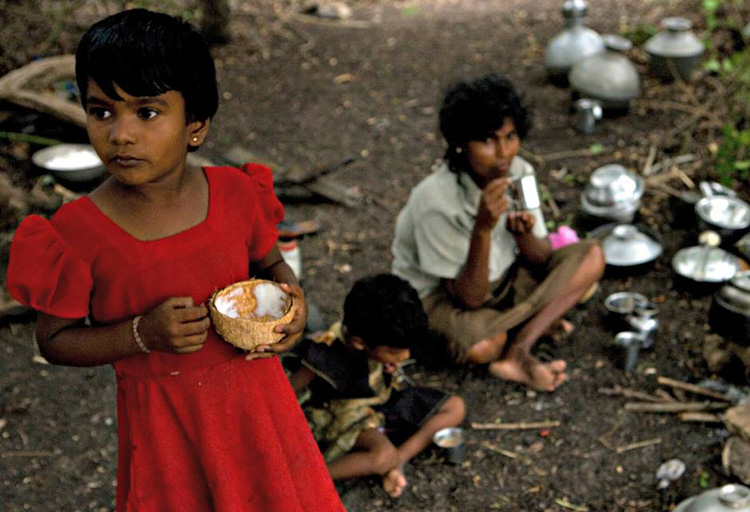
In an age of unprecedented global development, technological advancements, universal connectivity, and improvements in living standards in many areas of the world, it is a very dark irony that child food poverty remains a pressing issue. UNICEF defines child food poverty as children’s inability to access and consume a nutritious and diverse diet in early childhood. Despite the planet Earth’s undisputed capacity to produce enough food to nourish everyone, millions of children still go hungry each day. We desperately need to explore the multifaceted deleterious effects of child food poverty, on physical health, cognitive development, emotional well-being, and societal impacts and then try to formulate a road map to alleviate its deleterious effects.
Every day, right across the world, millions of parents and families are struggling to provide nutritious and diverse foods that young children desperately need to reach their full potential. Growing inequities, conflict, and climate crises, combined with rising food prices, the overabundance of unhealthy foods, harmful food marketing strategies and poor child-feeding practices, are condemning millions of children to child food poverty.
In a communique dated 06th June 2024, UNICEF reports that globally, 1 in 4 children; approximately 181 million under the age of five, live in severe child food poverty, defined as consuming at most, two of eight food groups in early childhood. These children are up to 50 per cent more likely to suffer from life-threatening malnutrition. Child Food Poverty: Nutrition Deprivation in Early Childhood – the third issue of UNICEF’s flagship Child Nutrition Report – highlights that millions of young children are unable to access and consume the nutritious and diverse diets that are essential for their growth and development in early childhood and beyond.
It is highlighted in the report that four out of five children experiencing severe child food poverty are fed only breastmilk or just some other milk and/or a starchy staple, such as maize, rice or wheat. Less than 10 per cent of these children are fed fruits and vegetables and less than 5 per cent are fed nutrient-dense foods such as eggs, fish, poultry, or meat. These are horrendous statistics that should pull at the heartstrings of the discerning populace of this world.
The report also identifies the drivers of child food poverty. Strikingly, though 46 per cent of all cases of severe child food poverty are among poor households where income poverty is likely to be a major driver, 54 per cent live in relatively wealthier households, among whom poor food environments and feeding practices are the main drivers of food poverty in early childhood.
One of the most immediate and visible effects of child food poverty is its detrimental impact on physical health. Malnutrition, which can result from both insufficient calorie intake and lack of essential nutrients, is a prevalent consequence. Chronic undernourishment during formative years leads to stunted growth, weakened immune systems, and increased susceptibility to infections and diseases. Children who do not receive adequate nutrition are more likely to suffer from conditions such as anaemia, rickets, and developmental delays.
Moreover, the lack of proper nutrition can have long-term health consequences. Malnourished children are at a higher risk of developing chronic illnesses such as heart disease, diabetes, and obesity later in life. The paradox of child food poverty is that it can lead to both undernutrition and overnutrition, with children in food-insecure households often consuming calorie-dense but nutrient-poor foods due to economic constraints. This dietary pattern increases the risk of obesity, creating a vicious cycle of poor health outcomes.
The impacts of child food poverty extend beyond physical health, severely affecting cognitive development and educational attainment. Adequate nutrition is crucial for brain development, particularly in the early years of life. Malnutrition can impair cognitive functions such as attention, memory, and problem-solving skills. Studies have consistently shown that malnourished children perform worse academically compared to their well-nourished peers. Inadequate nutrition during early childhood can lead to reduced school readiness and lower IQ scores. These children often struggle to concentrate in school, miss more days due to illness, and have lower overall academic performance. This educational disadvantage perpetuates the cycle of poverty, as lower educational attainment reduces future employment opportunities and earning potential.
The emotional and psychological effects of child food poverty are profound and are often overlooked. Food insecurity creates a constant state of stress and anxiety for both children and their families. The uncertainty of not knowing when or where the next meal will come from can lead to feelings of helplessness and despair. Children in food-insecure households are more likely to experience behavioural problems, including hyperactivity, aggression, and withdrawal. The stigma associated with poverty and hunger can further exacerbate these emotional challenges. Children who experience food poverty may feel shame and embarrassment, leading to social isolation and reduced self-esteem. This psychological toll can have lasting effects, contributing to mental health issues such as depression and anxiety in adolescence and adulthood.
Child food poverty also perpetuates cycles of poverty and inequality. Children who grow up in food-insecure households are more likely to remain in poverty as adults, continuing the intergenerational transmission of disadvantage. This cycle of poverty exacerbates social disparities, contributing to increased crime rates, reduced social cohesion, and greater reliance on social welfare programmes. The repercussions of child food poverty ripple through society, creating economic and social challenges that affect everyone. The healthcare costs associated with treating malnutrition-related illnesses and chronic diseases are substantial. Additionally, the educational deficits linked to child food poverty result in a less skilled workforce, which hampers economic growth and productivity.
Addressing child food poverty requires a multi-faceted approach that tackles both immediate needs and underlying causes. Policy interventions are crucial in ensuring that all children have access to adequate nutrition. This can include expanding social safety nets, such as food assistance programmes and school meal initiatives, as well as targeted manoeuvres to reach more vulnerable families. Ensuring that these programmes are adequately funded and effectively implemented is essential for their success.
In addition to direct food assistance, broader economic and social policies are needed to address the root causes of poverty. This includes efforts to increase household incomes through living wage policies, job training programs, and economic development initiatives. Supporting families with affordable childcare, healthcare, and housing can also alleviate some of the financial pressures that contribute to food insecurity.
Community-based initiatives play a vital role in combating child food poverty. Local food banks, community gardens, and nutrition education programmes can help provide immediate relief and promote long-term food security. Collaborative efforts between government, non-profits, and the private sector are necessary to create sustainable solutions.
Child food poverty is a profound and inescapable issue with far-reaching consequences. Its deleterious effects on physical health, cognitive development, emotional well-being, and societal stability underscore the urgent need for comprehensive action. As we strive for a more equitable and just world, addressing child food poverty must be a priority. By ensuring that all children have access to adequate nutrition, we can lay the foundation for a healthier, more prosperous future for individuals and society as a whole. The fight against child food poverty is not just a moral imperative but an investment in our collective future. Healthy, well-nourished children are more likely to grow into productive, contributing members of society. The benefits of addressing this issue extend beyond individual well-being, enhancing economic stability and social harmony. It is incumbent upon us all to recognize and act upon the understanding that every child deserves the right to adequate nutrition and the opportunity to thrive.
Despite all of these existent challenges, it is very definitely possible to end child food poverty. The world needs targeted interventions to transform food, health, and social protection systems, and also take steps to strengthen data systems to track progress in reducing child food poverty. All these manoeuvres must comprise a concerted effort towards making nutritious and diverse diets accessible and affordable to all. We need to call for child food poverty reduction to be recognized as a metric of success towards achieving global and national nutrition and development goals.
Material from UNICEF reports and AI assistance are acknowledged.

By Dr Upul Wijayawardhana
The colossal failure of not a single opinion poll predicting accurately the result of the Indian parliamentary election, the greatest exercise in democracy in the world, raises the question whether the importance of opinion polls is vastly exaggerated. During elections two types of opinion polls are conducted; one based on intentions to vote, published during or before the campaign, often being not very accurate as these are subject to many variables but exit polls, done after the voting where a sample tally of how the voters actually voted, are mostly accurate. However, of the 15 exit polls published soon after all the votes were cast in the massive Indian election, 13 vastly overpredicted the number of seats Modi’s BJP led coalition NDA would obtain, some giving a figure as high as 400, the number Modi claimed he is aiming for. The other two polls grossly underestimated predicting a hung parliament. The actual result is that NDA passed the threshold of 272 comfortably, there being no landslide. BJP by itself was not able to cross the threshold, a significant setback for an overconfident Mody! Whether this would result in less excesses on the part of Modi, like Muslim-bashing, remains to be seen. Anyway, the statement issued by BJP that they would be investigating the reasons for failure rather than blaming the process speaks very highly of the maturity of the democratic process in India.
I was intrigued by this failure of opinion polls as this differs dramatically from opinion polls in the UK. I never failed to watch ‘Election night specials’ on BBC; as the Big Ben strikes ‘ten’ (In the UK polls close at 10pm} the anchor comes out with “Exit polls predict that …” and the actual outcome is often almost as predicted. However, many a time opinion polls conducted during the campaign have got the predictions wrong. There are many explanations for this.
An opinion poll is defined as a research survey of public opinion from a particular sample, the origin of which can be traced back to the 1824 US presidential election, when two local newspapers in North Carolina and Delaware predicted the victory of Andrew Jackson but the sample was local. First national survey was done in 1916 by the magazine, Literary Digest, partly for circulation-raising, by mailing millions of postcards and counting the returns. Of course, this was not very scientific though it accurately predicted the election of Woodrow Wilson.
Since then, opinion polls have grown in extent and complexity with scientific methodology improving the outcome of predictions not only in elections but also in market research. As a result, some of these organisations have become big businesses. For instance, YouGov, an internet-based organisation co-founded by the Iraqi-born British politician Nadim Zahawi, based in London had a revenue of 258 million GBP in 2023.
In Sri Lanka, opinion polls seem to be conducted by only one organisation which, by itself, is a disadvantage, as pooled data from surveys conducted by many are more likely to reflect the true situation. Irrespective of the degree of accuracy, politicians seem to be dependent on the available data which lend explanations to the behaviour of some.
The Institute for Health Policy’s (IHP) Sri Lanka Opinion Tracker Survey has been tracking the voting intentions for the likely candidates for the Presidential election. At one stage the NPP/JVP leader AKD was getting a figure over 50%. This together with some degree of international acceptance made the JVP behave as if they are already in power, leading to some incidents where their true colour was showing.
The comments made by a prominent member of the JVP who claimed that the JVP killed only the riff-raff, raised many questions, in addition to being a total insult to many innocents killed by them including my uncle. Do they have the authority to do so? Do extra-judicial killings continue to be JVP policy? Do they consider anyone who disagrees with them riff-raff? Will they kill them simply because they do not comply like one of my admired teachers, Dr Gladys Jayawardena who was considered riff-raff because she, as the Chairman of the State Pharmaceutical Corporation, arranged to buy drugs cheaper from India? Is it not the height of hypocrisy that AKD is now boasting of his ties to India?
Another big-wig comes with the grand idea of devolving law and order to village level. As stated very strongly, in the editorial “Pledges and reality” (The Island, 20 May) is this what they intend to do: Have JVP kangaroo-courts!
Perhaps, as a result of these incidents AKD’s ratings has dropped to 39%, according to the IHP survey done in April, and Sajith Premadasa’s ratings have increased gradually to match that. Whilst they are level pegging Ranil is far behind at 13%. Is this the reason why Ranil is getting his acolytes to propagate the idea that the best for the country is to extend his tenure by a referendum? He forced the postponement of Local Governments elections by refusing to release funds but he cannot do so for the presidential election for constitutional reasons. He is now looking for loopholes. Has he considered the distinct possibility that the referendum to extend the life of the presidency and the parliament if lost, would double the expenditure?
Unfortunately, this has been an exercise in futility and it would not be surprising if the next survey shows Ranil’s chances dropping even further! Perhaps, the best option available to Ranil is to retire gracefully, taking credit for steadying the economy and saving the country from an anarchic invasion of the parliament, rather than to leave politics in disgrace by coming third in the presidential election. Unless, of course, he is convinced that opinion polls do not matter and what matters is the ballots in the box!

By Prof. Kirthi Tennakone
ktenna@yahoo.co.uk
Thoughtfulness is the quality of being conscious of issues that arise and considering action while seeking explanations. It facilitates finding solutions to problems and judging experiences.
Almost all human accomplishments are consequences of thoughtfulness.
Can you perform day-to-day work efficiently and effectively without being thoughtful? Obviously, no. Are there any major advancements attained without thought and contemplation? Not a single example!
Science and technology, art, music and literary compositions and religion stand conspicuously as products of thought.
Thought could have sinister motives and the only way to eliminate them is through thought itself. Thought could distinguish right from wrong.
Empathy, love, amusement, and expression of sorrow are reflections of thought.
Thought relieves worries by understanding or taking decisive action.
Despite the universal virtue of thoughtfulness, some advocate an idea termed mindfulness, claiming the benefits of nurturing this quality to shape mental wellbeing. The concept is defined as focusing attention to the present moment without judgment. A way of forgetting the worries and calming the mind – a form of meditation. A definition coined in the West to decouple the concept from religion. The attitude could have a temporary advantage as a method of softening negative feelings such as sorrow and anger. However, no man or woman can afford to be non-judgmental all the time. It is incompatible with indispensable thoughtfulness! What is the advantage of diverting attention to one thing without discernment during a few tens of minute’s meditation? The instructors of mindfulness meditation tell you to focus attention on trivial things. Whereas in thoughtfulness, you concentrate the mind on challenging issues. Sometimes arriving at groundbreaking scientific discoveries, solution of mathematical problems or the creation of masterpieces in engineering, art, or literature.
The concept of meditation and mindfulness originated in ancient India around 1000 BCE. Vedic ascetics believed the practice would lead to supernatural powers enabling disclosure of the truth. Failing to meet the said aspiration, notwithstanding so many stories in scripture, is discernable. Otherwise, the world would have been awakened to advancement by ancient Indians before the Greeks. The latter culture emphasized thoughtfulness!
In India, Buddha was the first to deviate from the Vedic philosophy. His teachers, Alara Kalama and Uddaka Ramaputra, were adherents of meditation. Unconvinced of their approach, Buddha concluded a thoughtful analysis of the actualities of life should be the path to realisation. However, in an environment dominated by Vedic tradition, meditation residually persisted when Buddha’s teachings transformed into a religion.
In the early 1970s, a few in the West picked up meditation and mindfulness. We Easterners, who criticize Western ideas all the time, got exalted after seeing something Eastern accepted in the Western circles. Thereafter, Easterners took up the subject more seriously, in the spirit of its definition in the West.
Today, mindfulness has become a marketable commodity – a thriving business spreading worldwide, fueled largely by advertising. There are practice centres, lessons onsite and online, and apps for purchase. Articles written by gurus of the field appear on the web.
What attracts people to mindfulness programmes? Many assume them being stressed and depressed needs to improve their mental capacity. In most instances, these are minor complaints and for understandable reasons, they do not seek mainstream medical interventions but go for exaggeratedly advertised alternatives. Mainstream medical treatments are based on rigorous science and spell out both the pros and cons of the procedure, avoiding overstatement. Whereas the alternative sector makes unsubstantiated claims about the efficacy and effectiveness of the treatment.
Advocates of mindfulness claim the benefits of their prescriptions have been proven scientifically. There are reports (mostly in open-access journals which charge a fee for publication) indicating that authors have found positive aspects of mindfulness or identified reasons correlating the efficacy of such activities. However, they rarely meet standards normally required for unequivocal acceptance. The gold standard of scientific scrutiny is the statistically significant reproducibility of claims.
If a mindfulness guru claims his prescription of meditation cures hypertension, he must record the blood pressure of participants before and after completion of the activity and show the blood pressure of a large percentage has stably dropped and repeat the experiment with different clients. He must also conduct sessions where he adopts another prescription (a placebo) under the same conditions and compares the results. This is not enough, he must request someone else to conduct sessions following his prescription, to rule out the influence of the personality of the instructor.
The laity unaware of the above rigid requirements, accede to purported claims of mindfulness proponents.
A few years ago, an article published and widely cited stated that the practice of mindfulness increases the gray matter density of the brain. A more recent study found there is no such correlation. Popular expositions on the subject do not refer to the latter report. Most mindfulness research published seems to have been conducted intending to prove the benefits of the practice. The hard science demands doing the opposite as well-experiments carried out intending to disprove the claims. You need to be skeptical until things are firmly established.
Despite many efforts diverted to disprove Einstein’s General Theory of Relativity, no contradictions have been found in vain to date, strengthening the validity of the theory. Regarding mindfulness, as it stands, benefits can neither be proved nor disproved, to the gold standard of scientific scrutiny.
Some schools in foreign lands have accommodated mindfulness training programs hoping to develop the mental facility of students and Sri Lanka plans to follow. However, studies also reveal these exercises are ineffective or do more harm than good. Have we investigated this issue before imitation?
Should we force our children to focus attention on one single goal without judgment, even for a moment?
Why not allow young minds to roam wild in their deepest imagination and build castles in the air and encourage them to turn these fantasies into realities by nurturing their thoughtfulness?
Be more thoughtful than mindful?



US sports envoys to Lanka to champion youth development

Rahuman questions sudden cancellation of leave of CEB employees


