
Life style
A timeline of sexism in Olympics fashion


From floor-skimming skirts to skimpy bikini bottoms:
The sexualisation of women’s bodies has been evident throughout Olympics history
This week, Norway’s women’s beach handball team was fined £1,300 for wearing shorts instead of bikini bottoms during a European Championship match against Spain. The European Handball Federation (EHF), which handed down the fine, deemed their attire “improper clothing” which is “not according to the Athlete Uniform Regulations defined in the IHF beach handball rules of the game”.
The EHF has received widespread backlash for its decision. The team’s captain, Katinka Haltvik, told Norwegian broadcaster NRK that the rule is “embarrassing” while the country’s Handball Federation commended the women for “raising their voices and announcing enough is enough”.
There is a stark difference between what men and women are allowed to wear under the international handball rules. While men wear vest tops and shorts, women must wear bikini bottoms “with a close fit and cut on an upward angle towards the top of the leg”.
Although beach handball will not be played at the Olympics, women competing in beach volleyball will have to follow similar rules, with men being given the option to wear loose tank tops and shorts, while all four of the options for women are figure-hugging.
While the early days of the Olympics dictated that women must cover as much of their bodies as possible, as not to cause a distraction to men, the scale has since shifted to the opposite end of the spectrum, with outfits in recent years overtly sexualising women’s bodies.
As the Tokyo Olympics opening ceremony got underway Friday, we’ve compiled a timeline of occasions when women were confronted with sexism at the global sporting event, and whether, if at all, any improvements have been made.
1900: ‘Distracting’ female bodies
Women were allowed to participate in the Olympics for the first time in 1900, when the tournament took place in Paris, France. The 22 women made up just 2 per cent of all athletes and were only invited to compete in five sports: tennis, sailing, croquet, golf and horseback riding. The 997 men
David Goldblatt, author of The Games: A Global History of the Olympics, told Fast Company that personal correspondence between the organisers of the games showed that they were “revolted by the presence of women, even though they had to give in and allow them to participate”.
The main concern was that women’s bodies when playing sport would serve as a distraction to male athletes. In a bid to overcome this, women were forced to wear ankle-length dresses with long sleeves and high necks.
British tennis player Charlotte Cooper Sterry became the first female Olympics tennis champion that summer, winning both the singles and mixed doubles tennis competitions. 1908: Legs out, still modest
Almost a decade later, at the 1908 Olympics in London, women could now show the bottom half of their legs, but uniforms were still extremely modest.
Pictures of Danish gymnasts show them in bloomers, with full-sleeved, crew-neck blouses. The uniforms were a far cry from current regulations, which state that all athletes, both men and women, must wear form-fitting uniforms.
While women’s gymnastics teams attended the games, they were not actually allowed to compete.
Two men’s competitions took place, while women were invited to attend a women’s competitions took place, while women were invited to attend a non-competitive “display” event where they could display their skills. 1912-1932:
Women can swim
The 1912 Stockholm Olympics marked the first year that women were allowed to compete in swimming races.
At the time, women wore swimming costumes that resembled loose unitards, with thigh-length shorts and a tank top style upper body.
By the 1932 games in Los Angeles, US, costumes had become more streamlined and figure-fitting similar to the ones worn by athletes today.
In 2012, Ralph Lauren debuted its Team USA Olympics uniform for the London Games, which featured military-inspired berets and sailor-style neckties. While all members of the USA team wore similar outfits, ensembles at previous opening ceremonies, such as the 1964 Tokyo games, pointed to the wider struggle for women’s equality.
Men’s outfits were often inspired by the military because historically, many of the athletes were former army members, Goldblatt told Fast Company.
“Soldiers had a real advantage. Who else had time to practice to compete, without getting any compensation? So the men were often in these absurd blazers and hats, marching like they would in the army,” he said.
Women, on the other hand, were seen in a white co-ord and matching hat, resembling uniform worn by female air stewards. This disparity in outfits was telling, given that “women had to prove, over and over, that they were strong enough to compete in each event,” Goldblatt said.
The uniform was updated ahead of the London Olympics in 2012 when the International Volleyball Federation added three more options to reflect players’ religious or cultural beliefs.
It was the same year that Boris Johnson, who was mayor of London at the time, published a column in The Telegraph on “20 reasons to feel cheerful about the Olympics”.
One of his reasons was the “semi-naked women playing beach volleyball”, according to Mail Online. “They are glistening like wet otters and the water is plashing off the brims of the spectators’ sou’westers. The whole thing is magnificent and bonkers,” he wrote.
Under the updated rules, women may now wear either a two-piece bikini, a one-piece swimming costume, or shorts with either a T-shirt or tank top. However, the briefs must still be “on an upward angle towards the top of the leg” and both shorts and tops must be “form-fitting”.
British Paralympian Olivia Breen performing a long jump Charlotte Cooper Sterry became the first female Olympic tennis champion at the 1900 Olympics.



Institute of Hospitality Sri Lanka
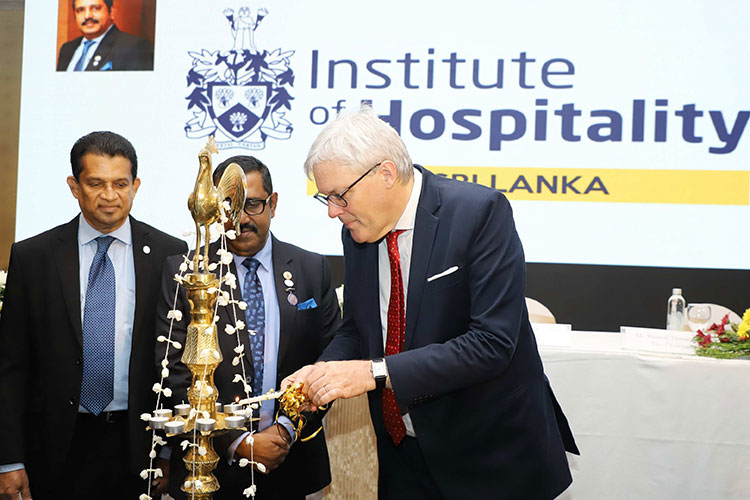
 The 32nd Annual General Meeting (AGM) of the UK-based Institute of Hospitality’s Sri Lanka Chapter was held recently at the Ramada Hotel Colombo,.The event provided an evening of camaraderie , reflection of the past and present achievements,setting new benchmarks for the future
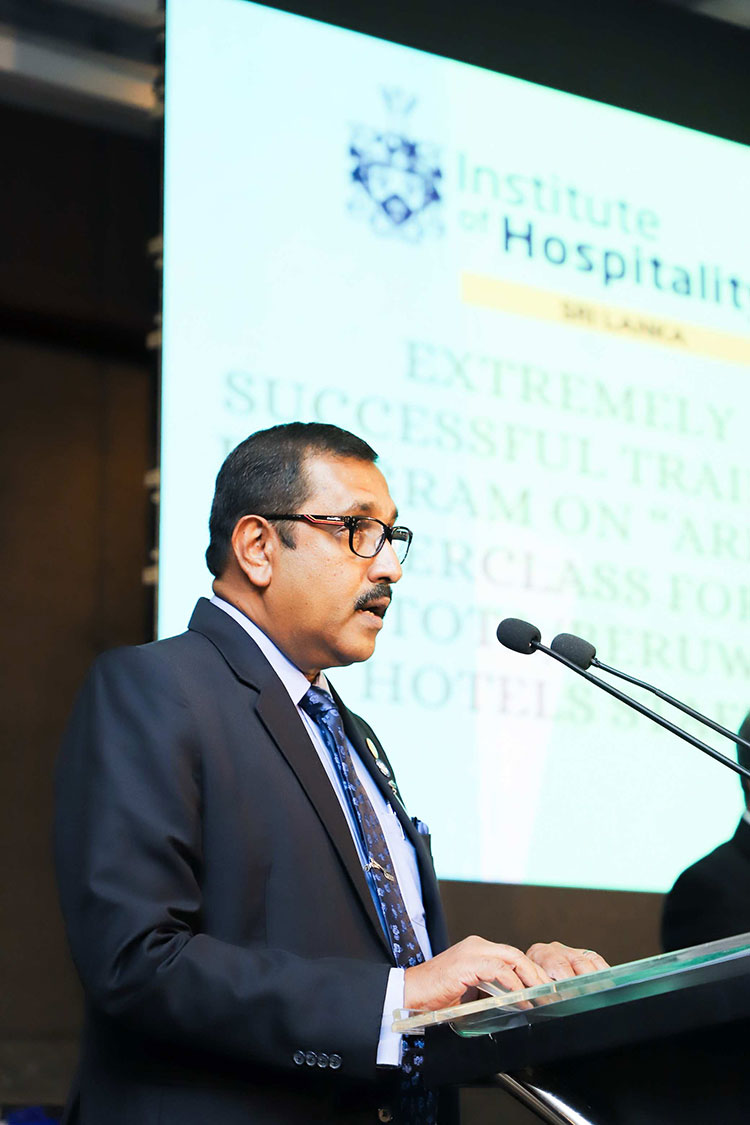
The AGM had the presence of two distinguished guests, the Chief Guest Opposition Leader Sajith Premadasa, and the Guest of Honour British High Commissioner to Sri Lanka, Andrew Patrick. Their inspiring speeches were lauded by all hoteliers who were present at the occasion
A special thanks was extended to Robert Richardson, CEO of the Institute of Hospitality UK, along with his team, sponsors, committee members, and all attendees for making the event memorable.
Dr. Harsha Jayasingh, Past President of the Institute of Hospitality (UK) Sri Lanka Chapter, emphasised the Institute’s longstanding history and the strength of its Sri Lankan branch. “The Institute of Hospitality (IH) UK has a history of 86 years, and we are proud to be the Sri Lanka Branch. IH Sri Lanka is much stronger now with many members from all areas of the hospitality industry,” he stated.
Dr. Jayasingh highlighted the significant role of tourism in Sri Lanka’s economy,. He said tourism it is the third-largest source of revenue for the country. “Tourism accounts for about 13.3% of total foreign exchange earnings and employs 450,000 people directly and indirectly. The hospitality industry in this island of pearl holds tremendous potential for economic growth, job creations, and cultural exchange,” he added.
He also pointed out more women should be attracted to the industry and advocated for the use of technology in hospitality sector to attract the younger generation.
The newly appointed Chairman Ramesh Dassanayake spoke about the challenges faced by the industry, including the reluctance of youth to join the sector. . Dassanayake expressed concerns over the migration of staff between hotels and the overall ‘brain drain’ in the sector. ” We must maintain high standards in the hotel We must try to attract tourists to Sri Lanka, we must have with many facilities Hence, hotel schools and other professional institutions involved in skills development mustincrease their intakes,” he pointed out.
Chief Guest Sajith Premadasa emphasised the importance of eco tourism and said “We need to have an environmental policy related to tourism in place,” . .
The 32nd AGM of the Institute of Hospitality UK, Sri Lanka Chapter, was a testament to the strength and potential of Sri Lanka’s hospitality industry. The insights and commitments shared during the event set a new benchmark for the future.(ZC)



Pix by Thushara Attapathu
Life style
He recognizes human identity beyond boundaries of gender, race, nationality and religion.

Visit of Sri Gurudev to Sri Lanka
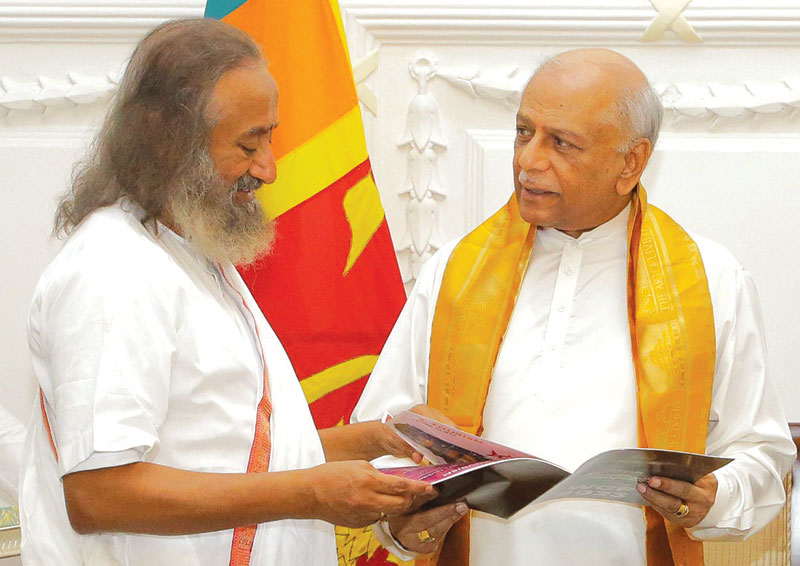
Humanitarian, spiritual leader and Global Ambassador of Peace Gurudev Sri Sri Ravi Shankar (Sri Gurudev) was in Sri Lanka on a three day tour on the invitation of the Prime Minister of Sri Lanka Dinesh Gunewardene. Gurudev who inspired a wave of volunteerism and service to moot one of the largest volunteer-based organisations in the world – The Art of Living – visited the various projects under the aegis of the foundation and launched twelve vocational and technical centers around the island. He was accompanied by thousands of followers from Sri Lanka and around the world.
Gurudev who visited Sri Lanka for the sixth time also had a first day cover launched in honour of his visit. He is a strong proponent of spreading happiness, using the unique Sudarshan Kriya, yoga, meditation and practical wisdom to unite people, empower individuals and transform communities. His programmes provide techniques and tools to live a deeper, more joyous life, while his non-profit organisations recognize the human identity beyond the boundaries of gender, race, nationality and religion.
The Art of Living which has more than 30,000 teachers and over one million volunteers across 180 countries has touched in excess of five hundred million people around the world. CNN called it “Life Changing” and The Washington Post headlined it, “Fresh air to millions”.
In Trincomalee, Gurudev met with war victims and had a heartwarming engagement with the children from the children’s homes run by the Foundation. He also visited the Koneswara Temple in Trincomalee and graced the Kumbhabhishekam at Seetha ecogPnize the human identity beyond the boundaries of gender, race, nationality and religion. Amman temple at Nuwara Eliya. He held discussions with the trustees on the progress of the foundation’s social service projects, while also holding a special event – Ekamuthuwa – attended by a large number of dignitaries and his devotees from around the world.
His time with the Prime Minister was spent discussing the prospects of unity in diversity and uniting Sri Lanka by adding happiness into the formula of living. In addition he had discussions with the Speaker of the Parliament of Sri Lanka Mahinda Yapa Abeywardena, prominent business stewards and civil society leaders.
by Zanita Careem
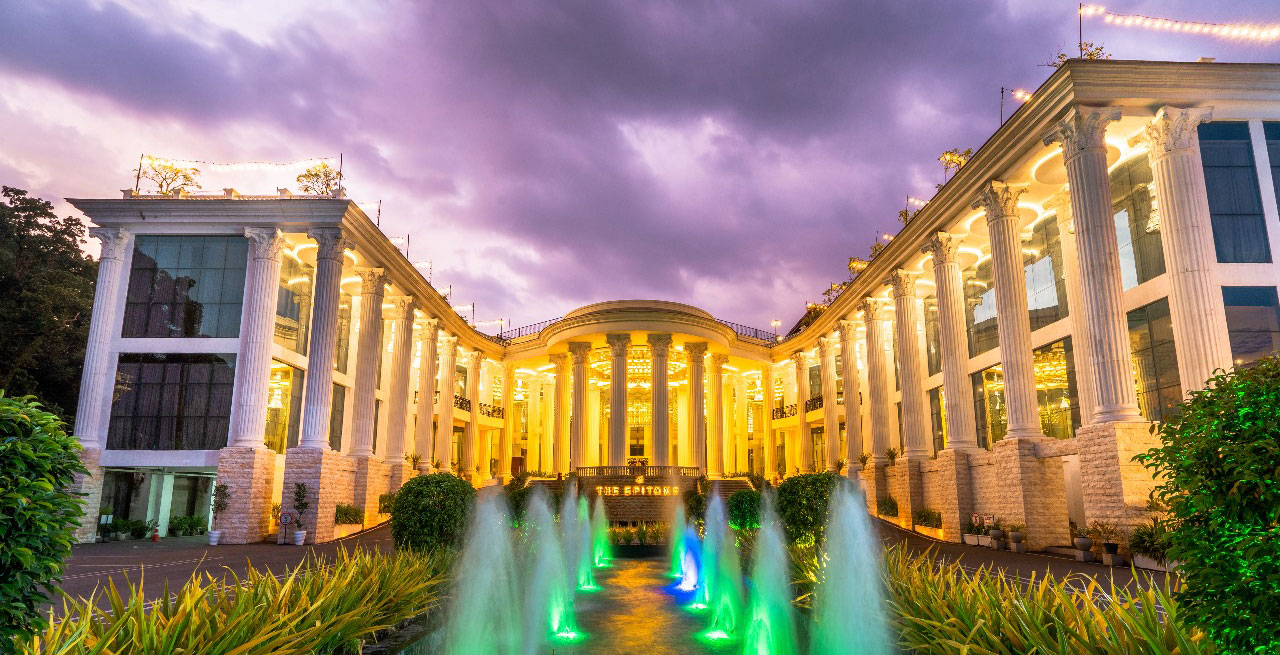
Envison your dream wedding day come to life at the Epitome Hotel, a prestigious city hotel in Kurunegala offering an unrivalled luxury rendors experience for weddings.
The venue is designed to embody opulence and luxury from all quarters for a spectacular wedding in kurunegala,Thier ballroom is the largest banquet facility in Sri Lanka It can be divided into six luxurious pillarless wedding halls on the ground floor and 25pax smaller banquet halls.
It can be easily named as a five star heaven in the heart of the city contributing to a myriad of immense experiences tailored to inspire and delight wedding experiences.
From opulent décor set up to exquisite table decor, lavish food, every detail is meticulously curated to spark your imagination and ignite creativity for a perfect wedding. The previous prestigious wedding shows season one and season two attracted large crowds
were unique events which gave the wedding vendors and potential clients had an opportunity to connect and interact with each other. Beyond being a showcase it was a chance for the wedding vendors to unite and contribute to the vibrancy of the wedding industry. The wedding show covered all area of the bridal industry providing a comprehensive variety of bridal supplies from Sri lanka and became the most popular bridal exhibitions in Kurunegala.This bridal exhibitions allowed brides and grooms to experience first hand the products and services available from suppliers in Sri Lanka
These wedding shows held at The Epitome created a benchmark and gave an opportunity for vendors to create connections to the utmost satisfaction said Harshan Lakshita Executive Director. of the magnificent Hotel
Our wedding shows featured experts and professionals in every field‘ It covered all areas of the bridal industry provided a comprehensive variety of bridal supplies from Sri lanka and became most popular bridal exhibition in this region.We are always open to everyone to join us at our wedding shows in the future. It is an opportunity to discover the incredible talent within our local wedding and bridal vendors to make meaningful relationships and plan thier special day at our breathtaking hotel The Epitome said General Manager Kavinda Caldera
The Epitome Hotel’s bridal show which will be held end of June will buzz with great ideas,advice and inspiration for all those who plan thier dream wedding
…….
The Hotel Epitome’s Wedding Season 3 will marked excellence, celebration and inspiration for those in the wedding industry. The exhibition halls will resonate with ideas on exquisite bridal wear to decor, florists , photography etc and showshowcase the rich tapestry of talent within the local wedding industry. .





US sports envoys to Lanka to champion youth development

Rahuman questions sudden cancellation of leave of CEB employees


