Life style
A style revolution

The Abaya or the hijab is a simple lose over garment, essentially a dress won by women in certain parts of the Muslim world. At least this is how, the internet defines the Abaya. But for Lamya Abedeen who specialise in chic wearable and fashionable Abaya, the dress means much more. Lamya, a popular designer, from Emirates is someone who has customised or changed the way the Arab World perceive an abaya.
Her hijabs or abayas are not all black, her designs have seen reflections of a unique form of traditional wear, like the Indian saree, the Japanese Kimono and fashionable pantaloons. She is one among the first woman and designer to have been recognised internationally. Perhaps, it is her bold take on her designs that caught international attentio, who would have dreamt of fur on a brightly coloured belt on an abaya? She also adorned her abayas with Polko dots, frills and coloured accessories
Yoland Aluwihare Holms,a batik designer of international repute,created abayas in Batik. This was her first attempt she created for our family wedding. Her designs were refreshing, versatile and elegant, a blend of fashion and modesty. However, her abayas were in a range of shades and styles in silk fabrics and it soon became a fashion statement in Sri Lanka.
In previous years, the abayas were typical black says Yoland. It’s changed dramatically, with many colours and shades coming in.
by Zanita Careem
In 2013 Nazma Khan who immigrated to the United States from Bangladesh at the age of 11 started World Hijab Day. Growing up in New York, Khan experienced discrimination because of her headscarf. But Nazma argued that the hijab can be a positive assertion of an identity. Muslim scholars have disagreements about whether the religious texts explicitly commands women to wear the veil. Sooner or laterin many Arab countries, the veil became a symbol of national identity.

Nike
, the well know US sportswear company has introduced sports hijabs Now hijabs or abayas begin to appear more in the Mainstream Western Industry. Halima Aden, a top model graced the cover of the Allure magazine July issue sporting a bright red Hilfiger Collection hoodiewith the Nike label peeking underneaths. This Somalian American beauty born in a Kenyan refugee camp is breaking barriers
She also adorned the Vogue Arabia, Fashion Book making headlines in New York and Milan fashion weeks. She is a trail blazer and a glass ceiling breaker. Halima is now one of the most popular Muslim models now, as a result,the Nike company unveiled their plans to launch the Nike Pro Hijab for 2018. Voices from a myriad of talented Muslims female athletes couldn’t be ignored. More recently American Eagle debuted the Denim Hijabs with Halima Aden rocking the item as part of its newest jeans collection.
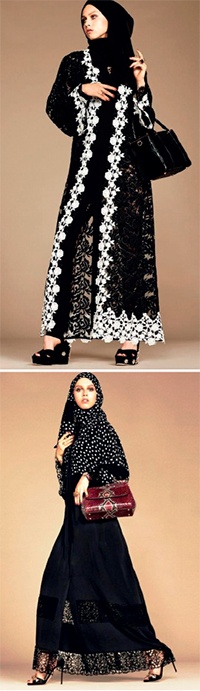
Recently, In high fashion couture, Dolce and Gabbana launched a collection of Hijab Abayas last year.
Halima in an interview to Allure magazine told “I have much more to offer than any physical appearances, and a hijab protects one against such statements as” You’ve too skiny. You are too fat, look at your hips Indeed Hijab shields me from all such comments.
The hijab or abayas have always made a fashion statement in Muslim majority societies from Jakarta Fashion week to Dubai based fashion bloggers, hijab wearing women are now heard and seen in the fashion industry.
The hijab and abayas are gaining prominence onmany international runaways runaways. Are Abayas well accepted in Sri Lanka..
Most of the teenagers and young women I spoke to in Sri Lanka said. ‘When I first wore it, it wasn’t considered trendy. The rebellious adolescence in me refused and I left home every morning with an elaborate fuchsia or a leopard print piece of fabric wrapped snugly around my head. Another international muslim student ” said ” when I started iwas experimental I pushed boundaries and made the garment more stylish’ What is a a hijab and what is veil? They are perhaps the most polarizing garments of our time. Two metres in length an inconspicuous piece of fabric which has margins garnered international reactions ranging from mandatory in some countries to an outright ban in other.
Now the the sudden surge of hijabs and abayas wearing models on the ramp has made this garment a fashion statement. Some years age, it was unheard of for a modelling agency to line up a abaya model on the ramp. This year alone, abaya, models have walked the ramp for some of the big ,names in fashion ,Should the abayas, hijabs or the veil ever be considered fashionable ? The answer in yes echoed some of the top designers.
Moving to a fashion world is not limited to age, gender nationality and religion. Recently fashion companies have shown that they lend to use hijab in their designs and designs.
In 2017 London was presented with a live show entitled “Muslim lifestyle, witnessing the first week of hjiab fashion, and Halima Aden, showcased some of the contemporary abayas t for the holy month of Ramadan.
This is the 21st century — a time when conventional shackles are being broken off and liberation is becoming a key objective of welfare in societies across the globe. The fashion industry is said to be a platform for putting aside conservative outlook and viewing the world from a much wider and better angle.
Muslim communities are often categorised as ultra-conventional societies — but, let me tell you that theycannot be singled out.. Every community has its own share of orthodoxy. Anyway, many designers have emerged and transformed the fashion industry on an international scale. And t oday, there are many Muslim fashion designers who have become harbingers of good fashion.
Indira Cancer Trust
Ramani Fernando Salons partnered with Indira Cancer Trust and Lalith Dharmawardana to initate the first Hair donation campaign, it is not Cancer Care Trust as reported inthe article last week.