Midweek Review
A group of university Students who made history:

A Nostalgic Note on that Distant November Day
BY Liyanage Amarakeerthi
University of Peradeniya
November has already arrived, and COVID-19 has restricted our movements at campus. I am in the middle of a research project related to 1956. During the months before November that year, University of Peradeniya was not under the attack of any virus but it was busy getting ready for a landmark event. Those who were in the midst of it perhaps did not know that they were creating history. They were attending to the routine activities of the campus, which was a vibrant place anyway. E.F.C. Ludowyk in English, Raplh Pieris in Sociology, Senarath Paranavithana in Archaeology, D. E. Hettiaracchi in Sinhala, K. Kanapathipillai in Tamil, K. N. Jayathilake in philosophy, among others, were renowned scholars and they were making Peradeniya a world class university. That was in the Humanities. Other faculties were equally vibrant, too.
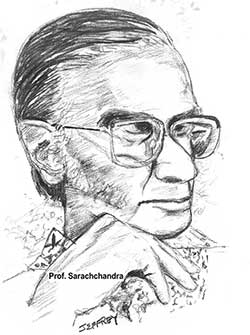
At the faculty of Arts Dr. Saracchandara, who had just returned from a year-long stay in Japan, was busy directing a play in the months leading to that November. Siri Gunasinghe, Gunadasa Amarasekara and some others, who were later to become major literary and intellectual figures in their generation, were eagerly helping the Doctor, keeping him company nearly always.
A set of brilliant young students were attending to everything related to producing the play. Many of them were the members of Drama Soc, and had some previous experience of reading or producing plays with professor Ludowyk. As Dr. Ranjini Obeyesekare, recently told me, Professor Ludowyk used to read aloud plays with students at his office. “If you are free, come and let’s read a play,” he would say. Students would happily oblige. Those days, English students interacted with other students. And ‘other students’ could interact with their cohorts in English. There was no or little gap among students in different subjects.
Inherit the Wind

Years later, Indrani Wijesinghe reminisces:
“After the annual vacation, we returned to the campus, for the second academic year. There was good news awaiting us that Dr. Sarachchandra was going to produce a drama and anyone interested could meet him at an audition. Once inside the audition room I was at complete ease, when I discovered that all who had gathered there were in the same boat- Trelicia, Hemamali, Trixie, Swarna, Lionel, Pastor, etc.” These students, along with so many others, did not know that they were making themselves immortal by being a part of that group.
Corona and Maname


“So one damp and drizzly Saturday afternoon, Piyaseeli Sirisena and I walked up Sangamitta Hill, past Sangamitta Hall, to the secluded B Bungalow that was the Sarachchandra residence. It is funny how little details retained in your memory suddenly spring to mind when you try to reminisce. My most vivid image of that rather hesitant walk up to the Sarachchandra door is of a rain-drenched Thumbergia creeper, its few remaining blossoms, beaten down but bravely glistening with raindrops trembling upon the velvety petals like dew. Even the drizzle outside, the door was open. Shaking the raindrops off our hair and clothes, we entered a world of chaos and buzzing activity ….”
Hemamali and Trilicia both played the role of the Princess Maname. After a few years, however, Hemamali was taken away from the world of Maname by the makeup artist of the very play, Siri Gunasinghe. Looking at photographs of that celebrated event in 1956, I can imagine Dr. Gunasinghe putting makeup on Hemamali’s face and looking at her beautiful big eyes. Perhaps, the already trend-setting poet had just enough time to utter a line of ‘free verse’ to her. Now the poet is no more but Hemamali is still translating Sinhala literature into English.
Drama Soc Crew
In addition to those students in the Maname cast, some other students were instrumental in getting the play on stage on November 3rd, 1956. One of them was W. Arthur Silva. Professor H. L. Seneviratane believes that it was Arthur’s perseverance that pushed the production forward. Although he had finished writing the script, Sarachchandra was not all that enthusiastic about producing the play. He did not receive the expected support from the university, and he did not think he would be able to find actors with required skills from among students. Arthur ran about and got things moving. Saracchandra himself came out of his semi-hibernation, and the rest is history.
During these Corona days, living at a beautiful university park with no students, I want to pay my tribute to that group of students who joined with one of their beloved teachers to give us a classic work of drama. In the process, they made their teacher immortal as well. Shyaman Jayasinghe, Ben Sirimanne, Trilicia Abeykoon, Hemamali Gunasekara, Edmand Wijesinghe, Lionel Fernando, Piyathilaka Weerasinghe, M. B. Adikaram, D. B. Herath, Karunadasa Gunarathne, Trixie de Silva, Indrani Pieris, Swarna Mahipala, Pastor Pieris, Nanda Abeywikrama, P. W. Sathischandra, Daya Jayasundara, Ramya Thumpela, H. L. Seneviratne, Kithsiri Amaratunghe, S. Edirisinghe, L. R. Mudalihami were students in the Maname original crew. In addition to them, office bearers of the Drama Society also contributed to make this historic achievement. K. D. A. Perera, Wimal Nawagamuwa, Rathnasuriya Hemapala, Sumana Gunarathne, Amaradasa Gunawardhane, and Indrani Pieris tirelessly worked for the first Maname production. Showing the cosmopolitan nature of Peradeniya those days, Peter La Sha, an American student residing at the campus, contributed with the management of the stage lights!
Maname, the play has now become a classic, and it is part of everyone’s cultural heritage. For some, it is part of what makes us Sinhala. For some the play signifies a revival of Sinhala art and culture. For me, it is a great artistic expression about the value of female voice and agency in postcolonial Sri Lankan society. ‘Without opportunity to intervene in making crucial ethical judgments, women in independent Sri Lanka are not really free’, the play seems to say among other things. And being a true work of art, it is open to multiple interpretations.
Being at the same university that produced the play, reflecting on the meaning of a university without student, I wanted to pay this tribute to that dynamic group of students who worked to give us a great play, on that distant November day.
(To write this essay, I consulted Home and the World: Essays in Honor of Sarath Amunugama. Ed. Varuni and Ramanika Amunugama and Maname in Retrospect. Ed. K.N.O. Dharmadasa and P.B. Galahitiyawa)