
Life style
A fish that sparked a national obsession

Bacalhau (salt cod) is a deep part of Portugal’s culinary identity. But the fish is found far from the country’s shores, so how did this love affair come to be and continue today?
On a cold winter’s evening in Portugal, it might come to your table com natas – fresh from the oven and bubbling in cream – layered between fried potato and sliced onion and spiced with nutmeg. Weaving through Lisbon’s steep and cobbled streets, it wouldn’t take long before you found someone serving it as a light and crispy fritter, dusted with a little coarse salt and dished up with a pot of pungent aioli. You could buy it shaped as mouth-sized fried potato dumplings pastéis style, flavoured with parsley and garlic, for a walk along the banks of Porto’s Douro River. You might even come across it as part of a hearty southern bread soup, topped with coriander and a poached egg.
That’s because bacalhau – or salt cod – which sits at the heart of all these dishes, runs deep through Portugal’s culinary identity, with the country consuming 20% of the world’s supply. In fact, so central to Portuguese hearts (and stomachs) is this ingredient, that the saying goes “there are 365 ways to prepare salted cod, one for each day of the year”.
But for a fish that is found only in the icy depths of the North Atlantic Ocean – far from Portugal’s shores – the country’s love affair with salt cod is a puzzling one. How exactly did it end up on Portuguese plates? The answer is wrapped up in more than 500 years of intriguing history.
Take a trip today to most restaurants, markets and cafés across the country and you’ll find salt cod in one form or another. It even plays a starring role at hip Lisbon restaurant Alma, which earned its first Michelin star within nine months of opening and added a second star soon after.
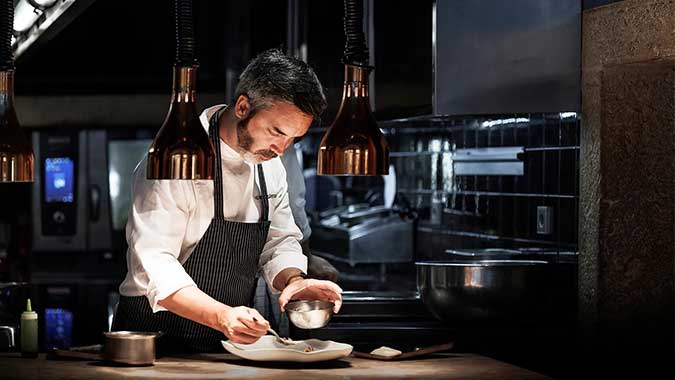
“It’s funny, sometimes Michelin star chefs or high-end cuisine chefs don’t value salted cod because they don’t see it [fitting] within this type of gastronomy,” said Alma executive chef and owner Henrique Sá Pessoa, of the typically humble comfort food. “But I always have and always will have cod on my menus.”
He assures visitors that a salt cod creation will also feature on the menu of his new restaurant, JOIA, which will open in London later this year. But though bacalhau is a traditional and well-explored ingredient for many natives across the country, Pessoa is still finding ways to push Portugal’s love for it into new territory.
Case in point: his “most Instagrammable” creation, Cobblestreet Cod, named for its likeness to the centuries-old streets outside Alma’s front door in the historical Chiado district. It’s a modern twist on an old peasant dish and one of the country’s most beloved salt cod recipes – bacalhau à bras – where typically shredded salt cod, fried matchstick potatoes and onions are all bound together with scrambled egg and garnished with black olives.
“I knew I couldn’t call it bacalhau à bras because the Portuguese are quite traditional, and people sometimes get offended when you play around with classics,” he explained. “I wanted to get inspired by this dish but elevate it presentation-wise, texture-wise and detail-wise into something more delicate and elaborate.”
The outcome is far removed from the version you’d find on family dinner tables. A creamy mixture of salt cod, fried potato, egg and onion arrives at the table hidden under a veil of wafer-thin slices of cod that have been coated in a black olive tapenade to create a cobbled visual. A final surprise comes when you break into the cobbled dome and spilt a confit egg yolk that has been resting in the middle of the salted cod mixture.
“I wanted to dislocate all these elements of the dish and try and make it as perfect as possible. When we launched it in the restaurant, it was an instant success. It was especially popular on social media because visually it is quite striking,” said Pessoa.
He assures visitors that a salt cod creation will also feature on the menu of his new restaurant, JOIA, which will open in London later this year. But though bacalhau is a traditional and well-explored ingredient for many natives across the country, Pessoa is still finding ways to push Portugal’s love for it into new territory.
Case in point: his “most Instagrammable” creation, Cobblestreet Cod, named for its likeness to the centuries-old streets outside Alma’s front door in the historical Chiado district. It’s a modern twist on an old peasant dish and one of the country’s most beloved salt cod recipes – bacalhau à bras – where typically shredded salt cod, fried matchstick potatoes and onions are all bound together with scrambled egg and garnished with black olives.
“I knew I couldn’t call it bacalhau à bras because the Portuguese are quite traditional, and people sometimes get offended when you play around with classics,” he explained. “I wanted to get inspired by this dish but elevate it presentation-wise, texture-wise and detail-wise into something more delicate and elaborate.”
The outcome is far removed from the version you’d find on family dinner tables. A creamy mixture of salt cod, fried potato, egg and onion arrives at the table hidden under a veil of wafer-thin slices of cod that have been coated in a black olive tapenade to create a cobbled visual. A final surprise comes when you break into the cobbled dome and spilt a confit egg yolk that has been resting in the middle of the salted cod mixture.
“I wanted to dislocate all these elements of the dish and try and make it as perfect as possible. When we launched it in the restaurant, it was an instant success. It was especially popular on social media because visually it is quite striking,” said Pessoa.
Pessoa’s bacalhau
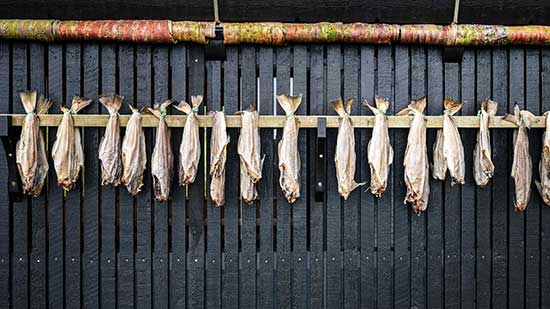
dish is just one of the latest evolutions of a long culinary legacy, one that’s wrapped up in centuries of history little-known to those outside the country. It started towards the end of the 14th Century, when the Portuguese navy found that the dried and salted fish could be stored for years in holds, making it the perfect food for long ocean voyages.
In the mid-1500s, during Portugal’s maritime explorations and hunt to find the coast of India, they stumbled across waters rich with cod around Canada and Greenland; a major discovery that kickstarted Portuguese cod fishing. But by the 16th Century, Portuguese fishermen were pushed out by the French and English.
In the centuries that followed, Portugal became heavily dependent on England as the main exporter of cod, and by the 1800s, the ingredient was something enjoyed only by the aristocracy. However, cod’s popularity expanded in the 20th Century during the reign of Portuguese dictator António de Oliveira Salazar, who wanted to bring it back home. His “cod campaign”, launched in 1934, looked to reignite Portugal’s fishing (and drying) industry and instate cod as a national symbol. Thousands of Portuguese fishermen were sent to Canada and Greenland to fish for cod, with some bringing back up to 900 tonnes per boat.
But this was long, gruelling and often dangerous work, and many men never made it back home to their families. It continued even during World War Two when one Portuguese lugger – the Maria da Glória – was bombed as it headed towards the fishing banks on the west coast of Greenland, killing 36 people on board. These conditions still plague the industry today, with global fatality rates thought to top 24,000 a year, according to the Seafarers Rights International.
It’s this complex history that makes Portugal’s love for cod so deep-rooted, and it’s why Portuguese food expert and chef Leandro Carreira dedicated more than 50 recipes to the product in his new book Portugal, The Cookbook. In total, it features more than 550 traditional recipes from across the country, including a raw salt cod salad, which mixes bacalhau together with barbecued red bell peppers, onions, garlic and parsley.
“If I didn’t include [salt cod], I would have been in a lot of trouble,” said Carreira. “Cod has become so embedded in our culture over the centuries, since the trade of salt began so it was so hard to choose which recipes would feature in the book.”
That love of salt cod still rings true today. “I know people who have eaten cod for more than 30 years every day,” Carreira said. “My grandmother used to eat the same cod dish – cod with boiled potatoes, raw onion, garlic, olive oil, vinegar and parsley – every single day for lunch. Even I, and everyone I know, had cod at least twice a week.
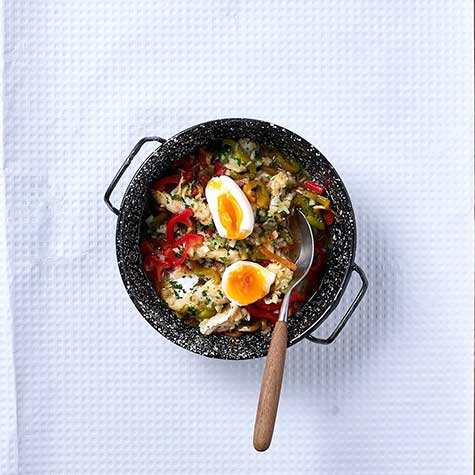
“Cod is an incredibly flexible product. You can grill it, steam it, bake it, deep fry, you can make a cake with it, have it raw after soaking it in water. So, if you combine this with its affordability and its accessibility, you can see why [it’s popular].”
You can grill it, steam it, bake it, deep fry, you can make a cake with it, have it raw after soaking it in water.
Portugal today imports around 70% of its cod from Norway; the Norwegian Seafood Council describes Portugal as “by far the biggest market for Norwegian cod”. They add that out of the 100,000 tonnes Norway exports annually to Portugal, 95% is salted.
In Norway’s remote and icy fishing island of Røst, they even have a name reserved for the heaviest of cod catches: “Portuguese cod,” said Pessoa, who, as a former ambassador for the Norwegian Seafood Council, visited the island several times. “They know Portugal will pay the best price for that cod.”
This is echoed by Rita Karlsen, chief executive of Norway’s Brødrene Karlsen, which has been exporting salted and dried cod to Portugal since the company’s beginning in 1932. “Portugal is very important [to Norwegian cod exporters]; it’s the most important country that we sell to,” she said. “We couldn’t have survived without Portugal.”
This influence has spread far and wide to countries like Brazil, which imported 8.6 tonnes of salt cod during the Easter period alone in 2019, or Angola, which imported 308 tonnes of salt cod from Norway in 2012, according to the Interpretative Center of the History of Cod, Lisbon’s museum dedicated to the fish. In Italy, they even hold a salt cod festival, Festa del Bacala, every year near Venice, and in the Tuscan region they favour classics such as baccalà alla livornese, which marries salt cod with a rich, garlicky tomato sauce.
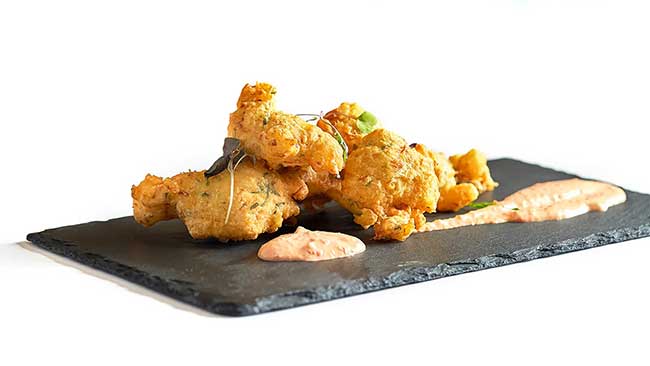
For other chefs in Portugal, salt cod bridges the past and present. Like Marlene Vieira, MasterChef Portugal judge, head chef of two Lisbon restaurants and the only female face within the chef’s wing of Lisbon’s Time Out Market, where her salt cod pataniscas (fritters) have won her accolades.
She explained how the fritter recipe was passed down from her grandmother, who came from a poor background. This meant she typically used the cheaper tail cuts of the fish in the batter, which had less moisture and resulted in a crispier finish “like tempura” – an excellent companion to the roasted red pepper and garlic mayonnaise that Vieira now serves with it.
As a child, she remembers helping her grandmother in the kitchen “to do the things she wouldn’t like to do”, like peeling onions, garlic and of course carefully picking out any bones left in the salt cod.
Today, while nodding to tradition, Vieira is keen to further promote the fish along with seafood local to Portugal – and her high-end restaurant Marlene focuses on just that. She even cooks it at home for her daughter, who, she said, “loves, loves, loves cod” – proof perhaps that despite the lengths the country has to go to secure this North Atlantic fish, the passion for it will continue to flow through Portuguese veins for generations to come.
–BBC



Institute of Hospitality Sri Lanka
 The 32nd Annual General Meeting (AGM) of the UK-based Institute of Hospitality’s Sri Lanka Chapter was held recently at the Ramada Hotel Colombo,.The event provided an evening of camaraderie , reflection of the past and present achievements,setting new benchmarks for the future
The AGM had the presence of two distinguished guests, the Chief Guest Opposition Leader Sajith Premadasa, and the Guest of Honour British High Commissioner to Sri Lanka, Andrew Patrick. Their inspiring speeches were lauded by all hoteliers who were present at the occasion
A special thanks was extended to Robert Richardson, CEO of the Institute of Hospitality UK, along with his team, sponsors, committee members, and all attendees for making the event memorable.
Dr. Harsha Jayasingh, Past President of the Institute of Hospitality (UK) Sri Lanka Chapter, emphasised the Institute’s longstanding history and the strength of its Sri Lankan branch. “The Institute of Hospitality (IH) UK has a history of 86 years, and we are proud to be the Sri Lanka Branch. IH Sri Lanka is much stronger now with many members from all areas of the hospitality industry,” he stated.
Dr. Jayasingh highlighted the significant role of tourism in Sri Lanka’s economy,. He said tourism it is the third-largest source of revenue for the country. “Tourism accounts for about 13.3% of total foreign exchange earnings and employs 450,000 people directly and indirectly. The hospitality industry in this island of pearl holds tremendous potential for economic growth, job creations, and cultural exchange,” he added.
He also pointed out more women should be attracted to the industry and advocated for the use of technology in hospitality sector to attract the younger generation.
The newly appointed Chairman Ramesh Dassanayake spoke about the challenges faced by the industry, including the reluctance of youth to join the sector. . Dassanayake expressed concerns over the migration of staff between hotels and the overall ‘brain drain’ in the sector. ” We must maintain high standards in the hotel We must try to attract tourists to Sri Lanka, we must have with many facilities Hence, hotel schools and other professional institutions involved in skills development mustincrease their intakes,” he pointed out.
Chief Guest Sajith Premadasa emphasised the importance of eco tourism and said “We need to have an environmental policy related to tourism in place,” . .
The 32nd AGM of the Institute of Hospitality UK, Sri Lanka Chapter, was a testament to the strength and potential of Sri Lanka’s hospitality industry. The insights and commitments shared during the event set a new benchmark for the future.(ZC)


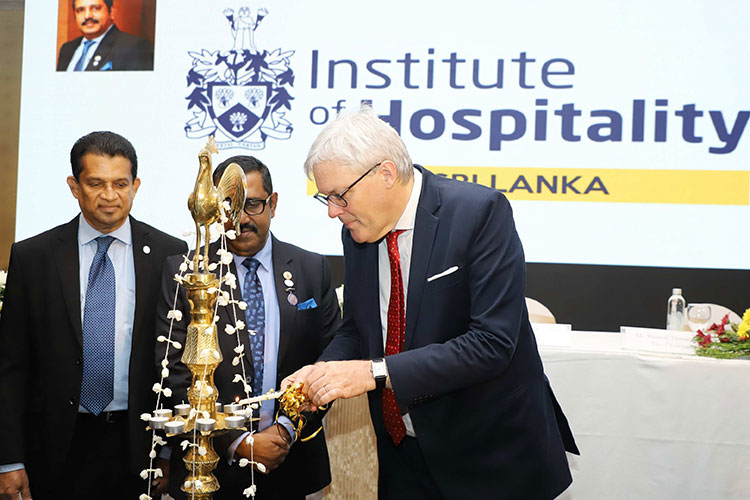
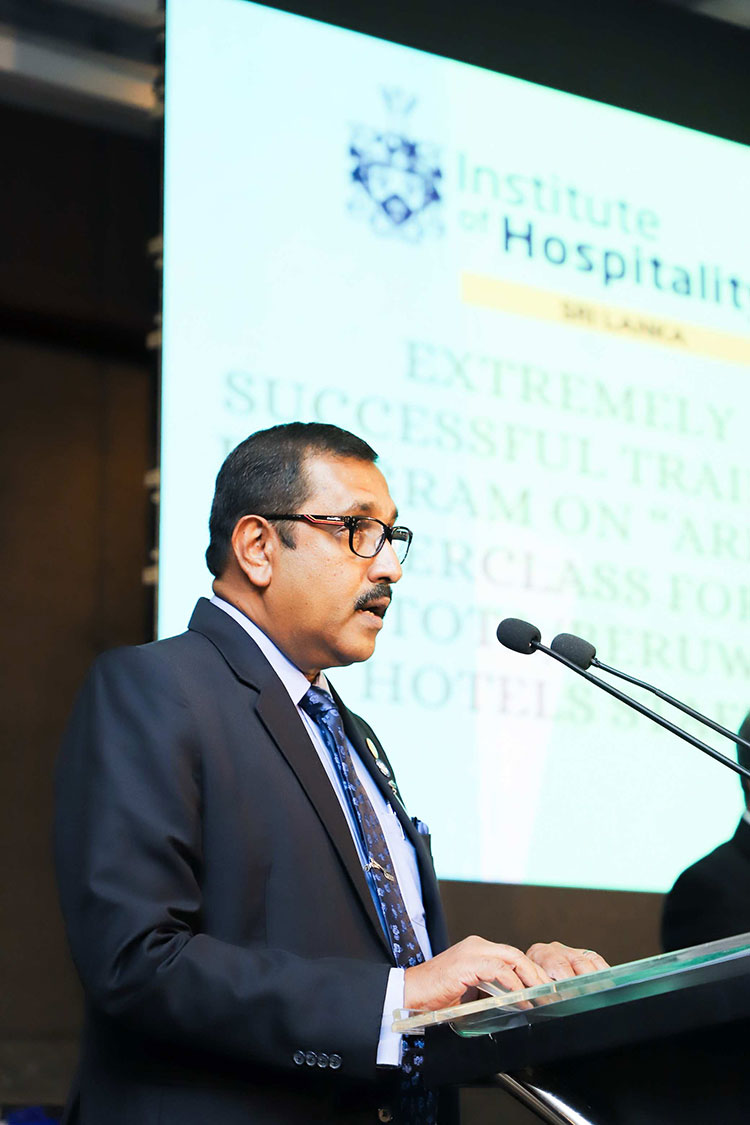

Pix by Thushara Attapathu
Life style
He recognizes human identity beyond boundaries of gender, race, nationality and religion.
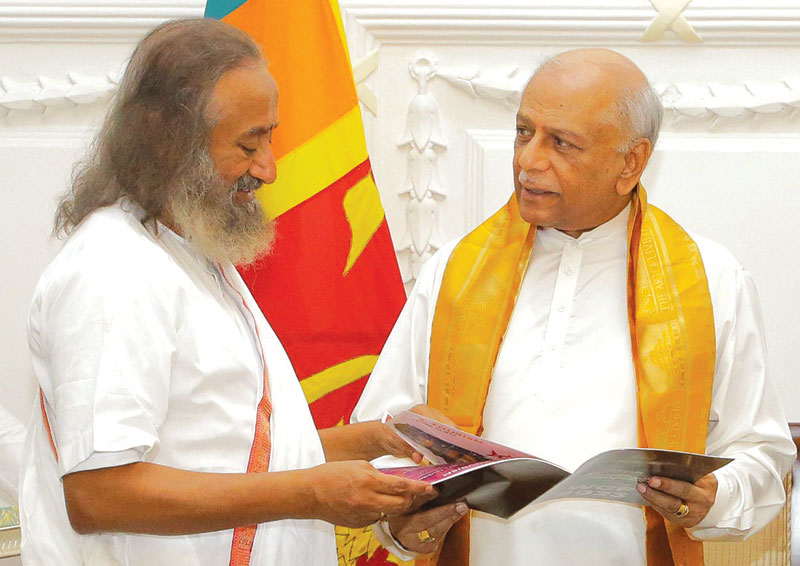
Visit of Sri Gurudev to Sri Lanka
Humanitarian, spiritual leader and Global Ambassador of Peace Gurudev Sri Sri Ravi Shankar (Sri Gurudev) was in Sri Lanka on a three day tour on the invitation of the Prime Minister of Sri Lanka Dinesh Gunewardene. Gurudev who inspired a wave of volunteerism and service to moot one of the largest volunteer-based organisations in the world – The Art of Living – visited the various projects under the aegis of the foundation and launched twelve vocational and technical centers around the island. He was accompanied by thousands of followers from Sri Lanka and around the world.
Gurudev who visited Sri Lanka for the sixth time also had a first day cover launched in honour of his visit. He is a strong proponent of spreading happiness, using the unique Sudarshan Kriya, yoga, meditation and practical wisdom to unite people, empower individuals and transform communities. His programmes provide techniques and tools to live a deeper, more joyous life, while his non-profit organisations recognize the human identity beyond the boundaries of gender, race, nationality and religion.
The Art of Living which has more than 30,000 teachers and over one million volunteers across 180 countries has touched in excess of five hundred million people around the world. CNN called it “Life Changing” and The Washington Post headlined it, “Fresh air to millions”.
In Trincomalee, Gurudev met with war victims and had a heartwarming engagement with the children from the children’s homes run by the Foundation. He also visited the Koneswara Temple in Trincomalee and graced the Kumbhabhishekam at Seetha ecogPnize the human identity beyond the boundaries of gender, race, nationality and religion. Amman temple at Nuwara Eliya. He held discussions with the trustees on the progress of the foundation’s social service projects, while also holding a special event – Ekamuthuwa – attended by a large number of dignitaries and his devotees from around the world.
His time with the Prime Minister was spent discussing the prospects of unity in diversity and uniting Sri Lanka by adding happiness into the formula of living. In addition he had discussions with the Speaker of the Parliament of Sri Lanka Mahinda Yapa Abeywardena, prominent business stewards and civil society leaders.
by Zanita Careem
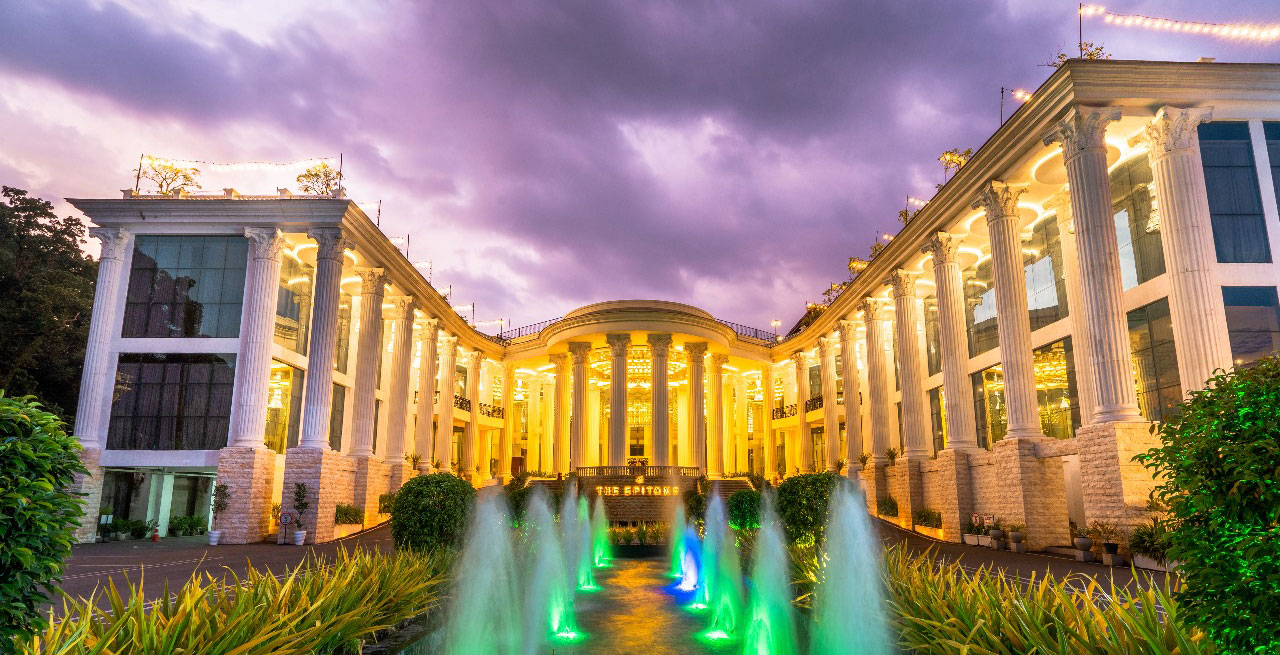
Envison your dream wedding day come to life at the Epitome Hotel, a prestigious city hotel in Kurunegala offering an unrivalled luxury rendors experience for weddings.
The venue is designed to embody opulence and luxury from all quarters for a spectacular wedding in kurunegala,Thier ballroom is the largest banquet facility in Sri Lanka It can be divided into six luxurious pillarless wedding halls on the ground floor and 25pax smaller banquet halls.
It can be easily named as a five star heaven in the heart of the city contributing to a myriad of immense experiences tailored to inspire and delight wedding experiences.
From opulent décor set up to exquisite table decor, lavish food, every detail is meticulously curated to spark your imagination and ignite creativity for a perfect wedding. The previous prestigious wedding shows season one and season two attracted large crowds
were unique events which gave the wedding vendors and potential clients had an opportunity to connect and interact with each other. Beyond being a showcase it was a chance for the wedding vendors to unite and contribute to the vibrancy of the wedding industry. The wedding show covered all area of the bridal industry providing a comprehensive variety of bridal supplies from Sri lanka and became the most popular bridal exhibitions in Kurunegala.This bridal exhibitions allowed brides and grooms to experience first hand the products and services available from suppliers in Sri Lanka
These wedding shows held at The Epitome created a benchmark and gave an opportunity for vendors to create connections to the utmost satisfaction said Harshan Lakshita Executive Director. of the magnificent Hotel
Our wedding shows featured experts and professionals in every field‘ It covered all areas of the bridal industry provided a comprehensive variety of bridal supplies from Sri lanka and became most popular bridal exhibition in this region.We are always open to everyone to join us at our wedding shows in the future. It is an opportunity to discover the incredible talent within our local wedding and bridal vendors to make meaningful relationships and plan thier special day at our breathtaking hotel The Epitome said General Manager Kavinda Caldera
The Epitome Hotel’s bridal show which will be held end of June will buzz with great ideas,advice and inspiration for all those who plan thier dream wedding
…….
The Hotel Epitome’s Wedding Season 3 will marked excellence, celebration and inspiration for those in the wedding industry. The exhibition halls will resonate with ideas on exquisite bridal wear to decor, florists , photography etc and showshowcase the rich tapestry of talent within the local wedding industry. .






US sports envoys to Lanka to champion youth development

Rahuman questions sudden cancellation of leave of CEB employees


