
Life style
Rice morning , noon ,and night in Sri Lanka

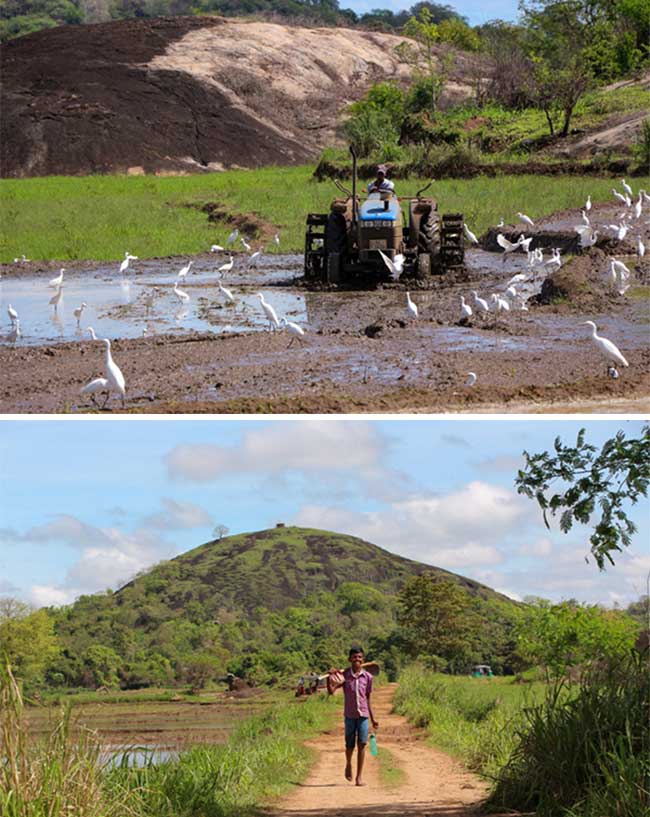
By Zinara Rathnayake
My mother is a good cook. My father is just slightly better. That’s how my younger sister would always describe my parents’ food. She’s right. My mother cooked delicious curries. But my father cooked the food we hold dear.My father grew up in Nabiriththawewa, a small village in Kurunegala.
Unlike his two older brothers who were more interested in going out with their friends, my father accompanied my grandfather to every village wedding. From what I could gather, my grandfather was the chef at every function in the village. He had cooked to feed hundreds.
“I followed him like a thread follows the needle. That’s how I learned to cook,” my father would say.
Although I wish I had met him, I never saw my grandfather, he was already a distant memory when I came to this world.When I was eight years old, my family lived in a small house by the rice fields in my father’s village. My father worked a tedious office job, commuting for hours on a passenger train every day.But when he was home, he would spend time doing two things: gardening and cooking.My father lived a frugal life so he could build a secure future for his two daughters.
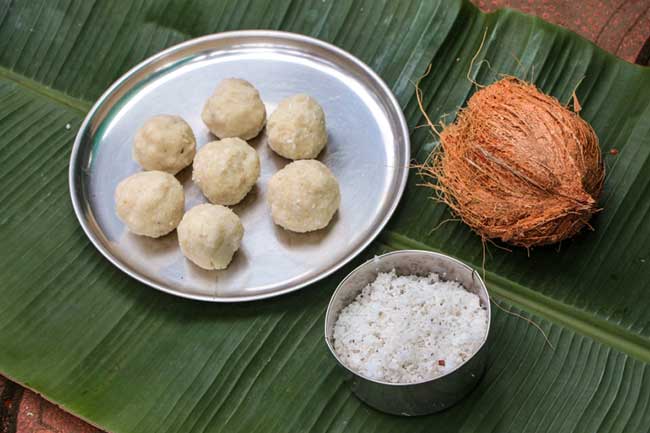
He was also a frugal cook, making use of every ingredient so nothing in his kitchen ended up in the waste pit. He mastered the art of delicious snacks, like bath aggala, a Sri Lankan sweet he makes using coconut and leftover rice and that marked our teatime ritual growing up. In Sinhala, aggala are sweet ball-shaped snacks and bath is cooked rice.
At home, teatime was when I cycled home through the rice paddies from the neighbours’ to find my little sister still in her bright sequined nursery dress with her colouring books. Outside, kids would be flying kites as men worked in the fields and women in colourful headwraps reaped golden-yellow paddy with their sharp sickles.
My mother, who was a government school teacher, would be just getting up from her afternoon nap to make tea with powdered milk for us.During the week, teatime meant a cup of tea with a packet of biscuits or a loaf of white bread to dip. But on the weekends, it was my father’s bath aggala, eaten as we sat on the verandah watching the world. Sometimes, my parents would tell us about their childhood. Or we would just watch colonies of bats dart across the evening sky as night fell, and giggle over something my little sister said.
As I look back on those teatimes spent at home, I miss the sounds and colours of those evenings that held us together, and the taste of my father’s bath aggala.It is only now that I understand that, for my father, bath aggala was more than sweet rice balls he made for his family. For him, it was making the most of rice: a grain beloved to him and all Sri Lankans.
The beloved grain
“Udetath bath, dawaltath bath, retath bath”
is a popular Sinhala saying that means “Rice for the morning, afternoon, and night.”
Nothing reflects the essence of my island and people better than that. Rice is not only the main staple for Sri Lankans, it’s more than that.In island kitchens, rice boils every day in clay pots over firewood or steams in electric rice cookers. A pot of steamed rice dominates our tables often, paired with other dishes and condiments. When rice is not cooked this way for breakfast or dinner, another rice-based food blesses our empty plates.
It could be kiribath, a sticky blend of rice and coconut milk eaten for breakfast. Or rice flour is used to make idi appa or idiyappam, discs of steamed thin noodles. Or appa or appam, bowl-shaped snacks with crispy edges and fluffy centres. Or dosa, thin, crisp flatbreads made with a fermented rice-lentil mix. Or levariya, sweet-savoury pockets of rice noodles filled with caramelised coconut.
We use soaked, ground rice to prepare sweetmeats for our New Year every April and when guests come over, we cook rice with aromatics like curry leaves and cinnamon and garnish it with crunchy cashews to prepare golden kaha bath.
When food is scarce, families soak leftover rice to eat in the morning with kiri hodi, a turmeric-infused coconut gravy soured with lime. This modest meal was my father’s favourite breakfast, paired with fresh green chilli.
Rice feeds us, builds us, and shapes us in many ways. This humble grain that thrives in the mud holds a place in every Sri Lankan meal and has crept into every nook and cranny of our society.Rice has a large share of the island’s agriculture, frames its economy, and unpacks our history. And our love for it has given birth to a host of flavourful dishes.I learned how rice grew when we moved to our father’s village. Paddy – the word for the plant and the grain before removing the hull – flourished in the fields thanks to the farmers toiling in the sun.
My father grew paddy in a small field inherited from his parents, which grew enough rice for us. While he readied the field, I would run behind him, getting my feet muddy. Once or twice, I helped him plant seedlings.The earliest stone carving of paddy cultivation in Sri Lanka dates back to 939-940 AD, says Professor Buddhi Marambe, who specialises in weed science and food security. Ancient Sri Lankan rulers built reservoirs to harness rainwater while people developed and preserved rice varieties for more than 3,000 years.
But when the island was colonised by the British in 1815, cash crops like tea and rubber were imposed on farmers to make money for the colonisers. British propaganda campaigns also encouraged people to replace rice with wheat in their diet. “By the 1940s, Sri Lanka had to import 60 percent of the rice needed for the country’s meagre six million population,” says Marambe.In the following decades, refined wheat flour and white bread rose in popularity while native rice was replaced by high-yield varieties to sustain the growing population – varieties that needed chemical fertilisers and pesticides.
In 2020, there was enough locally produced rice to feed Sri Lanka’s population of 21 million, Marambe says. But the then-government abruptly banned synthetic fertilisers in April 2021, forcing farmers to turn to organic fertilisers they were not used to. Farmers lost their harvest, and many deserted their rice fields.
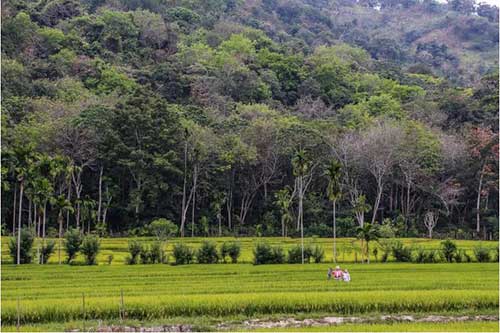
By the time the ban was lifted in November last year, Sri Lanka did not have enough foreign currency to import chemical fertilisers and pesticides. The hard currency shortage also resulted in a fuel crisis, and farmers have to pay more now for reaping and threshing machines.
“Most people [in our village] are abandoning their fields now,” my mother said when I rang her recently. “The machine is charging 240 rupees [$0.66] per minute. They can’t afford it.”
Sri Lanka’s future rice production now depends on a crippled economy and tentative foreign loans that may or may not come.In the past, leftover rice was considered “poor man’s food”, so people stopped eating foods like diya bath (fermented rice porridge with coconut milk) for breakfast, reaching for refined white bread slathered in preservative-laden bottled jam instead.
But, in June, food inflation was more than 60 percent in Sri Lanka and has since kept climbing. Prices soar daily, and most low-income families eat just one or two meals a day. As people rethink their food choices, frugal cooking has made a comeback.
My parents no longer buy biscuits or white bread. A packet of biscuits that cost 200 Sri Lankan rupees ($0.55) a week ago is now 600 rupees ($1.65). “Who would pay that much for biscuits,” my mother said. She wants me to bring her some from India, where I’m currently travelling.My father makes bath aggala more often now. It’s a dish he learned to make by watching his parents and older sisters, he told me recently on the phone.
When my father was a teenager, Sri Lanka was battling drought and an economic crisis in the 1970s. Even though his family had land to grow rice, there wasn’t enough water. So my grandparents made the most of what was available.
“They told us never to throw away rice, not even a single grain of it,” my father said. “When I saw a little boy digging in a dustbin for food at school, I realised what it means to have food on the table.”
Rice and coconuts
I don’t remember us ever buying rice. Even when I left home to live in Colombo, my parents would visit me with tightly packed grocery bags of rice from my father’s fields. But recently when I called home, my mother said she might have to buy rice for the first time in her life.
“The [threshing] machine will only come if we give them diesel,” my mother said. “And we can’t get diesel.”
Many families in the village are now eating diya bath in the morning, my mother said.
Making diya bath involves a few steps if you, like my father, want to eat it hot. Many people eat diya bath cold, which is faster.
If there is rice left over after dinner, my father soaks it in water, letting it soak overnight and draining it the next morning. Then he heats up the coconut milk in a pot, adds dried red chilli, curry leaves, onion, salt, half a teaspoon of turmeric powder, and Maldive fish flakes (dried, cured tuna fish), and lets it simmer.
For sourness, he squeezes in half a lime or adds a few pods of dark brown sun-dried tamarind. (This concoction alone is called kiri hodi). When it’s ready, my father pours it, piping hot, onto a bowl of rice and eats it with fresh green chilli and, sometimes, fried dried fish.
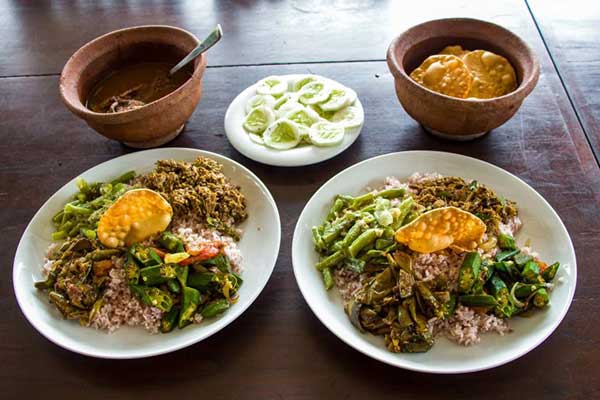
Cold diya bath
is a no-cook meal: mix two cups of coconut milk with one cup of soaked rice. Then add thinly-sliced red onion, two tablespoons of lime juice, three-four roasted dried red chillies, one teaspoon of grated Maldive fish, and salt to taste. If you like it sourer, squeeze in some more lime juice.
Some people like fresh green chilli instead of dried red chilli. Maldive fish is optional, but it adds a nice umami punch. Many elders believe that diya bath, with its fermented rice and coconut milk, cools the body and prevents heartburn.
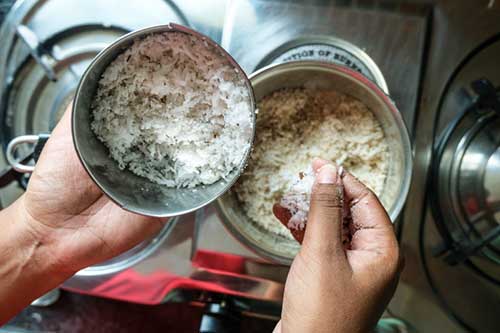
Speaking of coconut milk, when I make diya bath, I reach for coconut milk that comes in sealed cardboard containers but my parents have never bought coconut milk in their life, they make it. My father plucks coconuts from our garden, removes the fibrous outer husk, halves the nut, and scrapes it with a hiramanaya – a traditional grater with a wooden seat for the person to sit while grating. He mixes the grated coconut with water, squeezing it several times with his hands to make coconut milk.
Making coconut milk is laborious, but my parents still do it. If rice is our staple, coconut is its mate. It thickens our curries, binds our sambals, flavours our foods, and balances meals with healthy fats. Coconuts also make our condiments richer to pair with humble rice.
More than aggala
While people usually boil fresh rice for aggala, my father soaks leftover rice to make sugary, coconutty balls with a slight crunch. For him, bath aggala is food security. It is minimising waste.To make this teatime snack, he ferments leftover cooked rice overnight in water. In the morning, he drains and sun-dries the rice until it is crisp, then roasts it for about 20 minutes in a skillet on a low flame, until it turns brown.
When I made bath aggala recently, I roasted the rice for five to eight minutes and switched off the stove before it changed colour, so it stayed white. Do as you like, roasting for longer gives aggala a golden-brown colour and nutty flavour.Using a pestle and mortar, my father grinds the warm, roasted rice until he gets an uneven texture with pieces of broken rice that add a delightful crunch. You can use an electric grinder as I do, just don’t grind it into powder.
Take 250g of this ground rice and add about 100g of grated coconut, half a cup of sugar, half a teaspoon of salt, and half a cup of water. Mix it well with your hands and shape it into little balls. Some people prefer a bit of a spice kick to their aggala, which is easily done by sprinkling a hint of black pepper into the mix.Once ready, always serve with a cup of tea.
My father’s bath aggala is a testimony to Sri Lanka’s longstanding relationship with rice. It bears witness to the island’s often troubled history and present, twisted and framed by politics and economic interests.The road to recovery is long. But for now, I’d like to be lulled into sweet teatimes at home. One bath aggala at a time.
– Al Jazeera



Institute of Hospitality Sri Lanka
 The 32nd Annual General Meeting (AGM) of the UK-based Institute of Hospitality’s Sri Lanka Chapter was held recently at the Ramada Hotel Colombo,.The event provided an evening of camaraderie , reflection of the past and present achievements,setting new benchmarks for the future
The AGM had the presence of two distinguished guests, the Chief Guest Opposition Leader Sajith Premadasa, and the Guest of Honour British High Commissioner to Sri Lanka, Andrew Patrick. Their inspiring speeches were lauded by all hoteliers who were present at the occasion
A special thanks was extended to Robert Richardson, CEO of the Institute of Hospitality UK, along with his team, sponsors, committee members, and all attendees for making the event memorable.
Dr. Harsha Jayasingh, Past President of the Institute of Hospitality (UK) Sri Lanka Chapter, emphasised the Institute’s longstanding history and the strength of its Sri Lankan branch. “The Institute of Hospitality (IH) UK has a history of 86 years, and we are proud to be the Sri Lanka Branch. IH Sri Lanka is much stronger now with many members from all areas of the hospitality industry,” he stated.
Dr. Jayasingh highlighted the significant role of tourism in Sri Lanka’s economy,. He said tourism it is the third-largest source of revenue for the country. “Tourism accounts for about 13.3% of total foreign exchange earnings and employs 450,000 people directly and indirectly. The hospitality industry in this island of pearl holds tremendous potential for economic growth, job creations, and cultural exchange,” he added.
He also pointed out more women should be attracted to the industry and advocated for the use of technology in hospitality sector to attract the younger generation.
The newly appointed Chairman Ramesh Dassanayake spoke about the challenges faced by the industry, including the reluctance of youth to join the sector. . Dassanayake expressed concerns over the migration of staff between hotels and the overall ‘brain drain’ in the sector. ” We must maintain high standards in the hotel We must try to attract tourists to Sri Lanka, we must have with many facilities Hence, hotel schools and other professional institutions involved in skills development mustincrease their intakes,” he pointed out.
Chief Guest Sajith Premadasa emphasised the importance of eco tourism and said “We need to have an environmental policy related to tourism in place,” . .
The 32nd AGM of the Institute of Hospitality UK, Sri Lanka Chapter, was a testament to the strength and potential of Sri Lanka’s hospitality industry. The insights and commitments shared during the event set a new benchmark for the future.(ZC)


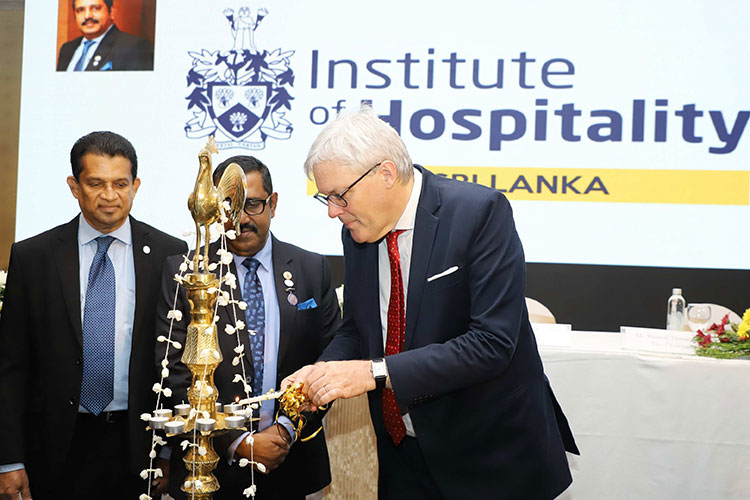
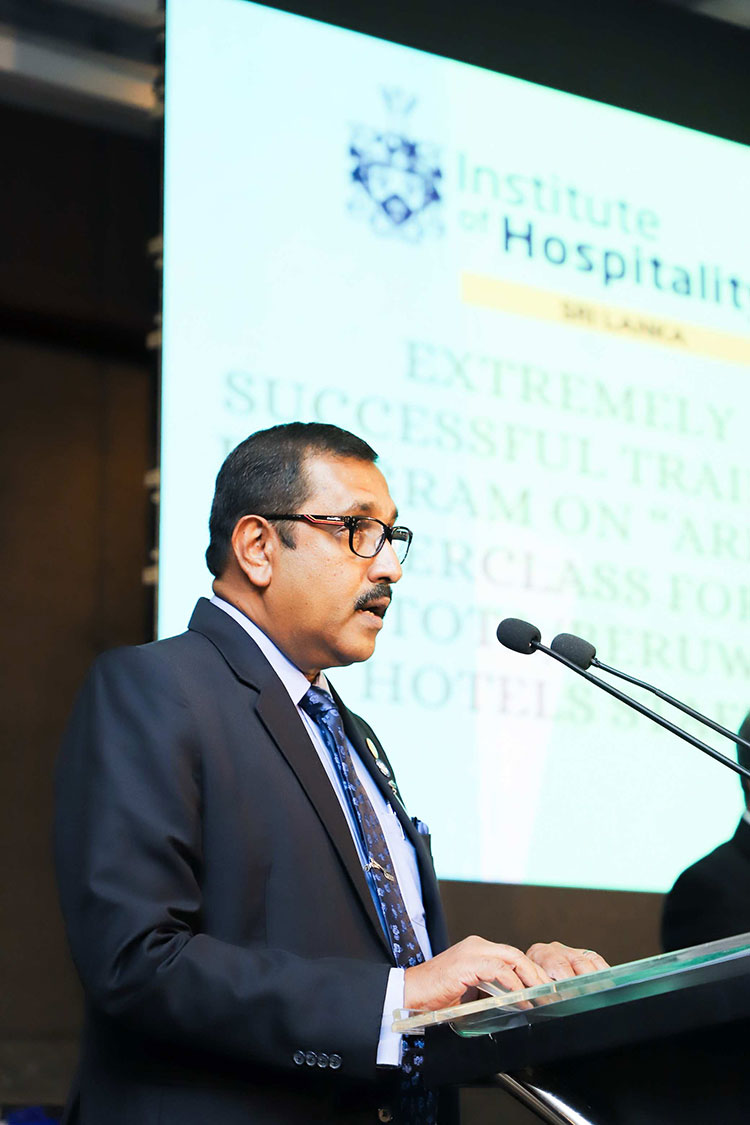

Pix by Thushara Attapathu
Life style
He recognizes human identity beyond boundaries of gender, race, nationality and religion.
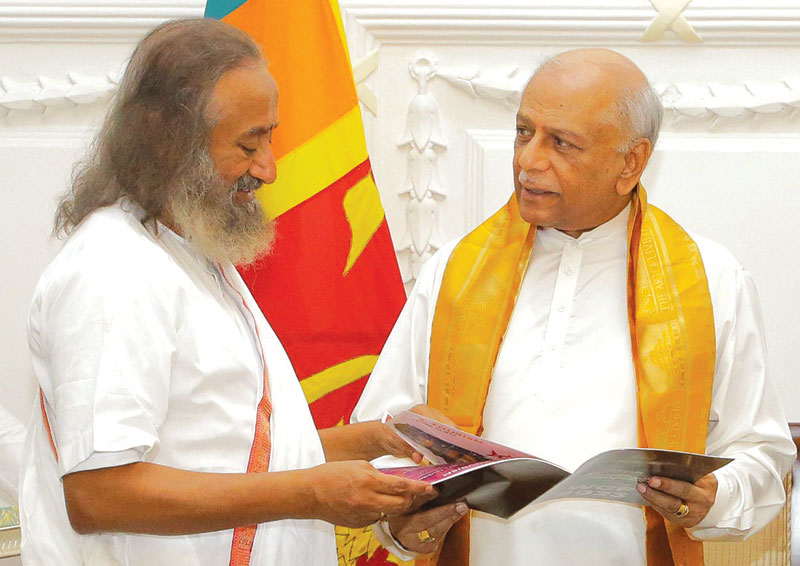
Visit of Sri Gurudev to Sri Lanka
Humanitarian, spiritual leader and Global Ambassador of Peace Gurudev Sri Sri Ravi Shankar (Sri Gurudev) was in Sri Lanka on a three day tour on the invitation of the Prime Minister of Sri Lanka Dinesh Gunewardene. Gurudev who inspired a wave of volunteerism and service to moot one of the largest volunteer-based organisations in the world – The Art of Living – visited the various projects under the aegis of the foundation and launched twelve vocational and technical centers around the island. He was accompanied by thousands of followers from Sri Lanka and around the world.
Gurudev who visited Sri Lanka for the sixth time also had a first day cover launched in honour of his visit. He is a strong proponent of spreading happiness, using the unique Sudarshan Kriya, yoga, meditation and practical wisdom to unite people, empower individuals and transform communities. His programmes provide techniques and tools to live a deeper, more joyous life, while his non-profit organisations recognize the human identity beyond the boundaries of gender, race, nationality and religion.
The Art of Living which has more than 30,000 teachers and over one million volunteers across 180 countries has touched in excess of five hundred million people around the world. CNN called it “Life Changing” and The Washington Post headlined it, “Fresh air to millions”.
In Trincomalee, Gurudev met with war victims and had a heartwarming engagement with the children from the children’s homes run by the Foundation. He also visited the Koneswara Temple in Trincomalee and graced the Kumbhabhishekam at Seetha ecogPnize the human identity beyond the boundaries of gender, race, nationality and religion. Amman temple at Nuwara Eliya. He held discussions with the trustees on the progress of the foundation’s social service projects, while also holding a special event – Ekamuthuwa – attended by a large number of dignitaries and his devotees from around the world.
His time with the Prime Minister was spent discussing the prospects of unity in diversity and uniting Sri Lanka by adding happiness into the formula of living. In addition he had discussions with the Speaker of the Parliament of Sri Lanka Mahinda Yapa Abeywardena, prominent business stewards and civil society leaders.
by Zanita Careem
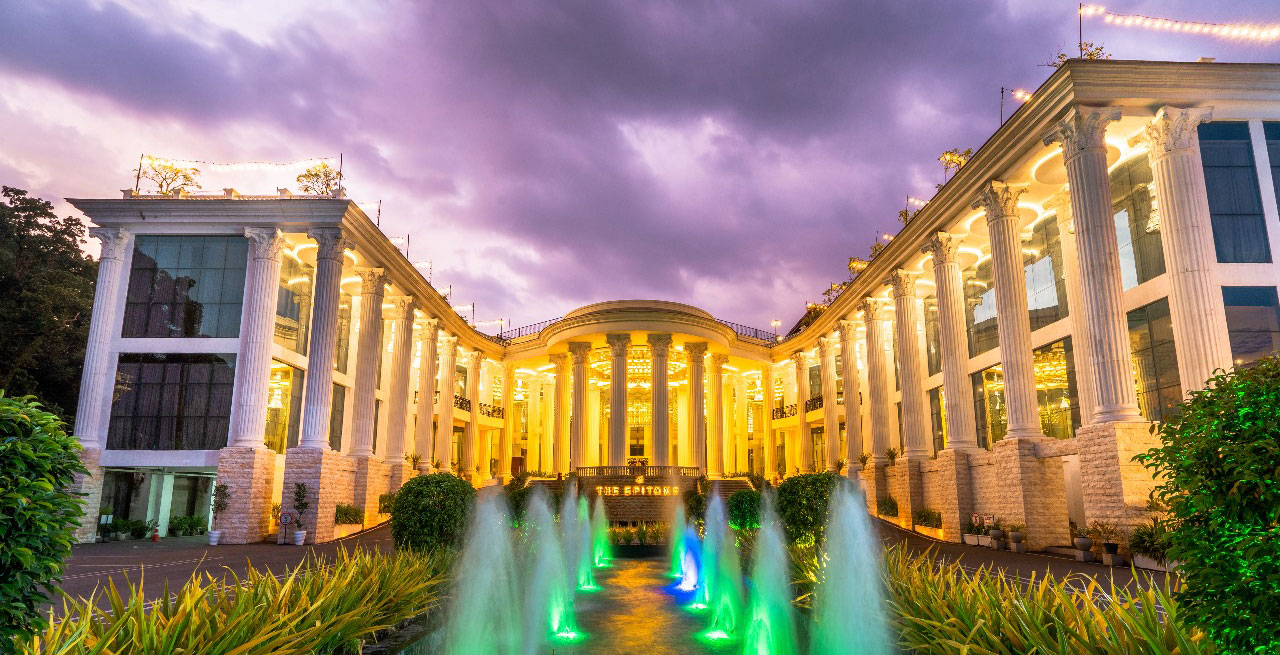
Envison your dream wedding day come to life at the Epitome Hotel, a prestigious city hotel in Kurunegala offering an unrivalled luxury rendors experience for weddings.
The venue is designed to embody opulence and luxury from all quarters for a spectacular wedding in kurunegala,Thier ballroom is the largest banquet facility in Sri Lanka It can be divided into six luxurious pillarless wedding halls on the ground floor and 25pax smaller banquet halls.
It can be easily named as a five star heaven in the heart of the city contributing to a myriad of immense experiences tailored to inspire and delight wedding experiences.
From opulent décor set up to exquisite table decor, lavish food, every detail is meticulously curated to spark your imagination and ignite creativity for a perfect wedding. The previous prestigious wedding shows season one and season two attracted large crowds
were unique events which gave the wedding vendors and potential clients had an opportunity to connect and interact with each other. Beyond being a showcase it was a chance for the wedding vendors to unite and contribute to the vibrancy of the wedding industry. The wedding show covered all area of the bridal industry providing a comprehensive variety of bridal supplies from Sri lanka and became the most popular bridal exhibitions in Kurunegala.This bridal exhibitions allowed brides and grooms to experience first hand the products and services available from suppliers in Sri Lanka
These wedding shows held at The Epitome created a benchmark and gave an opportunity for vendors to create connections to the utmost satisfaction said Harshan Lakshita Executive Director. of the magnificent Hotel
Our wedding shows featured experts and professionals in every field‘ It covered all areas of the bridal industry provided a comprehensive variety of bridal supplies from Sri lanka and became most popular bridal exhibition in this region.We are always open to everyone to join us at our wedding shows in the future. It is an opportunity to discover the incredible talent within our local wedding and bridal vendors to make meaningful relationships and plan thier special day at our breathtaking hotel The Epitome said General Manager Kavinda Caldera
The Epitome Hotel’s bridal show which will be held end of June will buzz with great ideas,advice and inspiration for all those who plan thier dream wedding
…….
The Hotel Epitome’s Wedding Season 3 will marked excellence, celebration and inspiration for those in the wedding industry. The exhibition halls will resonate with ideas on exquisite bridal wear to decor, florists , photography etc and showshowcase the rich tapestry of talent within the local wedding industry. .





US sports envoys to Lanka to champion youth development

Rahuman questions sudden cancellation of leave of CEB employees


