
News
‘Govt must hide its head in shame for allowing the crisis to deepen’

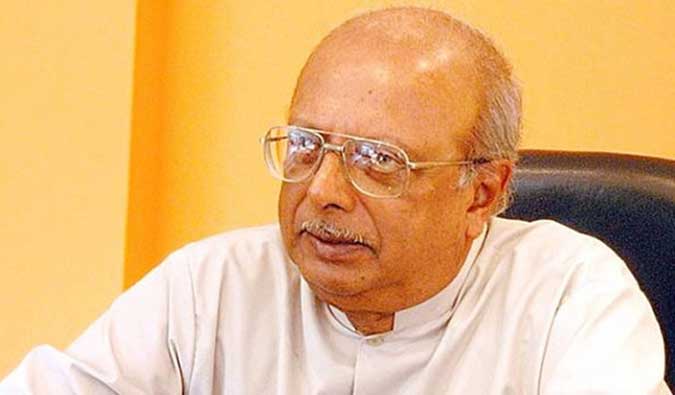
by Prof.TISSA VITARANA
Looking back at 2022, Sri Lanka cannot look forward to 2023, with any sense of hope. The economic, social and political crisis deepens without any clear plan by the Government to emerge from the crisis. Inflation is increasing with the Government, which is short of money due to its reluctance to tax the rich, resorting to massive printing of currency notes. This rise in the cost of living is fed by the support given to the private traders and big rice mill owners to fleece the cultivator and the producer who are in perpetual debt to them on the one hand and the consumer on the other. Survey data indicates that more than 65% of families live below the poverty line and that the malnutrition rate has approached 20%. Thus one out of five children below five years of age is suffering from severe under nutrition, and are both physically stunted and thin, but also mentally defective.
The future generation will be badly affected. Thus people with fixed or diminishing incomes faced with the high cost of living are suffering from hunger. In many families the parents have one meal a day and the children two, but the meals lack protein which is essential for development as well as vitamins and key minerals. Rampant bribery and corruption in the Administrative service has added to the suffering of the average person in his daily life; it is no longer a Public Service, it only serves the rich, the crooks and those with influence Instead of Government action to stop this exploitation by the middleman, like strengthening the Cooperative Movement among producers and consumers, reviving the Marketing and Food Control Departments, the Government supports the exploiter, rather than the exploited.
Ranil Wickremasinghe (RW) as Finance Minister tries to control the inflation by increasing the bank interest rate to a massive 30%. This not only deters the startup of new companies but also hits the established ones. The outcome of these policies is that the economy will continue to shrink, with more closures and job losses in the private sector together with the near complete stop to infrastructure development in the public sector. RW claimed that he would revive the economy through the private sector but his policies are undermining the private sector. The lack of jobs especially among the youth is leading to their leaving the country in huge numbers. The brain drain among professionals like doctors due to wrong tax policies is also increasing in an alarming manner. The youth that remain are driven to illicit activities like drug addiction and trafficking, and prostitution. Criminal activities like robberies, petty thefts, abductions, rape, assaults and murders are increasing so that people fear to venture out, especially after dark. Conflicts within families and between families and among criminal gangs are increasing. In society as a whole the collective cooperative spirit is being replaced by neoliberal individualism. Social cohesion is being lost. There is a complete breakdown of law and order.
The policy of taking more and more foreign loans is being persisted with. But even the International Monetary Fund (IMF) has yet to come forward with any part of its promised 3.9 billion US dollar (USD) aid package, despite several months of negotiations. Even if we get the IMF loan it will be too little too late. The terms demanded, if fully implemented, will reverse all the gains of the post-1956 era towards building a national economy as a sovereign independent state and emerge from our colonial past. The IMF demands would lead to de-nationalization and privatization of state-owned enterprises, but worst of all to the ownership passing over even to foreign hands. Sri Lanka would become a neo-colony subject to direct Imperialist exploitation once again.
The Government expects that by bowing down to the IMF terms Sri Lanka would be able to access more multilateral and bilateral loans and emerge from the dollar crisis and restore the ability to import using letters of credit from local banks. But getting deeper into foreign debt, which is the main cause of our dollar shortage and crisis, will only make matters worse. In 2021 we had to pay USD seven billion to service our 52 billion USD foreign debt, and Sri Lanka will be drawn further into the foreign debt trap. The fact that nearly 50% of the foreign loans are International Sovereign Bonds (which are short term high interest private loans) which are difficult to re-negotiate to delay payment makes matters worse. To further aggravate the situation the ban on the import of half of over 1500 non-essential items by this Government has been lifted recently. The dollar shortage will get worse and the fuel and gas queues will return and the shortage and high price of medicines and essential food items will also continue to rise.
The wrong policies of the present Government should be radically changed. There must be “a system change”. The way to increase productivity and national income is not by going back to the purely profit oriented privatization policy, but to move with the times and turn to a solidarity economy, as in Scandinavia and some provinces in Germany. In our agricultural economy the biggest export income earner is tea. But the private companies say they are running at a loss and cannot pay the employees a living wage. After 5 years of struggle the employees won a wage increase, the total allowance was raised to Rs.1000/day. But the employees are now being forced to increase their green leaf quota from 18 kilos per day to an impossible 24 kilos.
Even if they provide 20 or even 22 kilos, their pay is cut by Rs 50 per Kg, so that they are back to the status quo ante. We must learn from Kerala, India, where the solidarity economy is now in action. The ownership has been given to the employees by the Left regime, and as owners with shares in the company, in addition to their salary, they have increased the output tremendously and produce a large profit, which also benefits the society.
The present Government should also promote value added industry based on local raw material. I am happy to mention that as Minister of Science and Technology I developed the nanotechnology centre, SLNTEC, which can do this. In addition I was happy to learn that the Vidatha Centres for the development of SMEs in every Division have now topped the mark of thousand entrepreneurs that have successfully exported their products. Thus the answer is to make Sri Lanka an industrialized exporter of finished products.




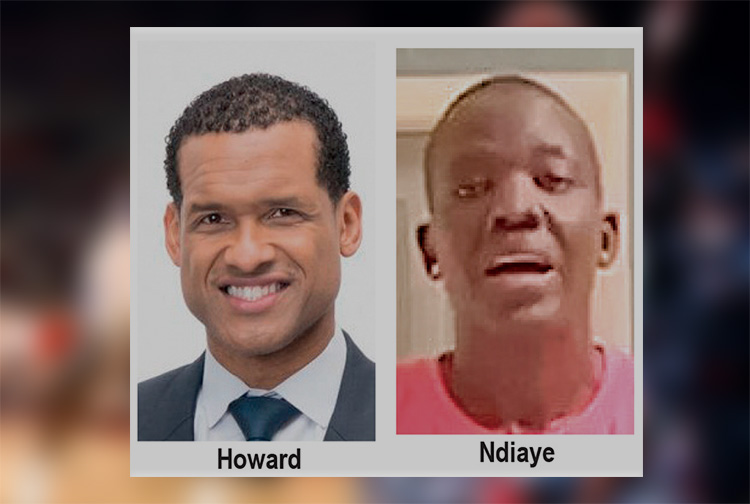
The U.S. Embassy in Colombo welcomed the U.S. Sports Envoys to Sri Lanka, former National Basketball Association (NBA) and Women’s National Basketball Association (WNBA) players Stephen Howard and Astou Ndiaye, from June 8 through 14.
The Public Diplomacy section of the U.S. Embassy said that it would launch a weeklong basketball program intended to harness the unifying power of sports, made possible through collaboration with Foundation of Goodness and IImpact Hoop Lab.
While in Sri Lanka, Howard and Ndiaye, both retired professional basketball players, will conduct a weeklong program, Hoops for Hope: Bridging Borders through Basketball. The Sports Envoys will lead basketball clinics and exhibition matches and engage in leadership sessions in Colombo and Southern Province for youth aged 14-18 from Northern, Uva, Eastern and Western Provinces, offering skills and leadership training both on and off the court. The U.S. Envoys will also share their expertise with the Sri Lanka Basketball Federation, national coaches, and players, furthering the development of basketball in the country. Beyond the clinics, they will collaborate with Sri Lankan schoolchildren to take part in a community service project in the Colombo area.
“We are so proud to welcome Stephen and Astou as our Sports Envoys to Sri Lanka, to build on the strong people-to-people connections between the United States and Sri Lanka,” said U.S. Ambassador Julie Chung. “The lessons that will be shared by our Sports Envoys – communication, teamwork, resilience, inclusion, and conflict resolution – are essential for leadership development, community building, equality, and peace. The U.S. Sports Envoy program is a testament to our belief that sports can be a powerful tool in promoting peace and unity.”
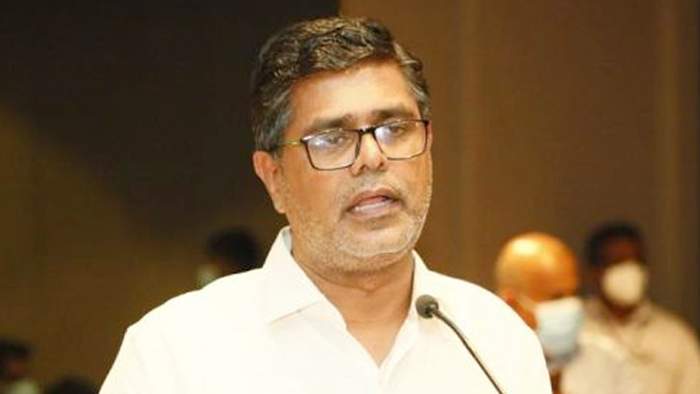
SJB Colombo District MP Mujibur Rahuman in parliament demanded to know from the government the reasons for CEB suspending the leave of all its employees until further notice from Thursday.
MP Rahuman said that the CEB has got an acting General Manager anew and the latter yesterday morning issued a circular suspending leave of all CEB employees with immediate effect until further notice.
“We demand that Minister Kanchana Wijesekera should explain this to the House. This circular was issued while this debate on the new Electricity Amendment Bill was pending. There are many who oppose this Bill. The Minister must tell parliament the reason for the urge to cancel the leave of CEB employees,” the MP said.However, Speaker Mahinda Yapa Abeywardena prevented Minister Wijesekera responding to the query and said that the matter raised by MP Rahuman was not relevant.
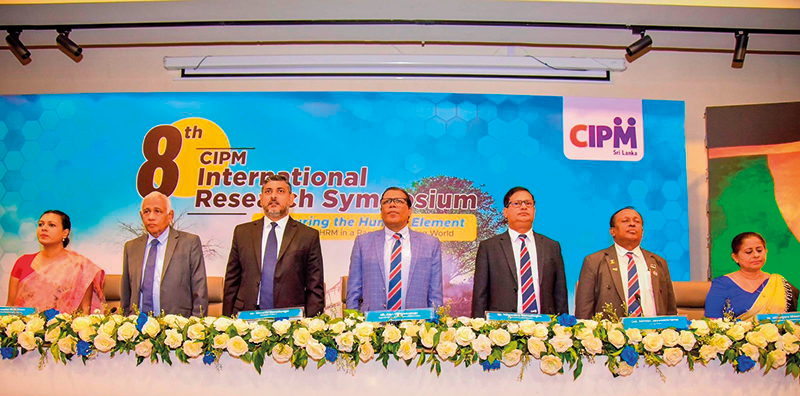
The Chartered Institute of Personnel Management (CIPM) successfully concluded the 8th Annual CIPM Symposium, which took place on 31st May 2024. Themed “Nurturing the Human Element—Redefining HRM in a Rapidly Changing World,” the symposium underscored the pivotal role of human resource management (HRM) in today’s dynamic global landscape. Since its inception in 1959, CIPM has been dedicated to advancing the HR profession through education, professional development, and advocacy, solidifying its position as Sri Lanka’s leading professional body for HRM.
Ken Vijayakumar, the President of the CIPM, graced the occasion as the chief guest. The symposium commenced with the welcome address by the Chairperson, Prof. Arosha Adikaram, followed by the Web Launch of the Symposium Proceedings and Abstract Book by the CIPM President. The event featured distinguished addresses, including a speech by Chief Guest Ken Vijayakumar, President of CIPM, and an address by Guest of Honor Shakthi Ranatunga, Chief Operating Officer of MAS Holdings Pvt. Ltd., Sri Lanka.
The symposium also featured an inspiring keynote address by Prof. Mario Fernando, Professor of Management and Director of the Centre for Cross Cultural Management (CCCM) at the University of Wollongong, Australia.
Vote of Thanks of the inauguration session was delivered by Dr. Dillanjani Weeratunga, Symposium Co-chair.
The symposium served as a comprehensive platform for researchers to present their findings across a wide range of critical topics in HRM. These included Cultural Diversity and Inclusion, Talent Development and Retention, Ethical Leadership and Corporate Social Responsibility, Adapting to Technological Advancements, Mental Health and Well-being at Work, Global Workforce Challenges, Employee Empowerment, and Reskilling and Upskilling.
The plenary session was led by Prof. Wasantha Rajapakse. Certificates were awarded to the best paper presenters during the valedictory session, followed by a vote of thanks delivered by Kamani Perera, Manager of Research and Development.
The annual symposium of CIPM was a truly inclusive event, attracting a diverse audience that spanned undergraduates, graduates, working professionals, research scholars and lecturers. This widespread interest highlights the symposium’s significance in the field of HRM, offering a unique opportunity for everyone to network and learn from scholarly brains.The CIPM International Research Symposium was sponsored by Hambantota International Port, Sri Lanka Institute of Information Technology (SLIIT), E B Creasy & Co. PLC, and Print Xcel Company.



US sports envoys to Lanka to champion youth development

Rahuman questions sudden cancellation of leave of CEB employees


