
News
Indonesia’s bid to woo investors complicated by ‘sex ban’ code

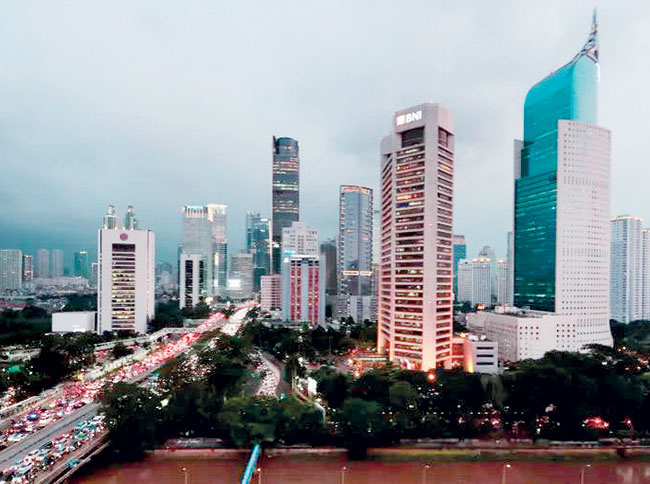
Medan, Indonesia– For years, Indonesia has strived to present itself as a welcoming investment destination, to rival neighbours Vietnam and Malaysia.
In 2016, during his first term in office, Indonesian President Joko “Jokowi” Widodo announced the opening up of dozens of industries to foreign investment in what he termed a “big bang” of economic liberalisation.Six years later, the Southeast Asian country’s controversial new criminal code – which has been blazed across international headlines, since its adoption earlier this month, due to its ban on sex outside of marriage – is raising questions about Jakarta’s commitment to fostering an open and welcoming business environment.
In Indonesia, opinion remains divided on whether the revised criminal code, which includes prohibitions on blasphemy, cohabitation, sorcery and insulting the government, helps or hurts Jakarta’s sales pitch to the world.
The Indonesian Employers Association (APINDO) has raised concerns about several sections of the code, including penalties for corporate crime, that will have a “broad impact”, and the recognition of customary law.
“For the business sector, the implementation of this customary law shall create legal uncertainty and make investors reconsider investing in Indonesia,” APINDO said in a statement provided to Al Jazeera.
APINDO also said the ban on non-marital sex will “do more harm than good, especially for the business sector engaged in tourism and hospitality”.Other industry figures have brushed off such concerns.
“Currently the government is still implementing the new criminal code. Of course, there will be some pros and cons, but there will be a three-year period before it is applied in real life,” Clement Gultom, Managing Director of Boraspati Tour and Travel, in Medan, told Al Jazeera.
“As such, I am more inclined to choose not to be aggressive towards the new criminal code,” Gultom said, adding that lawyers and activists could apply for a judicial review of the code, through the Supreme Court, if necessary.
Khairul Mahalli, Chairman of the North Sumatra Chamber of Commerce and Industry, expressed similarly upbeat sentiments.
“The function of the government is as a regulator and the function of businesses is as an operator,” he said. “We need to support the government and make sure that the new laws are coordinated at all levels of governance.”
Mahalli said bodies, such as the Chambers of Commerce, would be instrumental in connecting foreign businesses, with local partners, and ensuring the smooth continuation of businesses, after the code comes into effect.
“For now, the world of business, in Indonesia, has not been affected and is a world of opportunity,” he said.
The revised code – a complete overhaul of the code from 1918, when Indonesia was a Dutch colony – had been controversial for years, before its passage, sparking nationwide protests, in 2019. Then, as now, critics feared it would violate basic human rights and erode Indonesia’s democratic freedoms.The changes come as Indonesia has been making strides in its bid to attract investment, which includes a target of attracting $89bn in foreign investment next year.
Indonesia’s foreign direct investment (FDI) rose 63.6 percent, on a yearly basis, in the third quarter of 2022, hitting $10.83bn, according to the Investment Minister, Bahlil Lahadalia.China, Japan and Singapore were the biggest sources of investment, which was mainly driven by the development of resources processing – part of the country’s wider strategy to add value to its minerals.
Some environmental activists have suggested the revised code, far from dissuading investors, will embolden those who wish to exploit fragile ecosystems.Arie Rompas, a campaigner at Greenpeace Indonesia, said he believed the code had been ratified for the benefit of foreign investment and to silence critical voices.
“Investors will be happy because articles on environmental crime have been made easier, which is to say that environmental crimes have been made more difficult to prove in Court,” Rompas told Al Jazeera.
Rompas said many of the new laws, that critics say will restrict dissent and protest, are likely to be used against those who criticise foreign investment, particularly projects that threaten the environment.
“The potential for criminalisation actually threatens local communities and activists if they protest or criticise projects, considered strategic by the government, in cooperation with outsiders,” he said.
“This criminal code was designed to strengthen the spirit of colonialism’s legacy of exploiting natural resources, damaging the environment and silencing critical voices in civil society.”
The new criminal code places restrictions on “organising a march, rally or demonstration” and includes penalties of up to six months in prison for anyone found to have caused “a disturbance to the public interest, trouble, or riots in the community”.Other articles make insulting public authorities, and state institutions, a crime, punishable by up to 18 months in prison.
Usman Hamid, Director of Amnesty International Indonesia, said the Batang Toru Dam project, a $1.6bn China-funded hydropower business, run by Jakarta-based PT North Sumatra Hydro Energy, is an example of the kind of projects the government hopes to protect with the criminal code.The project, which began in 2017, has been controversial, from the start, due to what activists say is the threat it poses to the local Tapanuli orangutan population. Source: Al Jazeera


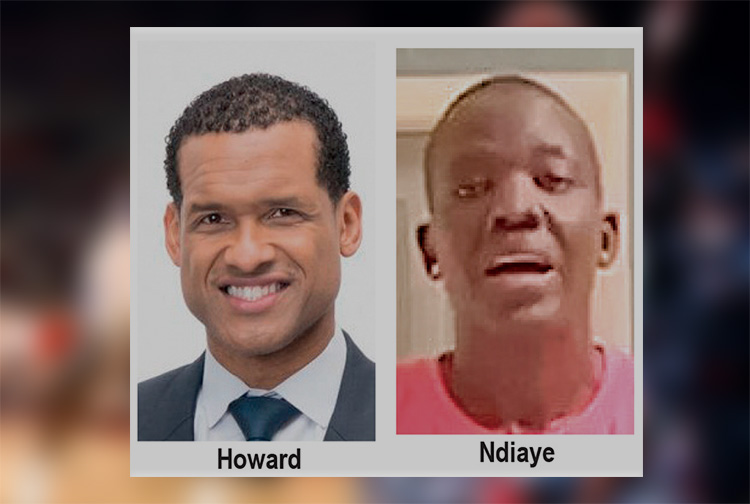
The U.S. Embassy in Colombo welcomed the U.S. Sports Envoys to Sri Lanka, former National Basketball Association (NBA) and Women’s National Basketball Association (WNBA) players Stephen Howard and Astou Ndiaye, from June 8 through 14.
The Public Diplomacy section of the U.S. Embassy said that it would launch a weeklong basketball program intended to harness the unifying power of sports, made possible through collaboration with Foundation of Goodness and IImpact Hoop Lab.
While in Sri Lanka, Howard and Ndiaye, both retired professional basketball players, will conduct a weeklong program, Hoops for Hope: Bridging Borders through Basketball. The Sports Envoys will lead basketball clinics and exhibition matches and engage in leadership sessions in Colombo and Southern Province for youth aged 14-18 from Northern, Uva, Eastern and Western Provinces, offering skills and leadership training both on and off the court. The U.S. Envoys will also share their expertise with the Sri Lanka Basketball Federation, national coaches, and players, furthering the development of basketball in the country. Beyond the clinics, they will collaborate with Sri Lankan schoolchildren to take part in a community service project in the Colombo area.
“We are so proud to welcome Stephen and Astou as our Sports Envoys to Sri Lanka, to build on the strong people-to-people connections between the United States and Sri Lanka,” said U.S. Ambassador Julie Chung. “The lessons that will be shared by our Sports Envoys – communication, teamwork, resilience, inclusion, and conflict resolution – are essential for leadership development, community building, equality, and peace. The U.S. Sports Envoy program is a testament to our belief that sports can be a powerful tool in promoting peace and unity.”
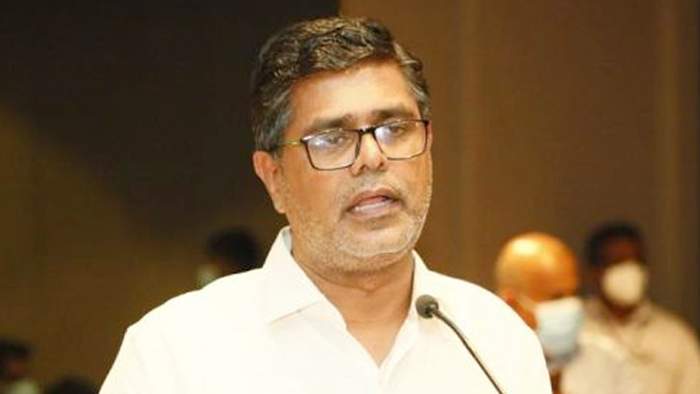
SJB Colombo District MP Mujibur Rahuman in parliament demanded to know from the government the reasons for CEB suspending the leave of all its employees until further notice from Thursday.
MP Rahuman said that the CEB has got an acting General Manager anew and the latter yesterday morning issued a circular suspending leave of all CEB employees with immediate effect until further notice.
“We demand that Minister Kanchana Wijesekera should explain this to the House. This circular was issued while this debate on the new Electricity Amendment Bill was pending. There are many who oppose this Bill. The Minister must tell parliament the reason for the urge to cancel the leave of CEB employees,” the MP said.However, Speaker Mahinda Yapa Abeywardena prevented Minister Wijesekera responding to the query and said that the matter raised by MP Rahuman was not relevant.
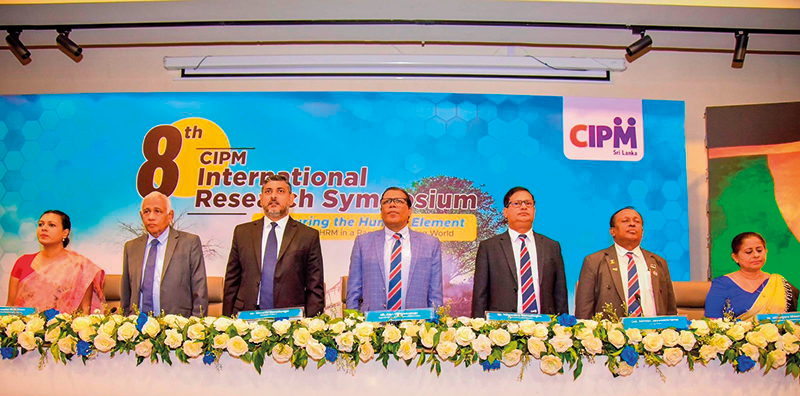
The Chartered Institute of Personnel Management (CIPM) successfully concluded the 8th Annual CIPM Symposium, which took place on 31st May 2024. Themed “Nurturing the Human Element—Redefining HRM in a Rapidly Changing World,” the symposium underscored the pivotal role of human resource management (HRM) in today’s dynamic global landscape. Since its inception in 1959, CIPM has been dedicated to advancing the HR profession through education, professional development, and advocacy, solidifying its position as Sri Lanka’s leading professional body for HRM.
Ken Vijayakumar, the President of the CIPM, graced the occasion as the chief guest. The symposium commenced with the welcome address by the Chairperson, Prof. Arosha Adikaram, followed by the Web Launch of the Symposium Proceedings and Abstract Book by the CIPM President. The event featured distinguished addresses, including a speech by Chief Guest Ken Vijayakumar, President of CIPM, and an address by Guest of Honor Shakthi Ranatunga, Chief Operating Officer of MAS Holdings Pvt. Ltd., Sri Lanka.
The symposium also featured an inspiring keynote address by Prof. Mario Fernando, Professor of Management and Director of the Centre for Cross Cultural Management (CCCM) at the University of Wollongong, Australia.
Vote of Thanks of the inauguration session was delivered by Dr. Dillanjani Weeratunga, Symposium Co-chair.
The symposium served as a comprehensive platform for researchers to present their findings across a wide range of critical topics in HRM. These included Cultural Diversity and Inclusion, Talent Development and Retention, Ethical Leadership and Corporate Social Responsibility, Adapting to Technological Advancements, Mental Health and Well-being at Work, Global Workforce Challenges, Employee Empowerment, and Reskilling and Upskilling.
The plenary session was led by Prof. Wasantha Rajapakse. Certificates were awarded to the best paper presenters during the valedictory session, followed by a vote of thanks delivered by Kamani Perera, Manager of Research and Development.
The annual symposium of CIPM was a truly inclusive event, attracting a diverse audience that spanned undergraduates, graduates, working professionals, research scholars and lecturers. This widespread interest highlights the symposium’s significance in the field of HRM, offering a unique opportunity for everyone to network and learn from scholarly brains.The CIPM International Research Symposium was sponsored by Hambantota International Port, Sri Lanka Institute of Information Technology (SLIIT), E B Creasy & Co. PLC, and Print Xcel Company.



US sports envoys to Lanka to champion youth development

Rahuman questions sudden cancellation of leave of CEB employees


