
News
Whiteflies a growing threat to coconut and other crops in Sri Lanka

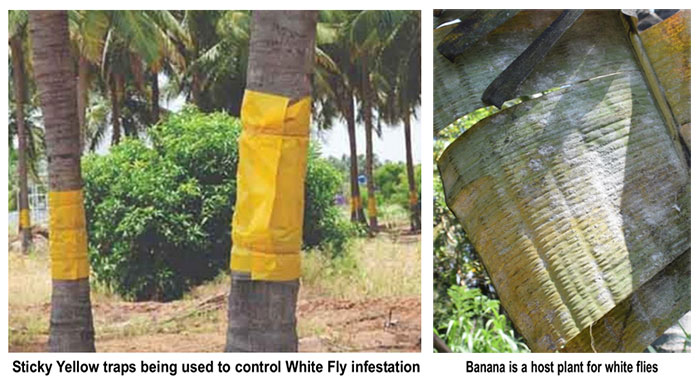
Text and pictures by PRIYAN DE SILVA
White flies (Aleyrodidae) have become a threat to coconut and other agricultural crops in Sri Lanka. They damage plants by sucking out its juices. Heavily infested plants can be seriously weakened. Leaves often turn yellow, appear dry and drop prematurely. White flies also transmit crop viruses.
Deputy Director (Research) at the Coconut Research Institute (CRI) Lunuwila, Dr. Nayanie Aratchige says that around 1,500 species of White Fly have been reported from around the world of which four species, Aleurotrachelus atratus (Palm-infesting whitefly), Paraleyrodes minei (Citrus nesting whitefly), Aleurodicus dispersus (Spiraling whitefly) and Aleurodicus cocois (Coconut whitefly) are presently a threat to coconut palms in Sri Lanka.
Dr Aratchige said that the first mention of the White Fly plaguing coconut palms was in Barbados in 1846, and that outbreaks have been reported in the Caribbean and South American regions since the 1990s and outbreaks of Rugose spiraling whitefly (Aleurodicus rugioperculatus) in India since 2016.
The species Aleurodicus dispersus (spiraling white fly) has been present in Sri Lanka since 1990 but it was previously considered a minor pest to coconut palms.
The first major white fly outbreak in coconut plantations in Sri Lanka was reported in 2019 from the Kegalle District and it is believed to have been caused by the accidental introduction of a new species via illegal importation of seedlings, the impact of climate change, sudden drop of natural enemy populations of the native population of whiteflies due to excessive use of insecticides on other crops.

Dr. Nayanie Aratchige
Dr Aratchige said that White Flies had invaded coconut plantations in Gampaha, Kegalle, Kandy, Kalutara, Colombo, Kurunegala, Ratnapura, Puttalam and even the Galle, Matara and Hambantota Districts, which have been battling the Weligama Coconut Leaf Wilt disease for over a decade.
Banana, guava, citrus, avocado, eggplant, okra, cashew, Indian almond (Kottamba), caryota palm (Kithul palm), areca nut, ornamental plants, curry leaves, green chillie, mango, jackfruit, breadfruit, neem, pigeon pea, different varieties of pepper, Water melon, coffee, etc., host the White Fly.
The Coconut Research Institute and the Coconut Cultivation Board are conducting awareness programmes on the identification of the pest and coordinated spraying of insecticides.
Sticky traps
Dr Aratchige said that placing yellow sticky traps or spraying of the following insecticides to control the menace is recommended.
Neem oil and soap mixture
(Neem oil – 10 ml, Soap powder – 05 g dissolved in 1 L of water) or
Thiamethoxam (Actara)
(3g in 10 l of water) or Carbosulfan (Marshal 20) (20ml in 10 l of water) or Chlorantraniliprole+Thiomethoxam (Virtako 40G) (2.5g in 10 l of water)
Neem oil and soap mixture is recommended for all infested areas as this mixture is less toxic to the natural enemies of whiteflies. Artificial insecticides are particularly recommended for newly infested areas and the coconut seedling nurseries.
The CRI is further researching on methods of chemical and biological control and have sought assistance from other countries for importation of exotic natural enemies of the white fly.




The U.S. Embassy in Colombo welcomed the U.S. Sports Envoys to Sri Lanka, former National Basketball Association (NBA) and Women’s National Basketball Association (WNBA) players Stephen Howard and Astou Ndiaye, from June 8 through 14.
The Public Diplomacy section of the U.S. Embassy said that it would launch a weeklong basketball program intended to harness the unifying power of sports, made possible through collaboration with Foundation of Goodness and IImpact Hoop Lab.
While in Sri Lanka, Howard and Ndiaye, both retired professional basketball players, will conduct a weeklong program, Hoops for Hope: Bridging Borders through Basketball. The Sports Envoys will lead basketball clinics and exhibition matches and engage in leadership sessions in Colombo and Southern Province for youth aged 14-18 from Northern, Uva, Eastern and Western Provinces, offering skills and leadership training both on and off the court. The U.S. Envoys will also share their expertise with the Sri Lanka Basketball Federation, national coaches, and players, furthering the development of basketball in the country. Beyond the clinics, they will collaborate with Sri Lankan schoolchildren to take part in a community service project in the Colombo area.
“We are so proud to welcome Stephen and Astou as our Sports Envoys to Sri Lanka, to build on the strong people-to-people connections between the United States and Sri Lanka,” said U.S. Ambassador Julie Chung. “The lessons that will be shared by our Sports Envoys – communication, teamwork, resilience, inclusion, and conflict resolution – are essential for leadership development, community building, equality, and peace. The U.S. Sports Envoy program is a testament to our belief that sports can be a powerful tool in promoting peace and unity.”
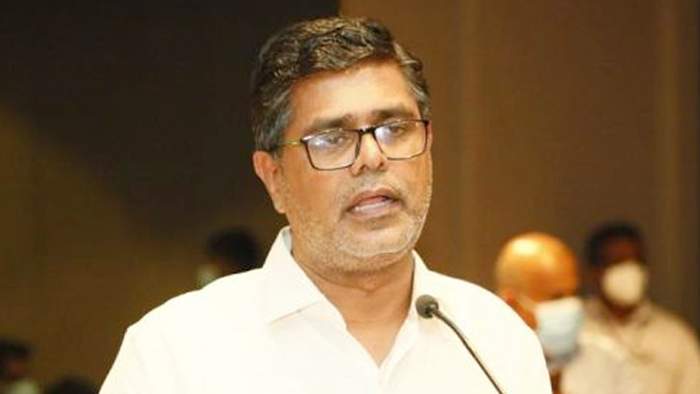
SJB Colombo District MP Mujibur Rahuman in parliament demanded to know from the government the reasons for CEB suspending the leave of all its employees until further notice from Thursday.
MP Rahuman said that the CEB has got an acting General Manager anew and the latter yesterday morning issued a circular suspending leave of all CEB employees with immediate effect until further notice.
“We demand that Minister Kanchana Wijesekera should explain this to the House. This circular was issued while this debate on the new Electricity Amendment Bill was pending. There are many who oppose this Bill. The Minister must tell parliament the reason for the urge to cancel the leave of CEB employees,” the MP said.However, Speaker Mahinda Yapa Abeywardena prevented Minister Wijesekera responding to the query and said that the matter raised by MP Rahuman was not relevant.
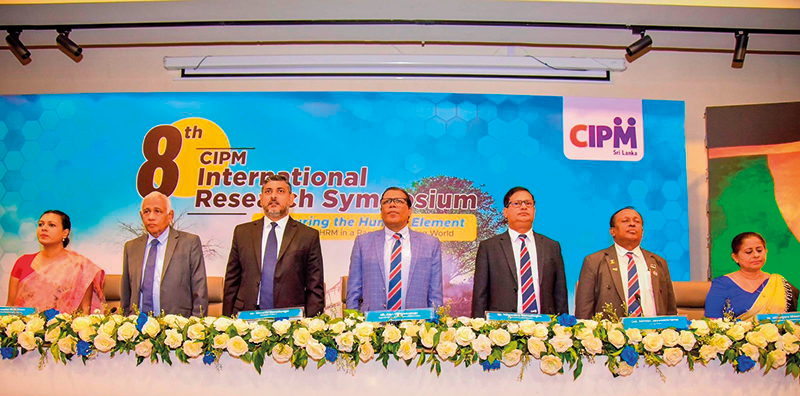
The Chartered Institute of Personnel Management (CIPM) successfully concluded the 8th Annual CIPM Symposium, which took place on 31st May 2024. Themed “Nurturing the Human Element—Redefining HRM in a Rapidly Changing World,” the symposium underscored the pivotal role of human resource management (HRM) in today’s dynamic global landscape. Since its inception in 1959, CIPM has been dedicated to advancing the HR profession through education, professional development, and advocacy, solidifying its position as Sri Lanka’s leading professional body for HRM.
Ken Vijayakumar, the President of the CIPM, graced the occasion as the chief guest. The symposium commenced with the welcome address by the Chairperson, Prof. Arosha Adikaram, followed by the Web Launch of the Symposium Proceedings and Abstract Book by the CIPM President. The event featured distinguished addresses, including a speech by Chief Guest Ken Vijayakumar, President of CIPM, and an address by Guest of Honor Shakthi Ranatunga, Chief Operating Officer of MAS Holdings Pvt. Ltd., Sri Lanka.
The symposium also featured an inspiring keynote address by Prof. Mario Fernando, Professor of Management and Director of the Centre for Cross Cultural Management (CCCM) at the University of Wollongong, Australia.
Vote of Thanks of the inauguration session was delivered by Dr. Dillanjani Weeratunga, Symposium Co-chair.
The symposium served as a comprehensive platform for researchers to present their findings across a wide range of critical topics in HRM. These included Cultural Diversity and Inclusion, Talent Development and Retention, Ethical Leadership and Corporate Social Responsibility, Adapting to Technological Advancements, Mental Health and Well-being at Work, Global Workforce Challenges, Employee Empowerment, and Reskilling and Upskilling.
The plenary session was led by Prof. Wasantha Rajapakse. Certificates were awarded to the best paper presenters during the valedictory session, followed by a vote of thanks delivered by Kamani Perera, Manager of Research and Development.
The annual symposium of CIPM was a truly inclusive event, attracting a diverse audience that spanned undergraduates, graduates, working professionals, research scholars and lecturers. This widespread interest highlights the symposium’s significance in the field of HRM, offering a unique opportunity for everyone to network and learn from scholarly brains.The CIPM International Research Symposium was sponsored by Hambantota International Port, Sri Lanka Institute of Information Technology (SLIIT), E B Creasy & Co. PLC, and Print Xcel Company.



US sports envoys to Lanka to champion youth development

Rahuman questions sudden cancellation of leave of CEB employees


