
News
FM accuses UNHRC of resorting to punitive, politicised, divisive, unhelpful action against Lanka for extraneous reasons

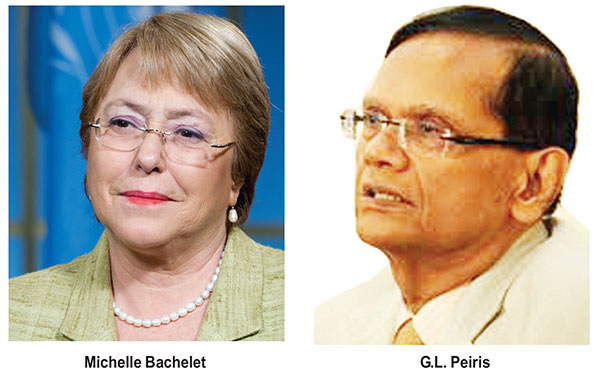
The Foreign Ministry has accused the UNHRC of resorting to punitive, politicised, divisive, unhelpful action against Sri Lanka due to extraneous reasons.
The OHCHR has now established a “Sri Lanka Accountability Project” citing resolution 46/1, in a situation where the language of OP6 (Operative Paragraph) in resolution 46/1 only sought to “strengthen the capacity of the OHCHR to collect, consolidate, analyse and preserve…evidence.” Thus, what was supposed to be only an internal capacity building exercise, within the OHCHR, has arbitrarily been elevated to the level of a project and listed with other external mechanisms of the UNHRC, the Foreign Ministry alleged in a statement that dealt with the 49th session of the UNHRC.
Text of the statement issued yesterday: “The delegation from Colombo that attended the 49th session of the Human Rights Council, in Geneva, was led by the Minister of Foreign Affairs, Professor G.L. Peiris, and comprised the following members: Minister of Justice Ali Sabry, State Minister of Production Supply and Regulation of Pharmaceuticals Prof. Channa Jayasumana, Foreign Secretary Admiral Prof. Jayanath Colombage, and Additional Solicitor General Nerin Pulle.
The 49th session of the Human Rights Council was held in a backdrop where a written update on Sri Lanka was to be presented to the Council by the UN High Commissioner for Human Rights in pursuance of resolution 46/1 which was adopted in March 2021, without the consent of Sri Lanka as the country concerned, and with only 22 of the 47 Council members voting in favour of it.
Operative Paragraph 6 of this resolution set a very dangerous precedent by requiring the Office of the High Commissioner to take on the role of collecting criminal evidence with a view to future prosecution. Due to its fundamentally flawed nature, even countries that voted in favour of resolution 46/1, in their ‘explanation of the vote’ expressed reservations regarding this new task assigned to the OHCHR which is not consistent with its founding document GA resolution 48/141.
The OHCHR has now established a “Sri Lanka Accountability Project,” citing resolution 46/1, in a situation where the language of OP6 in resolution 46/1 only sought to “strengthen the capacity of the OHCHR to collect, consolidate, analyse and preserve…evidence.” Thus, what was supposed to be only an internal capacity building exercise, within the OHCHR, has arbitrarily been elevated to the level of a project and listed with other external mechanisms of the UNHRC.
Furthermore, all this adversarial action is taking place in Geneva in a situation where the Government of Sri Lanka is vigorously engaged in initiating and implementing a series of national processes, aimed at advancing reconciliation and human rights for all our people. In this context, it was important for Sri Lanka to explain to the stakeholders in Geneva, including the Council, UN Member States and other relevant actors, our position on this matter and to present before them the significant progress that Sri Lanka has achieved, in this regard, even amidst COVID 19 – related challenges.
The Minister of Foreign Affairs addressed the High Level Segment of HRC49 on 1 March 2022 highlighting Sri Lanka’s longstanding profile as an active participant in the multilateral framework, the national Constitutional, legal and institutional frameworks that are in place for the realisation of human rights, including the right to development, and our achievements in this regard. The Minister also stressed the importance of the HRC being guided by the principles of impartiality, objectivity and non-selectivity, based on the principle of the sovereign equality of Member States, and raised objections to punitive, politicised, divisive, unhelpful action, initiated due to extraneous reasons.
The Minister of Foreign Affairs made a statement, on behalf of Sri Lanka, as the country concerned at the interactive dialogue that followed the introduction of the written update on Sri Lanka on 4 March 2022, pointing out among other things, that resolution 46/1 on Sri Lanka was directly contrary to the founding principles of the HRC. He also pointed out to the Council, the aspects of the High Commissioner’s written update that were discriminatory and intrusive.
At the Interactive Dialogue on the High Commissioner’s written update, Sri Lanka received cross-regional support and solidarity from a large number of countries of the Global South, who appreciated the Government’s significant efforts towards reconciliation and reiterated the importance of objective and constructive cooperation as the fundamental basis for multilateral engagement. Of the 45 countries that delivered statements at the interactive dialogue, 31 spoke in support of Sri Lanka. These speakers represented a broad spectrum of states from South, South East and Central Asia, Latin America and the Africa.
The 31 countries that spoke in favour of Sri Lanka, at the interactive dialogue, were Saudi Arabia, Egypt, the Philippines, Nepal, Kenya, Ethiopia, Maldives, China, Cuba, Japan, Syrian Arab Republic, Viet Nam, DPRK, Venezuela, Nigeria, Pakistan, Cambodia, the Russian Federation, Lebanon, Uganda, Belarus, Zimbabwe, Eritrea, South Sudan, Lao PDR, Yemen, Iran, Niger, Kazakhstan, Bangladesh and Azerbaijan.
In addition, in its statement, at the General Debate on Item 2 that followed, the interactive dialogue on Sri Lanka, South Korea also recognised Sri Lanka’s efforts at reconciliation and at initiating legal reforms.
The interventions from the States of the Global South recognised Sri Lanka’s commitment to promoting reconciliation and human rights through national processes, including through legislative reform, and the progress achieved in this regard, irrespective of COVID 19 – related challenges. They also underscored the importance of the Human Rights Council and the international community supporting voluntary national processes, as well as upholding the core principles of impartiality, non-selectivity and non-politicisation.
Among the matters stressed by the intervenient delegations were concerns over the micro-management of Sri Lanka’s internal constitutional and governance matters, and the imperative of strict adherence to the provisions of UN Charter and relevant UNGA and HRC resolutions. It was also stressed that cooperation with international human rights mechanisms should be without any external pressure from outside, with states having the power to determine its priorities and areas for international assistance and that only cooperative action will be truly effective and contribute to the real strengthening of human rights in a country.
Certain intervenient delegations also disagreed with the role being set for the OHCHR in collecting evidence, noting that the decision of the OHCHR to establish an “accountability project” is a breach of its mandate. The exorbitant cost of this mandate, in the region of US$ 3 million, was also commented on.
The delegation from Colombo held bi-lateral meetings with the following foreign delegations on the sidelines of HRC49 listed in the order in which they took place. – Lord Tariq Ahmed, Minister of State for South and Central Asia, UN and the Commonwealth accompanied by Rita French Ambassador/DPR of the UK. – Baroness Patricia Scotland, Commonwealth Secretary General – Minister of Foreign Affairs and Cooperation of Timor-Leste Mrs. Adaljiza Magno – Mrs. Nassima Baghli, Ambassador, Permanent Observer, Permanent Delegation of the Organization of Islamic Cooperation – Mr. Daren Tang, Director General, World Intellectual Property Organization (WIPO) – Mr Abdulaziz M.O. Alwasil, Permanent Representative of Saudi Arabia – Foreign Minister of Palestine Rizad Al Maliki and Mr Ibrahim Khraishi, Permanent Representative of Palestine to the UN in Geneva – Federal Minister for Human Rights of Pakistan, Ms Shireen M Mazari and the Permanent Representative of Pakistan in Geneva Mr Khalil Hashmi. – Minister of International Relations and Cooperation of South Africa, Dr Naledi Pandor – Vice Minister of Foreign Affairs for Human Rights and Humanitarian Affairs of Egypt Khaled El Bakry, and Mr. Ahmed Ihab Abdelahad Gamaleldin, Permanent Representative of Egypt – Permanent Representative of the USA in Geneva Ms.Bathsheba Nell Crocker – Permanent Representative of the UK Mr. Simon MANLEY, and Mrs. Amanda GORELY, Permanent Representative of Australia – Deputy Head of the Judiciary of the Islamic Republic of Iran Dr Kazem Gharibabadi, and H.E. Mr. Esmaeil Baghaei Hamaneh, Permanent Representative of Iran – Permanent Representative of Turkey Mr. Sadik Arslan – UN High Commissioner For Human Rights Michelle Bachelet – President of the Human Rights Council Mr. Federico Villegas, Permanent Representative of Argentina – Permanent Representative of Bangladesh Md. Mustafizur Rahman, and Febrian Ruddyard, Permanent Representative of Indonesia.
In addition to the above, State Minister of Production Supply and Regulation of Pharmaceuticals Prof. Channa Jayasumana held the following bi-laterals with – Dr Tedross Adhanom Ghebreyesus, Director General, World Health Organization – Mr Santiago Cornejo, Director of COVAX’s Country Engagement Team.



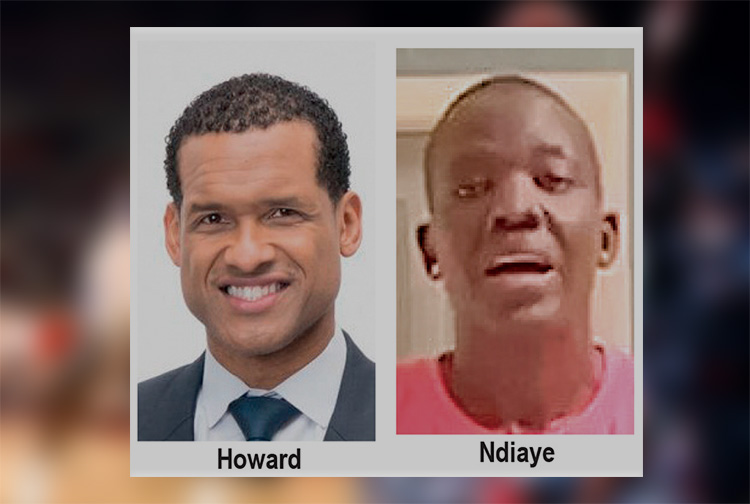
The U.S. Embassy in Colombo welcomed the U.S. Sports Envoys to Sri Lanka, former National Basketball Association (NBA) and Women’s National Basketball Association (WNBA) players Stephen Howard and Astou Ndiaye, from June 8 through 14.
The Public Diplomacy section of the U.S. Embassy said that it would launch a weeklong basketball program intended to harness the unifying power of sports, made possible through collaboration with Foundation of Goodness and IImpact Hoop Lab.
While in Sri Lanka, Howard and Ndiaye, both retired professional basketball players, will conduct a weeklong program, Hoops for Hope: Bridging Borders through Basketball. The Sports Envoys will lead basketball clinics and exhibition matches and engage in leadership sessions in Colombo and Southern Province for youth aged 14-18 from Northern, Uva, Eastern and Western Provinces, offering skills and leadership training both on and off the court. The U.S. Envoys will also share their expertise with the Sri Lanka Basketball Federation, national coaches, and players, furthering the development of basketball in the country. Beyond the clinics, they will collaborate with Sri Lankan schoolchildren to take part in a community service project in the Colombo area.
“We are so proud to welcome Stephen and Astou as our Sports Envoys to Sri Lanka, to build on the strong people-to-people connections between the United States and Sri Lanka,” said U.S. Ambassador Julie Chung. “The lessons that will be shared by our Sports Envoys – communication, teamwork, resilience, inclusion, and conflict resolution – are essential for leadership development, community building, equality, and peace. The U.S. Sports Envoy program is a testament to our belief that sports can be a powerful tool in promoting peace and unity.”
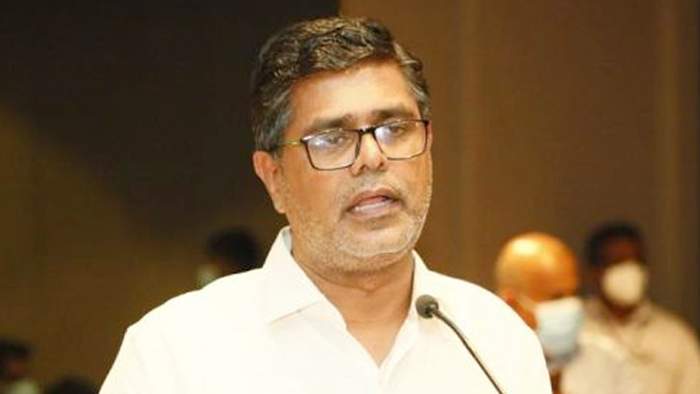
SJB Colombo District MP Mujibur Rahuman in parliament demanded to know from the government the reasons for CEB suspending the leave of all its employees until further notice from Thursday.
MP Rahuman said that the CEB has got an acting General Manager anew and the latter yesterday morning issued a circular suspending leave of all CEB employees with immediate effect until further notice.
“We demand that Minister Kanchana Wijesekera should explain this to the House. This circular was issued while this debate on the new Electricity Amendment Bill was pending. There are many who oppose this Bill. The Minister must tell parliament the reason for the urge to cancel the leave of CEB employees,” the MP said.However, Speaker Mahinda Yapa Abeywardena prevented Minister Wijesekera responding to the query and said that the matter raised by MP Rahuman was not relevant.
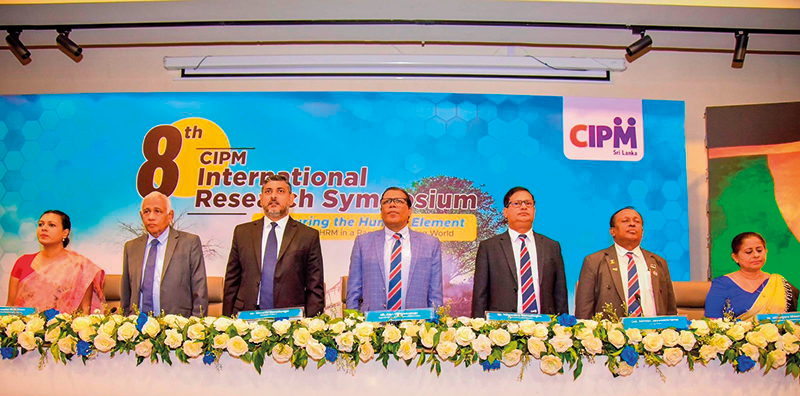
The Chartered Institute of Personnel Management (CIPM) successfully concluded the 8th Annual CIPM Symposium, which took place on 31st May 2024. Themed “Nurturing the Human Element—Redefining HRM in a Rapidly Changing World,” the symposium underscored the pivotal role of human resource management (HRM) in today’s dynamic global landscape. Since its inception in 1959, CIPM has been dedicated to advancing the HR profession through education, professional development, and advocacy, solidifying its position as Sri Lanka’s leading professional body for HRM.
Ken Vijayakumar, the President of the CIPM, graced the occasion as the chief guest. The symposium commenced with the welcome address by the Chairperson, Prof. Arosha Adikaram, followed by the Web Launch of the Symposium Proceedings and Abstract Book by the CIPM President. The event featured distinguished addresses, including a speech by Chief Guest Ken Vijayakumar, President of CIPM, and an address by Guest of Honor Shakthi Ranatunga, Chief Operating Officer of MAS Holdings Pvt. Ltd., Sri Lanka.
The symposium also featured an inspiring keynote address by Prof. Mario Fernando, Professor of Management and Director of the Centre for Cross Cultural Management (CCCM) at the University of Wollongong, Australia.
Vote of Thanks of the inauguration session was delivered by Dr. Dillanjani Weeratunga, Symposium Co-chair.
The symposium served as a comprehensive platform for researchers to present their findings across a wide range of critical topics in HRM. These included Cultural Diversity and Inclusion, Talent Development and Retention, Ethical Leadership and Corporate Social Responsibility, Adapting to Technological Advancements, Mental Health and Well-being at Work, Global Workforce Challenges, Employee Empowerment, and Reskilling and Upskilling.
The plenary session was led by Prof. Wasantha Rajapakse. Certificates were awarded to the best paper presenters during the valedictory session, followed by a vote of thanks delivered by Kamani Perera, Manager of Research and Development.
The annual symposium of CIPM was a truly inclusive event, attracting a diverse audience that spanned undergraduates, graduates, working professionals, research scholars and lecturers. This widespread interest highlights the symposium’s significance in the field of HRM, offering a unique opportunity for everyone to network and learn from scholarly brains.The CIPM International Research Symposium was sponsored by Hambantota International Port, Sri Lanka Institute of Information Technology (SLIIT), E B Creasy & Co. PLC, and Print Xcel Company.



US sports envoys to Lanka to champion youth development

Rahuman questions sudden cancellation of leave of CEB employees


