
News
Chinese investments in Sri Lanka does not automatically translates into political influence – Menon

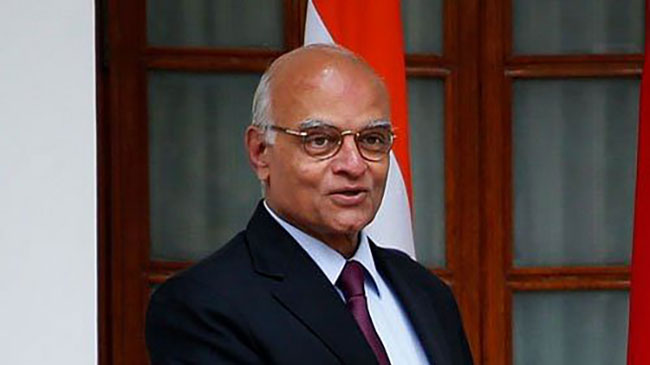
Former Indian Foreign Secretary, Shivshankar Menon has said that although China has invested heavily in countries like Pakistan and Sri Lanka, that does not automatically translate into political influence over a country’s foreign policy, popularity, or into soft power.
He said this responding to a question on the role of China’s Belt and Road Initiative (BRI) plays in advancing China’s economic and soft power interests in South Asia during an interview with E-International Relations magazine.
“The BRI plays a very considerable role in advancing China’s interests. It plays to China’s strengths, which are economic, where it is not really matched by any other power in the subcontinent. Nor do outside powers prioritise countervailing China’s growing influence in the subcontinent. By committing over US$ 100 billion to BRI projects in the subcontinent, China has made herself indispensable to the infrastructure and economic plans of the leaders of several countries in the subcontinent,” he said.
However, at the same time the examples of Pakistan and Sri Lanka suggest that one should be cautious in drawing the conclusion that this automatically translates into political influence over a country’s foreign policy, popularity, or into soft power, he said.
“The attractiveness of the Chinese model or way of doing things is still rather limited, as is their power of attraction. This is still a work in progress and the Chinese leadership has often spoken of the need for China to gain soft power. So, its impact on India’s relations with these countries has not, to my mind, yet peaked. India has other affinities and common interests with our neighbours that China cannot match that I think we should concentrate on, rather than trying to match or imitate China,” he said.
Menon added that in his recent book ‘India and Asian Geopolitics: The Past, Present‘, he suggests that China will not behave as Western powers have. He said that the Chinese are very conscious of their own political and strategic tradition. China, particularly their present leadership, see the last 150 years as a historical aberration, a “century of humiliation,” Menon said.
“It is an aberration in their mind from an imagined past when China was the preeminent power in the world, the largest economy, a technological leader, and so on. Objective historians and non-Chinese might have their own, different view of the past, but it is this perspective and the quest for primacy it produces that seems to drive China’s international behaviour now,” he said.
China’s is a different strategic culture from that of the two previous global superpowers, Great Britain and the USA, he said. The former Indian Foreign Secretary said that China’s geography, history, resource endowment and dependencies on the world are different from those western powers.
“Hence my sense is that they will not behave as western powers have. Today, China is yet to be a global superpower, and it is difficult to predict whether she will succeed in this quest, which is facing resistance,” he said.
Menon also said that if the political relationship between China and India remains adversarial, cutting their economic dependencies on China would become a strategic necessity.
“To my mind, the two countries need to find a new paradigm for the relationship, or a new strategic framework, within which to manage or settle these issues and to take the relationship forward. In other words, the present situation calls for a fundamental reset of India-China relations,” he said.
He added that the biggest challenge for India in the last decade was the fact that the international environment became less supportive of the efforts to transform India, particularly after the global economic crisis that began in 2007-8.
“The rise of China and the growth of China-US strategic rivalry changed the situation, opening new opportunities for India-US relations but also creating challenges in our neighbourhood and on the India-China border where China has been changing the status quo. China has emerged unequivocally as our greatest strategic challenge but is also our greatest trading partner. We now face a complex set of relationships with all our neighbours and the major powers in a world that is adrift between orders,” Menon said.
Menon also said that the idea of hard linear boundaries is a relatively recent one in history, a feature of the Westphalian state that has acquired popular legitimacy with the rise of nationalism. However, South Asia has “old nations in new states” he said, pointing to the limitations of these boundaries.
“For most of history, borders, as opposed to linear boundaries, were zones of interaction and communities straddled these borders, while trading, traveling, and carrying on the normal business of life across these porous borders.
With the evolution of India and its neighbours into modern Westphalian states in the second half of the 21st century, and the partitioning of the subcontinent into post-colonial states, hard boundaries were imposed on ancient communities and nations which did not coincide with natural features or ethnic divisions or with their patterns of life.
This is why border zones in most of our countries have been unstable and increasingly securitised by the state, with unfortunate consequences for the inhabitants. The most extreme example of this phenomenon is Pakistan. But I do believe that there are political and economic solutions to these issues which are increasingly being practised by the other countries in the subcontinent, such as India and Bangladesh,” he said.



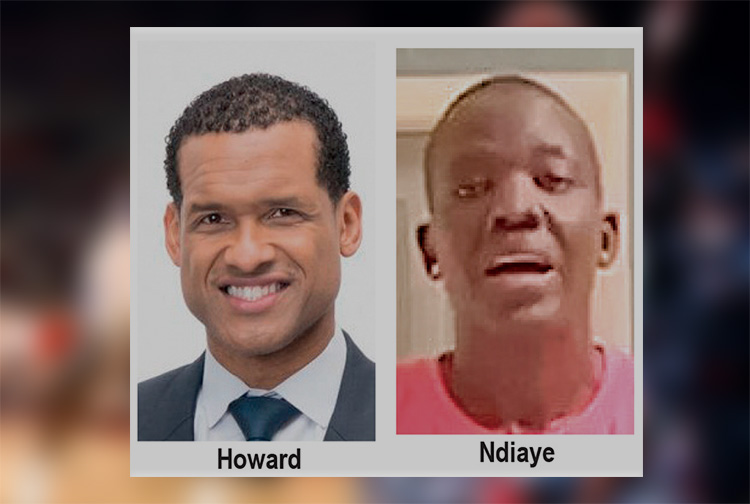
The U.S. Embassy in Colombo welcomed the U.S. Sports Envoys to Sri Lanka, former National Basketball Association (NBA) and Women’s National Basketball Association (WNBA) players Stephen Howard and Astou Ndiaye, from June 8 through 14.
The Public Diplomacy section of the U.S. Embassy said that it would launch a weeklong basketball program intended to harness the unifying power of sports, made possible through collaboration with Foundation of Goodness and IImpact Hoop Lab.
While in Sri Lanka, Howard and Ndiaye, both retired professional basketball players, will conduct a weeklong program, Hoops for Hope: Bridging Borders through Basketball. The Sports Envoys will lead basketball clinics and exhibition matches and engage in leadership sessions in Colombo and Southern Province for youth aged 14-18 from Northern, Uva, Eastern and Western Provinces, offering skills and leadership training both on and off the court. The U.S. Envoys will also share their expertise with the Sri Lanka Basketball Federation, national coaches, and players, furthering the development of basketball in the country. Beyond the clinics, they will collaborate with Sri Lankan schoolchildren to take part in a community service project in the Colombo area.
“We are so proud to welcome Stephen and Astou as our Sports Envoys to Sri Lanka, to build on the strong people-to-people connections between the United States and Sri Lanka,” said U.S. Ambassador Julie Chung. “The lessons that will be shared by our Sports Envoys – communication, teamwork, resilience, inclusion, and conflict resolution – are essential for leadership development, community building, equality, and peace. The U.S. Sports Envoy program is a testament to our belief that sports can be a powerful tool in promoting peace and unity.”
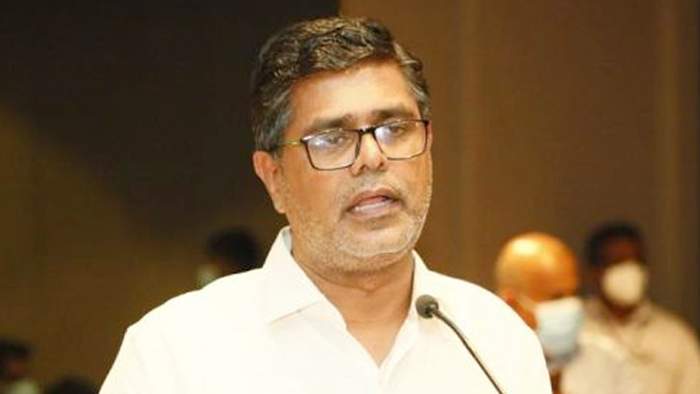
SJB Colombo District MP Mujibur Rahuman in parliament demanded to know from the government the reasons for CEB suspending the leave of all its employees until further notice from Thursday.
MP Rahuman said that the CEB has got an acting General Manager anew and the latter yesterday morning issued a circular suspending leave of all CEB employees with immediate effect until further notice.
“We demand that Minister Kanchana Wijesekera should explain this to the House. This circular was issued while this debate on the new Electricity Amendment Bill was pending. There are many who oppose this Bill. The Minister must tell parliament the reason for the urge to cancel the leave of CEB employees,” the MP said.However, Speaker Mahinda Yapa Abeywardena prevented Minister Wijesekera responding to the query and said that the matter raised by MP Rahuman was not relevant.
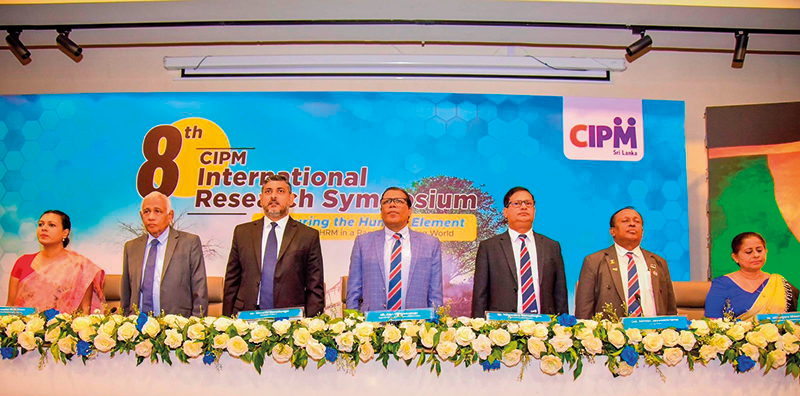
The Chartered Institute of Personnel Management (CIPM) successfully concluded the 8th Annual CIPM Symposium, which took place on 31st May 2024. Themed “Nurturing the Human Element—Redefining HRM in a Rapidly Changing World,” the symposium underscored the pivotal role of human resource management (HRM) in today’s dynamic global landscape. Since its inception in 1959, CIPM has been dedicated to advancing the HR profession through education, professional development, and advocacy, solidifying its position as Sri Lanka’s leading professional body for HRM.
Ken Vijayakumar, the President of the CIPM, graced the occasion as the chief guest. The symposium commenced with the welcome address by the Chairperson, Prof. Arosha Adikaram, followed by the Web Launch of the Symposium Proceedings and Abstract Book by the CIPM President. The event featured distinguished addresses, including a speech by Chief Guest Ken Vijayakumar, President of CIPM, and an address by Guest of Honor Shakthi Ranatunga, Chief Operating Officer of MAS Holdings Pvt. Ltd., Sri Lanka.
The symposium also featured an inspiring keynote address by Prof. Mario Fernando, Professor of Management and Director of the Centre for Cross Cultural Management (CCCM) at the University of Wollongong, Australia.
Vote of Thanks of the inauguration session was delivered by Dr. Dillanjani Weeratunga, Symposium Co-chair.
The symposium served as a comprehensive platform for researchers to present their findings across a wide range of critical topics in HRM. These included Cultural Diversity and Inclusion, Talent Development and Retention, Ethical Leadership and Corporate Social Responsibility, Adapting to Technological Advancements, Mental Health and Well-being at Work, Global Workforce Challenges, Employee Empowerment, and Reskilling and Upskilling.
The plenary session was led by Prof. Wasantha Rajapakse. Certificates were awarded to the best paper presenters during the valedictory session, followed by a vote of thanks delivered by Kamani Perera, Manager of Research and Development.
The annual symposium of CIPM was a truly inclusive event, attracting a diverse audience that spanned undergraduates, graduates, working professionals, research scholars and lecturers. This widespread interest highlights the symposium’s significance in the field of HRM, offering a unique opportunity for everyone to network and learn from scholarly brains.The CIPM International Research Symposium was sponsored by Hambantota International Port, Sri Lanka Institute of Information Technology (SLIIT), E B Creasy & Co. PLC, and Print Xcel Company.



US sports envoys to Lanka to champion youth development

Rahuman questions sudden cancellation of leave of CEB employees


