
News
Lanka’s Malik Peiris shares ‘China’s Nobel Prize’ of USD 1 mn with Yuen

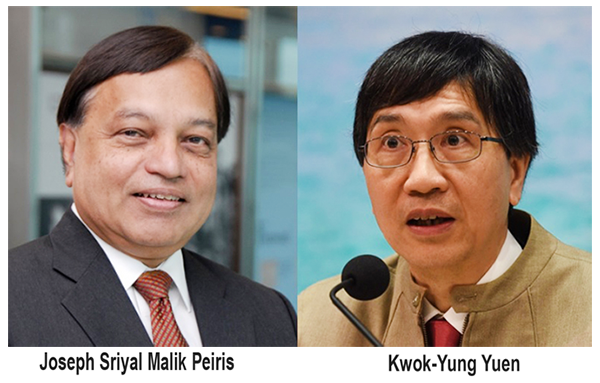
Hong Kong-based scientists Kwok-Yung Yuen and Sri Lanka’s Joseph Sriyal Malik Peiris won the prize in life sciences in the 2021 Future Science Prize, dubbed ‘China’s Nobel Prize’ for their major discoveries of SARS-CoV-1 as the causative agent of the global SARS outbreak in 2003 with impact on combating COVID-19 and emerging infectious diseases, the award organiser announced on Sunday.
The Chines Embassy in Colombo issued the following statement: “The Future Science Prize is a privately funded science honour established by a group of renowned scientists and entrepreneurs in 2016, aiming at recognising scientific breakthroughs and innovations in China with long-term significance to the world. The prize is given in three categories with $1 million for each award, namely the Life Science Prize, Physical Science Prize and Mathematics and Computer Science Prize.
Yuen, from the University of Hong Kong, told the Global Times in an exclusive interview on Sunday that “this is one of the most important prizes not just in China but also internationally. I am really honoured and grateful to get the recognition of the very eminent scientists of the selection committee for the prize.”
Wang Xiaodong, one of the reviewers of the award, said at Sunday’s press conference that “Chinese scientists were able to quickly identify the cause of the COVID-19 pandemic, thanks to their contributions.”
When asked how their discoveries affect people’s understanding of the cause of COVID-19, Yuen explained that since he and his team discovered in 2005 that the horseshoe bat was the natural animal reservouir for the ancestral SARS-CoV-1, they believe that SARSCoV-2 “also went from bats to another mammal(s) before jumping into humans”.
Moreover, SARS-CoV-2 replicates very well in both bat and human intestinal organs, which further supports the bat origin of SARS-CoV-2, he said. But there are also major differences between the two diseases, Yuen noted, in terms of “disease severity, asymptomatic or mildly symptomatic rates and the ability of the virus to suppress interferon and inflammatory responses.”
As world scientists call for the second phase of the coronavirus origins study, experts from the Chinese Centre for Disease Control and Prevention have suggested that investigations should be carried out in countries where horseshoe bats and pangolins reside, those with virus-positive animal data and which supplied Wuhan Huanan seafood market through cold-chain logistics, as more tests and molecular viral research suggest it is possible that the early outbreak in the Huanan market may have been sparked by cold-chain imports.
Jin Dongyan, a professor at the School of Biomedical Sciences at HKU, told the Global Times the same day that Yuen and his research team, where a group of world-leading researchers are gathered, are very valuable to the Hong Kong Special Administrative Region. “From SARS to COVID-19, the team has been engaged in coronavirus-related basic studies while combing through clinical studies. That working mode contributes to the outstanding work of the university to the study of infectious diseases,” Jin said.
Yuen and his research team are devoting their efforts to find out how to prevent potential re-emergence of a SARS and COVID-19-like public health crisis. Studies on the types of coronaviruses that exist in bats, the potential hosts of the cross-species transmission, as well as how humans transmitted the virus to animals are part of their research, Jin said.
Yuen also told the Global Times that he is working on many areas from the pathogenesis of the coronavirus to antivirals and vaccines. “My part of the awarded prize will go back to the HKU for teaching and research purposes,” he added.
Apart from Kwok-Yung Yuen and Joseph Sriyal Malik Peiris, Zhang Jie, a professor at Shanghai Jiao Tong University, won the Physical Science Prize for his development of laser-based fast electron beam technologies. Simon Sze from the “National Chiao Tung University” in the island of Taiwan won the prize in mathematics and computer science.
The science committee of the prizes, composed of 23 outstanding scientists, is at the core of the award selection. Mau-Chung Frank Chang, chairman of the committee, said that the nomination and selection of the prize was established in accordance with the Nobel Prize system, in which the committee invites international experts as nominators and then solicits evaluation letters from experts in relevant fields of the nominated work. Based on the evaluations, the committee then votes to select the final award winners.
In the previous five years, 20 winners were awarded the Future Science Prize, all of whom have been widely recognised both in scientific circles and society. The late Yuan Longping, known as “the father of hybrid rice,” was awarded the Life Science Prize in 2018 “for pioneering the use of hybrid vigor to achieve higher yield and increased stress resistance in rice.”



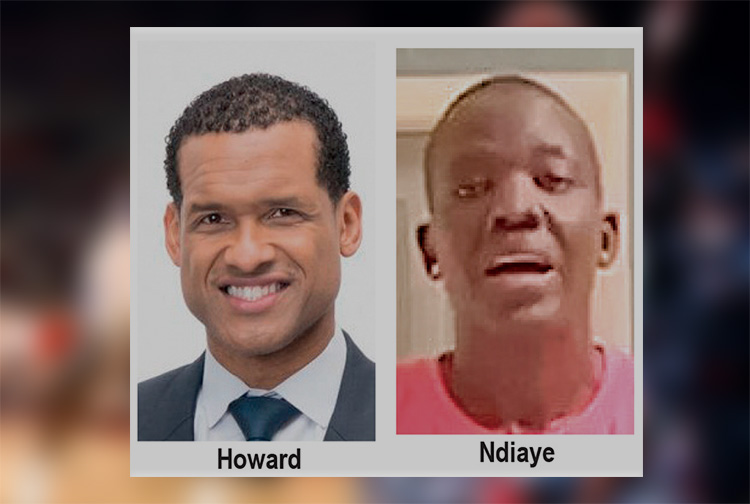
The U.S. Embassy in Colombo welcomed the U.S. Sports Envoys to Sri Lanka, former National Basketball Association (NBA) and Women’s National Basketball Association (WNBA) players Stephen Howard and Astou Ndiaye, from June 8 through 14.
The Public Diplomacy section of the U.S. Embassy said that it would launch a weeklong basketball program intended to harness the unifying power of sports, made possible through collaboration with Foundation of Goodness and IImpact Hoop Lab.
While in Sri Lanka, Howard and Ndiaye, both retired professional basketball players, will conduct a weeklong program, Hoops for Hope: Bridging Borders through Basketball. The Sports Envoys will lead basketball clinics and exhibition matches and engage in leadership sessions in Colombo and Southern Province for youth aged 14-18 from Northern, Uva, Eastern and Western Provinces, offering skills and leadership training both on and off the court. The U.S. Envoys will also share their expertise with the Sri Lanka Basketball Federation, national coaches, and players, furthering the development of basketball in the country. Beyond the clinics, they will collaborate with Sri Lankan schoolchildren to take part in a community service project in the Colombo area.
“We are so proud to welcome Stephen and Astou as our Sports Envoys to Sri Lanka, to build on the strong people-to-people connections between the United States and Sri Lanka,” said U.S. Ambassador Julie Chung. “The lessons that will be shared by our Sports Envoys – communication, teamwork, resilience, inclusion, and conflict resolution – are essential for leadership development, community building, equality, and peace. The U.S. Sports Envoy program is a testament to our belief that sports can be a powerful tool in promoting peace and unity.”
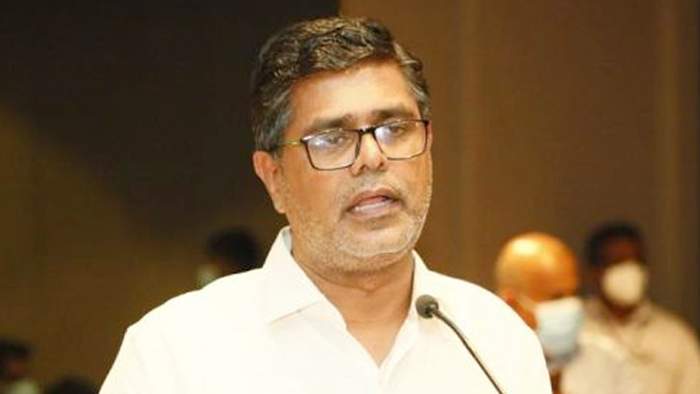
SJB Colombo District MP Mujibur Rahuman in parliament demanded to know from the government the reasons for CEB suspending the leave of all its employees until further notice from Thursday.
MP Rahuman said that the CEB has got an acting General Manager anew and the latter yesterday morning issued a circular suspending leave of all CEB employees with immediate effect until further notice.
“We demand that Minister Kanchana Wijesekera should explain this to the House. This circular was issued while this debate on the new Electricity Amendment Bill was pending. There are many who oppose this Bill. The Minister must tell parliament the reason for the urge to cancel the leave of CEB employees,” the MP said.However, Speaker Mahinda Yapa Abeywardena prevented Minister Wijesekera responding to the query and said that the matter raised by MP Rahuman was not relevant.
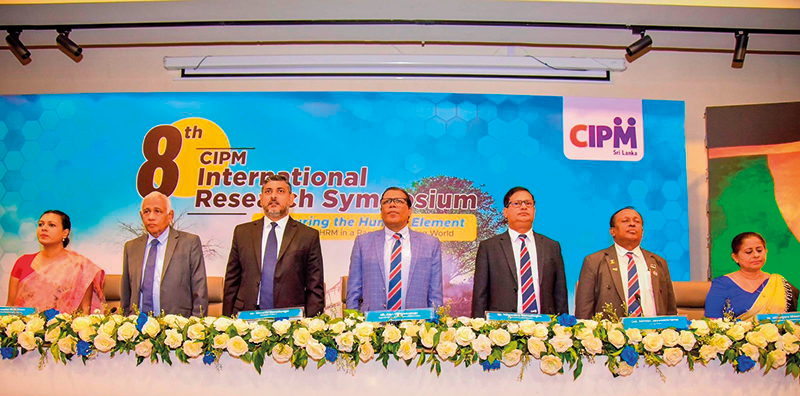
The Chartered Institute of Personnel Management (CIPM) successfully concluded the 8th Annual CIPM Symposium, which took place on 31st May 2024. Themed “Nurturing the Human Element—Redefining HRM in a Rapidly Changing World,” the symposium underscored the pivotal role of human resource management (HRM) in today’s dynamic global landscape. Since its inception in 1959, CIPM has been dedicated to advancing the HR profession through education, professional development, and advocacy, solidifying its position as Sri Lanka’s leading professional body for HRM.
Ken Vijayakumar, the President of the CIPM, graced the occasion as the chief guest. The symposium commenced with the welcome address by the Chairperson, Prof. Arosha Adikaram, followed by the Web Launch of the Symposium Proceedings and Abstract Book by the CIPM President. The event featured distinguished addresses, including a speech by Chief Guest Ken Vijayakumar, President of CIPM, and an address by Guest of Honor Shakthi Ranatunga, Chief Operating Officer of MAS Holdings Pvt. Ltd., Sri Lanka.
The symposium also featured an inspiring keynote address by Prof. Mario Fernando, Professor of Management and Director of the Centre for Cross Cultural Management (CCCM) at the University of Wollongong, Australia.
Vote of Thanks of the inauguration session was delivered by Dr. Dillanjani Weeratunga, Symposium Co-chair.
The symposium served as a comprehensive platform for researchers to present their findings across a wide range of critical topics in HRM. These included Cultural Diversity and Inclusion, Talent Development and Retention, Ethical Leadership and Corporate Social Responsibility, Adapting to Technological Advancements, Mental Health and Well-being at Work, Global Workforce Challenges, Employee Empowerment, and Reskilling and Upskilling.
The plenary session was led by Prof. Wasantha Rajapakse. Certificates were awarded to the best paper presenters during the valedictory session, followed by a vote of thanks delivered by Kamani Perera, Manager of Research and Development.
The annual symposium of CIPM was a truly inclusive event, attracting a diverse audience that spanned undergraduates, graduates, working professionals, research scholars and lecturers. This widespread interest highlights the symposium’s significance in the field of HRM, offering a unique opportunity for everyone to network and learn from scholarly brains.The CIPM International Research Symposium was sponsored by Hambantota International Port, Sri Lanka Institute of Information Technology (SLIIT), E B Creasy & Co. PLC, and Print Xcel Company.



US sports envoys to Lanka to champion youth development

Rahuman questions sudden cancellation of leave of CEB employees


