
News
Be prepared to make more sacrifices – President

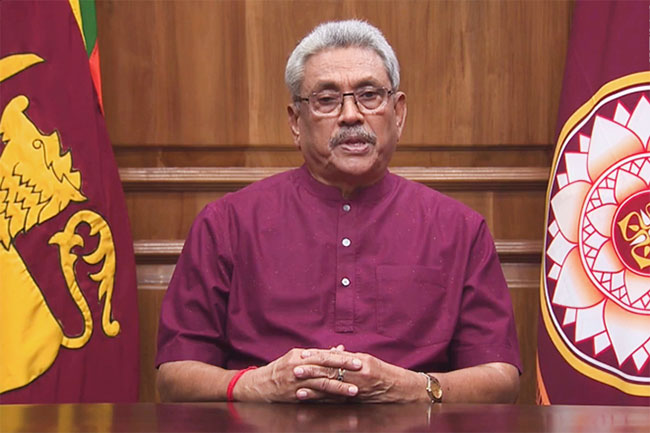
President Gotabaya Rajapaksa, in his address to the nation, yesterday, requested the public to be prepared to make more sacrifices in case of the country being placed under a prolonged lockdown to curb the spread of the pandemic.
Noting that with increased vaccination the number of cases and Covid deaths would decrease, the President urged the people to work together in unity as a team to defeat the COVID-19 pandemic. He added that most of those who had died from COVID-19 senior citizens and he had advised the health sector to conduct Rapid Antigen Tests, at least once a week, targeting the people over 60 years, suffering from chronic diseases.
“I request everyone in the country to be prepared to make more sacrifices, if the country is to be placed under a lockdown for a longer period of time in the future. At this crucial juncture, everyone should take the country forward, strategically, by acknowledging the gravity of the situation. Therefore, I respectfully request everyone.”
Given below is the President’s speech in full: “The accepted opinion of the World Health Organization (WHO), the majority of medical experts and, according to the global standardised methodology, is that the vaccination is the only solution for the COVID-19 pandemic.
“That is why, I made a special commitment to bring in vaccines to Sri Lanka in the recent past. I personally spoke to the Heads of Governments in countries like China and India. I personally wrote letters to several other Heads of State. Discussions were held with vaccine producing countries, through our Foreign Ministry, Ambassadors and High Commissioners. Our officials coordinated with vaccine manufacturing companies.
“All these efforts were made because I wanted to vaccinate all the people of our country. As a result, the country is now receiving a large number of vaccines that we need monthly. Initially, we received the AstraZeneca vaccine, manufactured in India.
“Afterwards, we were able to get the Sinopharm vaccine manufactured in China, but the administration of the vaccine to the public was delayed for about a month due to the delay in getting the vaccine approved by the National Medicines Regulatory Authority (NMRA). Nevertheless, the Government took measures to administer Sinopharm vaccine continuously since May 8 this year. In addition, we have received the Pfizer and Moderna vaccines from the United States, the AstraZeneca vaccines from Japan, and the Sputnik vaccines from Russia, placing us among the countries that administer the highest rates of COVID-19 vaccines to its people. As at the 19th of this month, a total of 12,019,193 vaccine doses have been administered as the First Dose.
Meanwhile, fifty one million twenty four thousand one hundred and eighty five (5,124,185) vaccines have been administered to the people as the Second Dose. In addition, we have approximately three million doses of vaccines to be given as the Second Dose. Another 3 million doses will be received later in this month. At present, about 98% of the people who are above the age of 30, have been vaccinated while 43% have been given the both doses. By August 31, more than 81% of the population will be able to receive the second dose. By 10th of September, 100% can receive both the doses. With this development, the number of patients and the number of deaths will decrease.
“The Government took steps to vaccinate all frontline health workers, persons engaged in essential services such as ports, security services, and factory workers by giving them the priority. People over the age of 60 were also vaccinated by giving them the priority. In addition, more than a million factory workers under the age of 30 were also vaccinated.
“We continue to follow the restrictive measures such as imposition of interprovincial travel restrictions across the country, isolation of Grama Niladhari Divisions, imposition of curfew, summoning only the essential public service employees to work, halting the functions like weddings, closure of certain businesses, ban on inter-provincial travel and prohibition of gatherings at places of worship.
“We were able to successfully manage the first wave of the COVID-19 virus due to the actions that we took at that time. Such stern decisions had to be made at that time because there were no other options available at that time. The country has to be placed under a complete lockdown for several months continuously. Through all these efforts, we were able to overcome the first COVID- 19 wave.
“Though we took measures to place the country under a lockdown occasionally, we should understand the consequences of this decision. The lowest economic growth of the country since Independence was seen during the first wave of COVID-19 as a result of placing the country under a lockdown. Especially, the apparel sector that brought in a revenue of about USD 5 billion to Sri Lanka was gravely affected. Their orders were stopped. Many lost their jobs. Export earnings fell.
“Our tourism industry, which generated over USD 4.5 billion and provided a livelihood to over 3 million people, completely collapsed. Hundreds of thousands of jobs were lost. The occasional lockdown of the country dealt a severe blow to the construction industry. They are not able to bring in employees they require. It is not possible to obtain the raw material at the required time. Over the past one and half years, we have lost most of the expected local and foreign investments in this sector.
“Small and medium enterprises are another important sector of our local economy. The COVID-19 pandemic was a major obstacle for these businesses that contribute more than 50% of the GDP. Due to the continuous disruption of their business activities, these companies lost revenue and faced grave issues without being able to repay their loans or pay salaries.
“Those who obtained leases for vehicles could not pay the installments. Housing loan borrowers could not settle the loan installments. Addition to this, close to 4.5 million self-employed personnel and daily wage earners became helpless since they lost their sources of income completely. Amidst all these obstacles, we also had the responsibility to keep the people alive. We did not abdicate that responsibility.
“Each time the country was placed under a lockdown due to COVID-19 risks, we spend around Rs. 30 billion in each round to provide an allowance of Rs. 5,000 to the people who have become helpless without a daily income. The government has borne this cost on a number of occasions. In addition to the cost of quarantine centres maintained by the government, each family quarantined in their own homes is provided with a relief package worth Rs. 10,000 for two weeks. Even under this dire situation, the government has never taken any action to reduce the salaries or curtail the allowances of more than 1.4 million public servants.
“Though our foreign exchange earnings dropped, we did not default on the government’s loan installments. We had to pay a colossal loan installment of about USD 4 billion a year as a result of the loans obtained by various governments in the past. All these loan installments were settled on time. The country’s economy would be in great crisis if the country was put under another complete lockdown. It is not a situation that this country can bear. A large number of orders have been received by the apparel industry in the export sector.
“If we are not able to deliver these orders on time, we may lose a large amount of foreign exchange. We are also making great efforts to rebuild the collapsed tourism industry. At the moment, nearly 200 tourists enter the country on daily basis. If we close down the country, we will have to restart attracting tourists from the very beginning. Moreover, by having to provide relief to the daily income earners, small and medium enterprises and companies once again due to a lockdown, the country’s economy will be gravely affected. The people should understand the impact of a complete lockdown. Today, except for a few countries, most others including economically powerful ones have fully opened up.
“The tourism industry in the world is gradually recovering. The countries that are open today are taking advantage of that opportunity. Our country, which has a small economy should also take advantage of this opportunity. We can’t allow the country’s economy to collapse completely by refusing to take required action. However, I have decided to impose a lockdown from 10 pm today till 4 am on 30th Monday of this month in order to contain the increase of COVID patients.
“This situation is not a rivalry or conflict between different ideologists, trade unions, doctors, other health officials and the government. We have to understand the reality. This is a serious issue that the whole world faces. Today, all the countries are adapting to the method of ‘New Normal’. As a government, we have properly taken all necessary measures that need to be taken.
“Although the government does everything it can to provide oxygen, establish intermediate treatment centers and administer vaccines, it is the role of the doctors to manage patients appropriately. Also, I highly appreciate the service rendered by the doctors, nurses and all other health sector officials so far, despite the risk to their lives. I also pay my respects to the health sector officials belonging to all ranks who have sacrificed their lives.
“It is clear that this is not a time for strike actions and protests. Do not attempt to destabilize the country. Although the health sector looks at this issue from one angle, as a government we will have to manage the small economy in our country if we are to continue to pay off foreign debts, pay salaries, and provide subsidies without any interruption. Most of the people passed away from COVID-19 virus are over the age of 60. The majority of people out of them have been suffering from chronic diseases for a long time. And, they have not been vaccinated. People with these chronic diseases should seek treatment as soon as they develop COVID-19 symptoms.
Therefore, I have advised the health sector to conduct Rapid Antigen Tests at least once a week targeting the people over 60 years who are suffering from chronic diseases. I request everyone in the country to be prepared to make more sacrifices, if the country is to be placed under a lockdown for a longer period of time in the future. At this crucial juncture, everyone should take the country forward strategically by acknowledging the gravity of the situation. Therefore, I respectfully request everyone to work together in unity as a team to defeat the COVID-19 pandemic.”


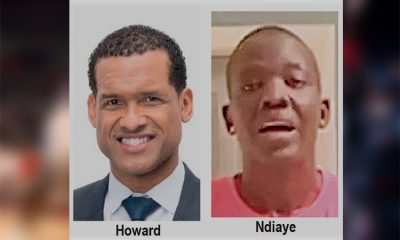




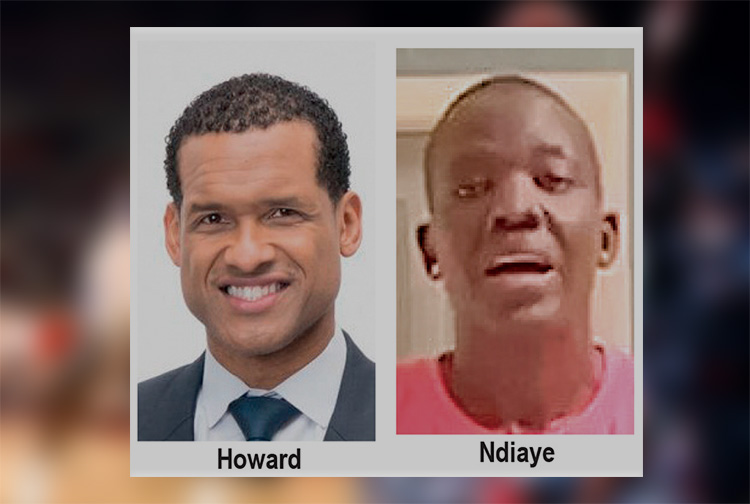
The U.S. Embassy in Colombo welcomed the U.S. Sports Envoys to Sri Lanka, former National Basketball Association (NBA) and Women’s National Basketball Association (WNBA) players Stephen Howard and Astou Ndiaye, from June 8 through 14.
The Public Diplomacy section of the U.S. Embassy said that it would launch a weeklong basketball program intended to harness the unifying power of sports, made possible through collaboration with Foundation of Goodness and IImpact Hoop Lab.
While in Sri Lanka, Howard and Ndiaye, both retired professional basketball players, will conduct a weeklong program, Hoops for Hope: Bridging Borders through Basketball. The Sports Envoys will lead basketball clinics and exhibition matches and engage in leadership sessions in Colombo and Southern Province for youth aged 14-18 from Northern, Uva, Eastern and Western Provinces, offering skills and leadership training both on and off the court. The U.S. Envoys will also share their expertise with the Sri Lanka Basketball Federation, national coaches, and players, furthering the development of basketball in the country. Beyond the clinics, they will collaborate with Sri Lankan schoolchildren to take part in a community service project in the Colombo area.
“We are so proud to welcome Stephen and Astou as our Sports Envoys to Sri Lanka, to build on the strong people-to-people connections between the United States and Sri Lanka,” said U.S. Ambassador Julie Chung. “The lessons that will be shared by our Sports Envoys – communication, teamwork, resilience, inclusion, and conflict resolution – are essential for leadership development, community building, equality, and peace. The U.S. Sports Envoy program is a testament to our belief that sports can be a powerful tool in promoting peace and unity.”
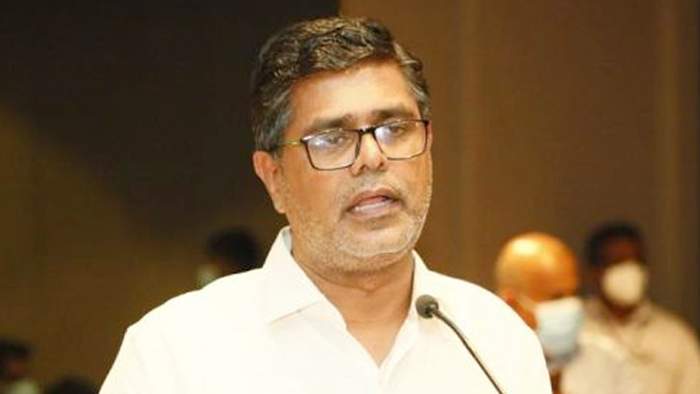
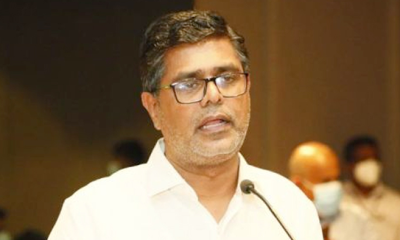
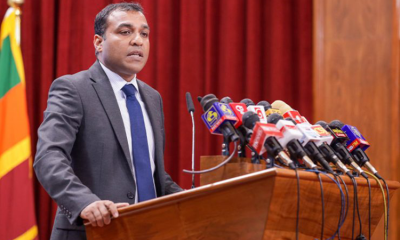
SJB Colombo District MP Mujibur Rahuman in parliament demanded to know from the government the reasons for CEB suspending the leave of all its employees until further notice from Thursday.
MP Rahuman said that the CEB has got an acting General Manager anew and the latter yesterday morning issued a circular suspending leave of all CEB employees with immediate effect until further notice.
“We demand that Minister Kanchana Wijesekera should explain this to the House. This circular was issued while this debate on the new Electricity Amendment Bill was pending. There are many who oppose this Bill. The Minister must tell parliament the reason for the urge to cancel the leave of CEB employees,” the MP said.However, Speaker Mahinda Yapa Abeywardena prevented Minister Wijesekera responding to the query and said that the matter raised by MP Rahuman was not relevant.
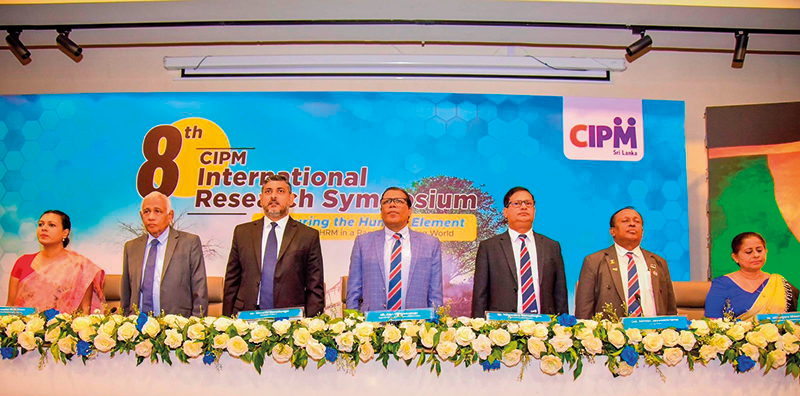
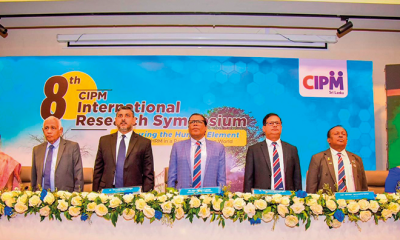
The Chartered Institute of Personnel Management (CIPM) successfully concluded the 8th Annual CIPM Symposium, which took place on 31st May 2024. Themed “Nurturing the Human Element—Redefining HRM in a Rapidly Changing World,” the symposium underscored the pivotal role of human resource management (HRM) in today’s dynamic global landscape. Since its inception in 1959, CIPM has been dedicated to advancing the HR profession through education, professional development, and advocacy, solidifying its position as Sri Lanka’s leading professional body for HRM.
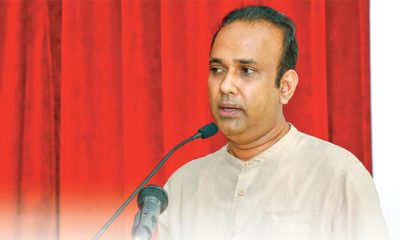
Ken Vijayakumar, the President of the CIPM, graced the occasion as the chief guest. The symposium commenced with the welcome address by the Chairperson, Prof. Arosha Adikaram, followed by the Web Launch of the Symposium Proceedings and Abstract Book by the CIPM President. The event featured distinguished addresses, including a speech by Chief Guest Ken Vijayakumar, President of CIPM, and an address by Guest of Honor Shakthi Ranatunga, Chief Operating Officer of MAS Holdings Pvt. Ltd., Sri Lanka.
The symposium also featured an inspiring keynote address by Prof. Mario Fernando, Professor of Management and Director of the Centre for Cross Cultural Management (CCCM) at the University of Wollongong, Australia.
Vote of Thanks of the inauguration session was delivered by Dr. Dillanjani Weeratunga, Symposium Co-chair.
The symposium served as a comprehensive platform for researchers to present their findings across a wide range of critical topics in HRM. These included Cultural Diversity and Inclusion, Talent Development and Retention, Ethical Leadership and Corporate Social Responsibility, Adapting to Technological Advancements, Mental Health and Well-being at Work, Global Workforce Challenges, Employee Empowerment, and Reskilling and Upskilling.
The plenary session was led by Prof. Wasantha Rajapakse. Certificates were awarded to the best paper presenters during the valedictory session, followed by a vote of thanks delivered by Kamani Perera, Manager of Research and Development.
The annual symposium of CIPM was a truly inclusive event, attracting a diverse audience that spanned undergraduates, graduates, working professionals, research scholars and lecturers. This widespread interest highlights the symposium’s significance in the field of HRM, offering a unique opportunity for everyone to network and learn from scholarly brains.The CIPM International Research Symposium was sponsored by Hambantota International Port, Sri Lanka Institute of Information Technology (SLIIT), E B Creasy & Co. PLC, and Print Xcel Company.



US sports envoys to Lanka to champion youth development

Rahuman questions sudden cancellation of leave of CEB employees


