
Life style
Paws and hands in harmony

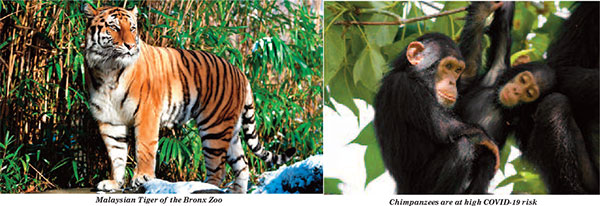
With incidents of animals being tested positive for COVID-19 both locally and in various parts of the world, there is a discourse and public anxiety about potential animal to human and human to animal transmission of the virus. We spoke to several authorities committed to animal welfare and virology to find answers and to dispel unnecessary fears.
by Randima Attygalle
The 14-year-old African Lion, ‘Thor’ of the Dehiwala Zoo, gifted by a zoo in Seoul, was reported to be having severe respiratory signs including breathing difficulties and a nasal discharge. Its loss of appetite and lethargy further worried keepers. On an official request made by the Director (Animal Health and Nutrition), Department of National Zoological Gardens, Department of Medical Microbiology of the Faculty of Medicine, University of Kelaniya tested the nasal swab specimens of the sick lion for COVID-19. Fecal samples of the infected animal were sent to the Molecular and Nutritional Biochemistry Laboratory (MNBL) at the Faculty of Veterinary Medicine and Animal Science, University of Peradeniya. Both laboratories confirmed the lion to be COVID-19 positive. This is the first known case of an animal contracting COVID-19 here at home.
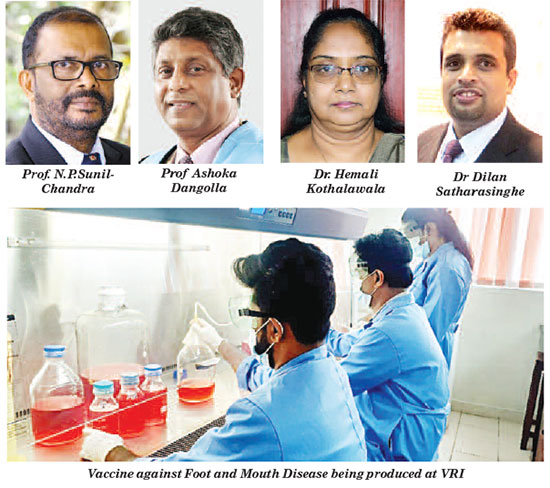
The lion was confirmed COVID-19 positive according to the criteria of the World Organization for Animal Health (OIE), Prof. N.P Sunil-Chandra, Virologist and Chair of Medical Microbiology from the Faulty of Medicine, University of Kelaniya told the Sunday Island. “The nature of a specimen, whether it is human, animal or of environmental origin, is not going to alter the result. Hence COVID-19 PCR procedure adopted for the respiratory samples of the infected lion was the same as that which is used for human samples,” he said.
While veterinarians and other staff of the Dehiwala Zoo have been tested, further investigations, assisted by zoo authorities, are being carried out to identify the exact source of infection in the lion. Asymptomatic human infection is a very likely source for the infection in the lion, he said.
“Asymptomatic human infection was incriminated as the source infection in the case of a COVID infected four-year-old Malaysian tiger in the Bronx Zoo, USA which was reported in March last year. Infected pet cats have also been reported in Belgium, Hong Kong, USA and Brazil but there is not enough evidence to change the current opinion of the OIE that neither cats nor dogs appear to be able to pass the virus to people,” the senior professor said.
 SARS CoV-2 infections in minks in the Netherlands and in Denmark have been reported in close proximity to a region with high incidence of COVID-19 in humans. A mutation of the SARS CoV-2 virus in a mink in Denmark and one of the variant was found in several people, he explained.
In 1918 the world experienced its worst flu outbreak (commonly called the Spanish flu) due to an influenza virus type A strain H1N1 which emerged in birds infected a third of the world’s human population killing over 50 million people. Three more influenza pandemics followed: in 1957 ‘Asian’ flu (A-H2N2), in 1968 ‘Hong Kong’ flu (A-H3N2) and the 2009 ‘swine’ flu (A-H1N1). “Although milder than the 1918 pandemic, these highlight the constant threat of es to human health.
Emergence of SARS CoV-2 virus in 2019 which led to the current COVID-19 global pandemic further highlights the threat of emerging zoonotic virus infections,” observed Prof Sunil-Chandra. He elaborated on the importance of working on ‘One Health’ concept (the collaborative efforts of multiple disciplines working locally, nationally and globally, to attain optimal health for people, animals and the environment) when confronted with emerging zoonotic infections such as COVID-19.
“Climate changes and deforestation affect animal reservoirs of viruses and due these adverse effects animal migration leads to increased interactions in the animal-human interface. This could spread viruses to new locations and across a wider range of domestic and wildlife species including birds and bats.”
‘Spillover events’ from wildlife via vectors or domestic animals are the starting points for many outbreaks, from influenza to HIV and from SARS to COVID-19, pointed out the Virologist. “Therefore, it is natural to have misconceptions among people with pandemic stress about how new diseases jump from animals to human. Although it is theoretically possible that the virus can be transmitted from an infected animal to human, todate there is no evidence for SARS CoV-2 transmission from animals to humans. Mink is the only animal known to have passed the coronavirus to humans, except for the initial spillover event from an unknown species in China.”
According to the OIE, there is no evidence that cats or dogs spread the disease to humans bit it recommends that sick persons with COVID-19 should avoid contact with pets, including petting, cuddling, being kissed or licked, and sharing food, in order to protect their pets during the time of their illness.
Gorillas and chimpanzees are identified as animals that are at very high COVID-19 risk, pointed out Prof. Ashoka Dangolla, Senior Lecturer in Veterinary Clinical Studies from the Faculty of Veterinary Medicine and Animal Science, (FVMAS) University of Peradeniya. Felines such as domestic cats, tigers and lions are at a medium risk he said. “Veterinarians are very familiar with other animal Coronavirus infections in cats. This has been so for several decades. Feline infectious peritonitis is one such condition with respiratory signs in cats. But we must keep in mind that COVID-19 is a novel Coronavirus (SARS CoV-2) which has the ability to mutate into new variants. Therefore, all possible precautions must be taken while extending love and compassion to our pets.”
Since it is known that cat family members can contract the disease from symptomatic and asymptomatic parties, it is advisable to keep away from them if you are COVID-19 positive or suspected of it, Prof. Dangolla advises. “Cats cannot, according to available information, infect humans. But if you do find your cat having respiratory symptoms, it’s always advisable to take the cat to a vet in the area.”
Care should also be taken not to feed monkeys and to dispose of our waste in an irresponsible manner, the senior veterinarian warns. Dogs are of low risk for developing COVID-19. “So far, COVID- 19 positive dogs have not been reported in Sri Lanka though we test all dogs that are being brought into the country for COVID-19. If a household dog shows respiratory signs such as difficulty in breathing, best advice is to show it to a vet.”
Susceptibility of dogs, pigs and elephants to COVID-19 is low whilst ferrets, mink, mice and rats have very low susceptibility, says the veterinarian. Birds have never been reported to be COVID positive. COVID positive Asian elephants have been documented in India, therefore it is advisable not to go near captive elephants if a person is COVID positive or asymptomatic he notes. “If an infected (symptomatic or asymptomatic) person gets close to a healthy elephant, closer than two meters, the elephant may get infected, but there is no report to say that elephants infect people. Sheep, cattle and even dolphins can get infected but they are at medium risk.”
Since our local vets have been working with Coronavirus and the Sri Lanka Veterinary Research Institute has been producing several vaccines against viruses in animals, we can have some hope that the vets would produce a vaccine against COVID in animals if a need arises, says Prof Dangolla.
The Molecular and Nutritional Biochemistry laboratory of FVMAS, University of Peradeniya conducts tests to detect COVID-19 and the presence of SARS-like viruses in animals. Since September, 2020, the lab had been offering services to the Department of Animal Production and Health (DAPH) to screen hundreds of animals for COVID-19 infection that came into the country. These came as pets through the Animal Quarantine Department at the Bandaranaike International Airport (BIA) which operates under DAPH said Dr. Dilan Satharasinghe, Senior Lecturer from the Department of Basic Veterinary Sciences, FVMAS, University of Peradeniya.
“We have also screened mangroves and toque monkeys as a part of a surveillance programme implemented via DAPH in collaboration with the Wildlife Department and it is an ongoing process,” he said. DAPH and Animal Quarantine Division at the BIA screen all animals coming into the country for COVID-19 infection. Samples are referred to the Molecular and Nutritional Biochemistry laboratory and upon the confirmation of negative results, animals are released to the owners.
The Department of Animal Production and Health (DAPH) implements disease control programmes mainly through Directorates of Animal Health and Veterinary Research. The DAPH has strong structure throughout the country with 26 Regional Veterinary Investigating Centres (RVICs), one located in each district. The disease control programmes are implemented by its islandwide network of 337 Government Veterinary Offices (GVOs) which come under nine Provincial Departments of Animal Production and Health (PDAPH). The central Veterinary Investigating Centres and the technical divisions of Veterinary Research Institute (VRI) provide referral diagnostic facilities for Regional VICs and GVOs in managing diseases.
Curative and Preventive measures are carried out by the DAPH and PDAPH. Disease investigations, epidemiological studies, surveillance programmes and vaccination programmes are being carried out in managing viral diseases.
Animal Disease Act No.59 of 1992 stipulates that no person can import any animal or animal related product without the permission of the Director General of Animal Production and Health. “This provision is to prevent the entry of any exotic disease to the country. Accordingly, animals, animal products, veterinary products and biological imports are controlled by the DAPH by issuing pre- clearance approval for such imports,” said the Director General of Animal Production and Health, Dr. Hemali Kothalawala.
Quarantine stations are established in ports of entry such as Katunayake, Colombo, Mattala and Jaffna to control imports through air and sea passage. Animal entry is permitted based on negative test certificates of certain given diseases and in high-risk situations animals are being quarantined for a number of days at the quarantine stations or on-farm, explained Dr. Kothalawala. “Apart from these routine protocols, today a COVID-negative certificate is mandatory when importing any animal to the country.”
The Animal Disease Act also requires the Director General of Animal Production and Health to take action to control animal disease spread in the country. Today DAPH has established a diagnostic facility with animal specific RT-PCR antigen kits and an Epidemiological Survey is planned to uncover the factors associated with the COVID-19.
The Veterinary Research Institute (VRI), of DAPH has a long history of vaccine production in Sri Lanka. VRI produces several viral vaccines and bacterial vaccines for the livestock sector in the country. Among the viral vaccines, the most important as Dr. Kothalawala explained, is the one for Foot and Mouth Disease (FMD) which causes severe milk production drop in cows when infected. The vaccine which was first produced locally in 1964 is now developed using the latest technology to enhance the immune duration and its shelf life. “Presently, 50% of the country’s requirement is produced within the country. Recently approved project on FMD control is planning to expand the capacity by two-fold by end of the next year,” Dr. Kothalawala said.
A viral vaccine for goat Contagious Pustular Dermatitis (CPD) which causes severe production loss and kid mortality is also being produced at the VRI. It also produces a live viral vaccine for New Castle Disease which causes a very high death rate among chicken. While a newly invented vaccine with oil adjutant to give lifelong immunity in birds is ready to release for the industry another vaccine is being produced by VRI as well as Veterinary Investigation Centres for warts in cattle, she noted. Several bacterial vaccines are also being produced at the VRI for deadly diseases in cattle and poultry. A vaccine for tick fever which causes severe economic losses in milk production especially in high producing animals such as cattle and buffalo is also being produced at the VRI.



Institute of Hospitality Sri Lanka
 The 32nd Annual General Meeting (AGM) of the UK-based Institute of Hospitality’s Sri Lanka Chapter was held recently at the Ramada Hotel Colombo,.The event provided an evening of camaraderie , reflection of the past and present achievements,setting new benchmarks for the future
The AGM had the presence of two distinguished guests, the Chief Guest Opposition Leader Sajith Premadasa, and the Guest of Honour British High Commissioner to Sri Lanka, Andrew Patrick. Their inspiring speeches were lauded by all hoteliers who were present at the occasion
A special thanks was extended to Robert Richardson, CEO of the Institute of Hospitality UK, along with his team, sponsors, committee members, and all attendees for making the event memorable.
Dr. Harsha Jayasingh, Past President of the Institute of Hospitality (UK) Sri Lanka Chapter, emphasised the Institute’s longstanding history and the strength of its Sri Lankan branch. “The Institute of Hospitality (IH) UK has a history of 86 years, and we are proud to be the Sri Lanka Branch. IH Sri Lanka is much stronger now with many members from all areas of the hospitality industry,” he stated.
Dr. Jayasingh highlighted the significant role of tourism in Sri Lanka’s economy,. He said tourism it is the third-largest source of revenue for the country. “Tourism accounts for about 13.3% of total foreign exchange earnings and employs 450,000 people directly and indirectly. The hospitality industry in this island of pearl holds tremendous potential for economic growth, job creations, and cultural exchange,” he added.
He also pointed out more women should be attracted to the industry and advocated for the use of technology in hospitality sector to attract the younger generation.
The newly appointed Chairman Ramesh Dassanayake spoke about the challenges faced by the industry, including the reluctance of youth to join the sector. . Dassanayake expressed concerns over the migration of staff between hotels and the overall ‘brain drain’ in the sector. ” We must maintain high standards in the hotel We must try to attract tourists to Sri Lanka, we must have with many facilities Hence, hotel schools and other professional institutions involved in skills development mustincrease their intakes,” he pointed out.
Chief Guest Sajith Premadasa emphasised the importance of eco tourism and said “We need to have an environmental policy related to tourism in place,” . .
The 32nd AGM of the Institute of Hospitality UK, Sri Lanka Chapter, was a testament to the strength and potential of Sri Lanka’s hospitality industry. The insights and commitments shared during the event set a new benchmark for the future.(ZC)


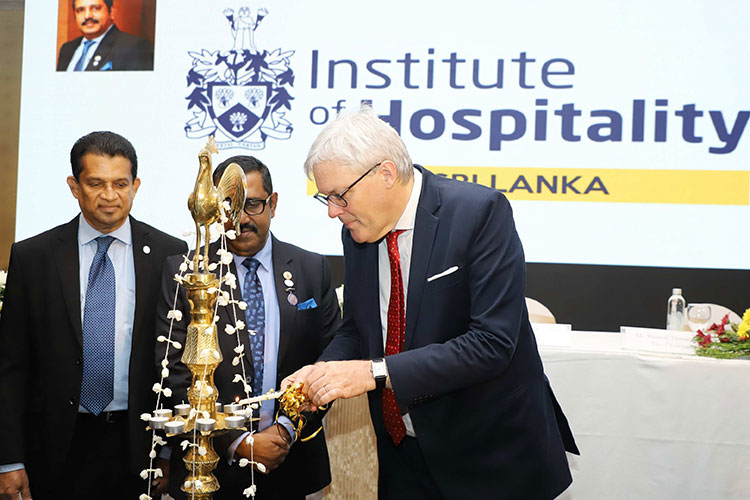


Pix by Thushara Attapathu
Life style
He recognizes human identity beyond boundaries of gender, race, nationality and religion.

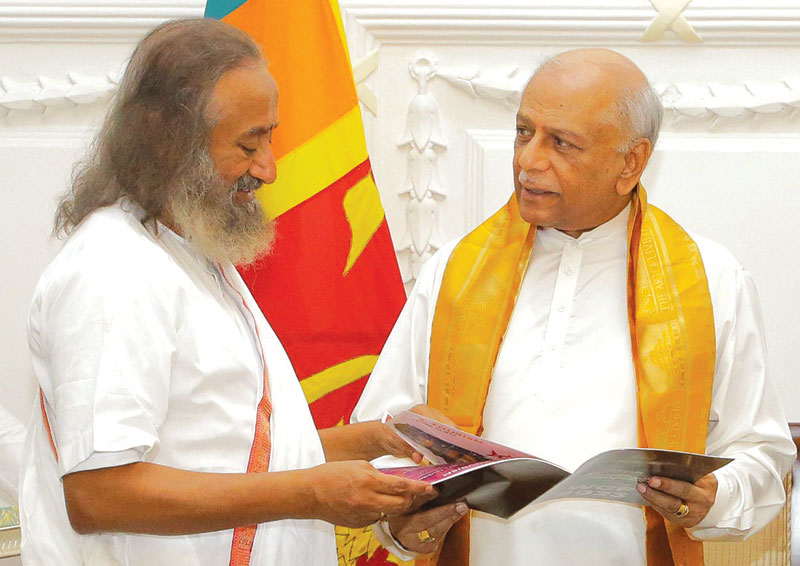
Visit of Sri Gurudev to Sri Lanka
Humanitarian, spiritual leader and Global Ambassador of Peace Gurudev Sri Sri Ravi Shankar (Sri Gurudev) was in Sri Lanka on a three day tour on the invitation of the Prime Minister of Sri Lanka Dinesh Gunewardene. Gurudev who inspired a wave of volunteerism and service to moot one of the largest volunteer-based organisations in the world – The Art of Living – visited the various projects under the aegis of the foundation and launched twelve vocational and technical centers around the island. He was accompanied by thousands of followers from Sri Lanka and around the world.
Gurudev who visited Sri Lanka for the sixth time also had a first day cover launched in honour of his visit. He is a strong proponent of spreading happiness, using the unique Sudarshan Kriya, yoga, meditation and practical wisdom to unite people, empower individuals and transform communities. His programmes provide techniques and tools to live a deeper, more joyous life, while his non-profit organisations recognize the human identity beyond the boundaries of gender, race, nationality and religion.
The Art of Living which has more than 30,000 teachers and over one million volunteers across 180 countries has touched in excess of five hundred million people around the world. CNN called it “Life Changing” and The Washington Post headlined it, “Fresh air to millions”.
In Trincomalee, Gurudev met with war victims and had a heartwarming engagement with the children from the children’s homes run by the Foundation. He also visited the Koneswara Temple in Trincomalee and graced the Kumbhabhishekam at Seetha ecogPnize the human identity beyond the boundaries of gender, race, nationality and religion. Amman temple at Nuwara Eliya. He held discussions with the trustees on the progress of the foundation’s social service projects, while also holding a special event – Ekamuthuwa – attended by a large number of dignitaries and his devotees from around the world.
His time with the Prime Minister was spent discussing the prospects of unity in diversity and uniting Sri Lanka by adding happiness into the formula of living. In addition he had discussions with the Speaker of the Parliament of Sri Lanka Mahinda Yapa Abeywardena, prominent business stewards and civil society leaders.

by Zanita Careem
Envison your dream wedding day come to life at the Epitome Hotel, a prestigious city hotel in Kurunegala offering an unrivalled luxury rendors experience for weddings.
The venue is designed to embody opulence and luxury from all quarters for a spectacular wedding in kurunegala,Thier ballroom is the largest banquet facility in Sri Lanka It can be divided into six luxurious pillarless wedding halls on the ground floor and 25pax smaller banquet halls.
It can be easily named as a five star heaven in the heart of the city contributing to a myriad of immense experiences tailored to inspire and delight wedding experiences.
From opulent décor set up to exquisite table decor, lavish food, every detail is meticulously curated to spark your imagination and ignite creativity for a perfect wedding. The previous prestigious wedding shows season one and season two attracted large crowds
were unique events which gave the wedding vendors and potential clients had an opportunity to connect and interact with each other. Beyond being a showcase it was a chance for the wedding vendors to unite and contribute to the vibrancy of the wedding industry. The wedding show covered all area of the bridal industry providing a comprehensive variety of bridal supplies from Sri lanka and became the most popular bridal exhibitions in Kurunegala.This bridal exhibitions allowed brides and grooms to experience first hand the products and services available from suppliers in Sri Lanka
These wedding shows held at The Epitome created a benchmark and gave an opportunity for vendors to create connections to the utmost satisfaction said Harshan Lakshita Executive Director. of the magnificent Hotel
Our wedding shows featured experts and professionals in every field‘ It covered all areas of the bridal industry provided a comprehensive variety of bridal supplies from Sri lanka and became most popular bridal exhibition in this region.We are always open to everyone to join us at our wedding shows in the future. It is an opportunity to discover the incredible talent within our local wedding and bridal vendors to make meaningful relationships and plan thier special day at our breathtaking hotel The Epitome said General Manager Kavinda Caldera
The Epitome Hotel’s bridal show which will be held end of June will buzz with great ideas,advice and inspiration for all those who plan thier dream wedding
…….
The Hotel Epitome’s Wedding Season 3 will marked excellence, celebration and inspiration for those in the wedding industry. The exhibition halls will resonate with ideas on exquisite bridal wear to decor, florists , photography etc and showshowcase the rich tapestry of talent within the local wedding industry. .







US sports envoys to Lanka to champion youth development

Rahuman questions sudden cancellation of leave of CEB employees


