
News
Spike in feed prices push small and medium poultry farms to the brink of closure

by Suresh Perera
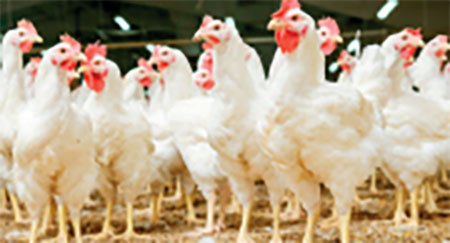
With import restrictions pushing up poultry feed prices to an all-time high, a grave shortage of chicken and eggs is anticipated in the short term as small and medium scale producers are finding it increasingly difficult to keep pace with soaring production costs, a senior industry official warned.
A 50% drop in production has been projected within a few months as moderate farms are now unable to sustain their businesses and will eventually close down, says Ajith Gunasekara, president of the All Island Poultry Association.
“The reverberations will be felt in December when the demand balloons during Christmas”, he predicted.
He said that Sri Lanka produces only half of the poultry industry’s demand for maize, the main ingedient of poultry feed.
With consignments from India and Ukraine no longer coming due to import restrictions, the disruption in supplies has seen a spike in prices for the local produce.
A kilogram of maize has climbed to anything between Rs. 90-95 in the marketplace due to the non-availability of imports at competitive pricing, he said. “This will sound the death knell to small-time poultry farms”.
In any poultry farm, feed absorbs 70% of the operational cost, Gunasekara stressed. “Apart from maize, producers also have to procure soya, corn and vitamins at substantial cost for the feed combination”.
The prevailing Covid-19 related travel restrictions have also aggravated the crisis the poultry industry is grappling with as the continued closure of wholesale distribution points have crippled supplies to the retail chain, he complained.
This means the retail trade has no access to the produce to supply traders and mobile vendors who have been declared essential services to service consumers, he said.
There are a multitude of ‘meat shops’ run by poultry producers island-wide, but they have no stocks as wholesalers, who collect chicken from farms, have not been authorized to operate during the travel restrictions, he protested.
Those in the chicken processing business are also facing immense hardships as they have not been permitted to operate, he explained. “Overall, the losses suffered by the industry will be enormous”.
Retailers cannot be expected to collect stocks from farms in the provinces even if they are able to make it as they don’t have either freezer trucks or necessary storage facilities, Gunasekara pointed out. “Moreover, visits to farms have been restricted due to Covid-19 preventive measures”.
“We have asked the government to intervene in the matter as the industry is in deep trouble with skyrocketing poultry feed prices pinning down producers on the one hand and accumulating stocks in storage facilities on the other”, he noted.
He said that traders have also been dealt a big financial blow with stocks of chicken in their deep freezers no longer fit for consumption.
The farm gate price is Rs. 430 per kilogram of chicken (whole bird), but despite a MRP (Maximum Retail Price) of Rs. 550 in terms of the price control mechanism, it is being sold for Rs. 700 per kilo these days due to procurement difficulties, he continued.
The reluctance of people to eat fish due to contamination fears following the X-Press Pearl disaster has also triggered a bigger demand for chicken. Unlike fish, cooked chicken can be refrigerated and eaten for about a week by an average family, Gunasekara elaborated.
He said the annual demand for chicken is between 15,000 to 18,000 metric tons. There’s an annual surge of up to 18,000MT during the April-December festive season.
The production of eggs ranges from 700,000 to 800,000 per day. Purchased at a farm gate price of Rs. 12-14 each, retailers at present sell each for Rs. 20.
“We were prepared for a two-week lockdown, but with the continued closure, the situation is getting more desperate by the day”, he said.




The U.S. Embassy in Colombo welcomed the U.S. Sports Envoys to Sri Lanka, former National Basketball Association (NBA) and Women’s National Basketball Association (WNBA) players Stephen Howard and Astou Ndiaye, from June 8 through 14.
The Public Diplomacy section of the U.S. Embassy said that it would launch a weeklong basketball program intended to harness the unifying power of sports, made possible through collaboration with Foundation of Goodness and IImpact Hoop Lab.
While in Sri Lanka, Howard and Ndiaye, both retired professional basketball players, will conduct a weeklong program, Hoops for Hope: Bridging Borders through Basketball. The Sports Envoys will lead basketball clinics and exhibition matches and engage in leadership sessions in Colombo and Southern Province for youth aged 14-18 from Northern, Uva, Eastern and Western Provinces, offering skills and leadership training both on and off the court. The U.S. Envoys will also share their expertise with the Sri Lanka Basketball Federation, national coaches, and players, furthering the development of basketball in the country. Beyond the clinics, they will collaborate with Sri Lankan schoolchildren to take part in a community service project in the Colombo area.
“We are so proud to welcome Stephen and Astou as our Sports Envoys to Sri Lanka, to build on the strong people-to-people connections between the United States and Sri Lanka,” said U.S. Ambassador Julie Chung. “The lessons that will be shared by our Sports Envoys – communication, teamwork, resilience, inclusion, and conflict resolution – are essential for leadership development, community building, equality, and peace. The U.S. Sports Envoy program is a testament to our belief that sports can be a powerful tool in promoting peace and unity.”
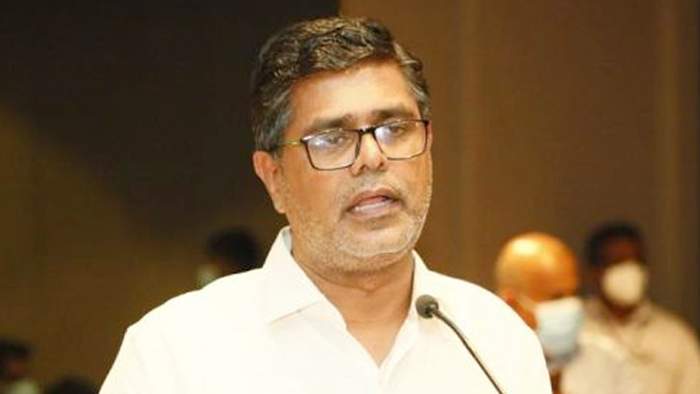
SJB Colombo District MP Mujibur Rahuman in parliament demanded to know from the government the reasons for CEB suspending the leave of all its employees until further notice from Thursday.
MP Rahuman said that the CEB has got an acting General Manager anew and the latter yesterday morning issued a circular suspending leave of all CEB employees with immediate effect until further notice.
“We demand that Minister Kanchana Wijesekera should explain this to the House. This circular was issued while this debate on the new Electricity Amendment Bill was pending. There are many who oppose this Bill. The Minister must tell parliament the reason for the urge to cancel the leave of CEB employees,” the MP said.However, Speaker Mahinda Yapa Abeywardena prevented Minister Wijesekera responding to the query and said that the matter raised by MP Rahuman was not relevant.
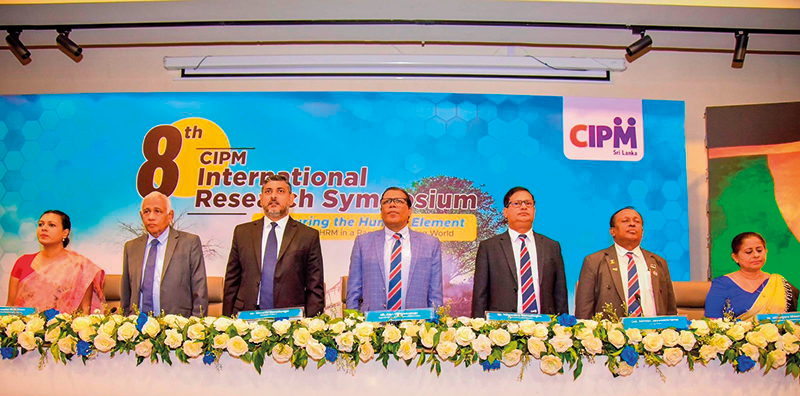
The Chartered Institute of Personnel Management (CIPM) successfully concluded the 8th Annual CIPM Symposium, which took place on 31st May 2024. Themed “Nurturing the Human Element—Redefining HRM in a Rapidly Changing World,” the symposium underscored the pivotal role of human resource management (HRM) in today’s dynamic global landscape. Since its inception in 1959, CIPM has been dedicated to advancing the HR profession through education, professional development, and advocacy, solidifying its position as Sri Lanka’s leading professional body for HRM.
Ken Vijayakumar, the President of the CIPM, graced the occasion as the chief guest. The symposium commenced with the welcome address by the Chairperson, Prof. Arosha Adikaram, followed by the Web Launch of the Symposium Proceedings and Abstract Book by the CIPM President. The event featured distinguished addresses, including a speech by Chief Guest Ken Vijayakumar, President of CIPM, and an address by Guest of Honor Shakthi Ranatunga, Chief Operating Officer of MAS Holdings Pvt. Ltd., Sri Lanka.
The symposium also featured an inspiring keynote address by Prof. Mario Fernando, Professor of Management and Director of the Centre for Cross Cultural Management (CCCM) at the University of Wollongong, Australia.
Vote of Thanks of the inauguration session was delivered by Dr. Dillanjani Weeratunga, Symposium Co-chair.
The symposium served as a comprehensive platform for researchers to present their findings across a wide range of critical topics in HRM. These included Cultural Diversity and Inclusion, Talent Development and Retention, Ethical Leadership and Corporate Social Responsibility, Adapting to Technological Advancements, Mental Health and Well-being at Work, Global Workforce Challenges, Employee Empowerment, and Reskilling and Upskilling.
The plenary session was led by Prof. Wasantha Rajapakse. Certificates were awarded to the best paper presenters during the valedictory session, followed by a vote of thanks delivered by Kamani Perera, Manager of Research and Development.
The annual symposium of CIPM was a truly inclusive event, attracting a diverse audience that spanned undergraduates, graduates, working professionals, research scholars and lecturers. This widespread interest highlights the symposium’s significance in the field of HRM, offering a unique opportunity for everyone to network and learn from scholarly brains.The CIPM International Research Symposium was sponsored by Hambantota International Port, Sri Lanka Institute of Information Technology (SLIIT), E B Creasy & Co. PLC, and Print Xcel Company.



US sports envoys to Lanka to champion youth development

Rahuman questions sudden cancellation of leave of CEB employees


