
News
CAA pushes for new legislation to regulate LPG composition in cylinders


‘Lives of consumers should not be endangered’
By Suresh Perera
A top level Consumer Affairs Authority (CAA) team met with Attorney General Sanjay Rajaratnam last week to discuss the scope of enacting legislation to regulate the composition of Liquid Petroleum Gas (LPG) in existing cylinders and new products introduced to the market.
The move comes in the backdrop of the controversy over Litro Gas Lanka launching a new 18-litre product, which was described as a “violation of consumer laws”.
Despite the weight being reduced by three kilograms, the domestic 9.18 kg hybrid cylinder was priced Rs. 1,395 – a mere one hundred rupees less than the regular 12.5-kilogram cylinder.
“The butane and propane composition in cooking gas should be regulated for public safety”, says Thushan Gunawardena, CAA’s Executive Director.
It should be ensured that gas companies don’t endanger the lives of consumers by changing the composition for profiteering by ignoring possible risk factors of increasing propane in the composition, he said.
“We have sought to regulate the composition of LPG domestic cylinders under Section 18 of the CAA Act”, he told The Sunday Island.
Stressing on the immediate need for legal clout to “mitigate the risk factors typically associated with LPG composition”, Gunawardena has already written to CAA Chairman, Major General (Rtd) D. M. Shantha Dissanayaka, with copies to the President’s office, AG’s Department and State Minister Lasantha Alagiyawanna, calling for new laws to adequately scrutinize the LPG sector’s manufacturing process.
He said the Sri Lanka Standards Institution (SLSI) has received complaints that cylinder valves are leaking due to the composition change. This could pose a serious hazard and possible loss of life, if true.
Under Section 7 (a), the objects of the CAA shall be “to protect consumers against the marketing of goods or the provision of services which are hazardous to life and property of consumers”, Gunawardena further says in his letter.
“Therefore, we need to formally engage the SLSI to publish the required LPG standards as per Act No. 6 of 1984 and adopt the standard under Section 12 (2) of the CAA Act and publish a gazette informing adoption of the standard set by SLSI”, he continued.
“If we don’t take action to enact new regulations for the LPG sector to adequately scrutinize the manufacturing process, we are in contravention of the CAA Act for inaction by virtue as per in section 12 (1) & (2) of the Act”, he pointed out.
The composition of LPG in other countries is regulated. However, the composition varies from country to country and is generally decided by the climatic conditions, the CAA Executive Director explained, while adding that “we need to scientifically get the composition from SLSI or a similar institution for the best composition for Sri Lanka for propane+ and butane percentages that forms LPG”.
As far as available data shows, a propane rich mixture is used only in cold countries and a butane rich mixture is more suitable for tropical countries like Sri Lanka. According to reports, butane has a higher fuel value than propane and makes it ideal for domestic use as a propane rich mixture carries a risk during handing, Gunawardena noted.
On Wednesday, an extraordinary gazette notification was issued under the CAA Act No. 09 of 2003 directing all manufacturers and traders of LPG to ensure that adequate quantities of 12.5kg domestic cylinders are available for sale at all outlets island-wide.
“No trader who has in his possession or custody or under his control 12.5kg LPG cylinders shall refuse to sell or in any manner directly or indirectly compel consumers not to purchase such cylinders”, it warned.
Asked what prompted the special direction, Gunawardena said the CAA has received more than one thousand complaints so far about the non-availability of 12.5kg domestic cylinders in the marketplace.
What is the use of the CAA if it cannot do its job of regulating the market?, he queried. “A regulator serves no purpose if the system is allowed to be manipulated”.
“We need to push for a directive to prohibit the sale of 18-litre cylinders”, he emphasized.




The U.S. Embassy in Colombo welcomed the U.S. Sports Envoys to Sri Lanka, former National Basketball Association (NBA) and Women’s National Basketball Association (WNBA) players Stephen Howard and Astou Ndiaye, from June 8 through 14.
The Public Diplomacy section of the U.S. Embassy said that it would launch a weeklong basketball program intended to harness the unifying power of sports, made possible through collaboration with Foundation of Goodness and IImpact Hoop Lab.
While in Sri Lanka, Howard and Ndiaye, both retired professional basketball players, will conduct a weeklong program, Hoops for Hope: Bridging Borders through Basketball. The Sports Envoys will lead basketball clinics and exhibition matches and engage in leadership sessions in Colombo and Southern Province for youth aged 14-18 from Northern, Uva, Eastern and Western Provinces, offering skills and leadership training both on and off the court. The U.S. Envoys will also share their expertise with the Sri Lanka Basketball Federation, national coaches, and players, furthering the development of basketball in the country. Beyond the clinics, they will collaborate with Sri Lankan schoolchildren to take part in a community service project in the Colombo area.
“We are so proud to welcome Stephen and Astou as our Sports Envoys to Sri Lanka, to build on the strong people-to-people connections between the United States and Sri Lanka,” said U.S. Ambassador Julie Chung. “The lessons that will be shared by our Sports Envoys – communication, teamwork, resilience, inclusion, and conflict resolution – are essential for leadership development, community building, equality, and peace. The U.S. Sports Envoy program is a testament to our belief that sports can be a powerful tool in promoting peace and unity.”
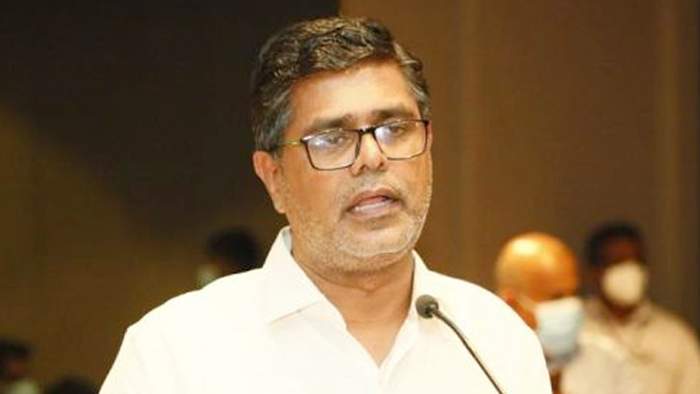
SJB Colombo District MP Mujibur Rahuman in parliament demanded to know from the government the reasons for CEB suspending the leave of all its employees until further notice from Thursday.
MP Rahuman said that the CEB has got an acting General Manager anew and the latter yesterday morning issued a circular suspending leave of all CEB employees with immediate effect until further notice.
“We demand that Minister Kanchana Wijesekera should explain this to the House. This circular was issued while this debate on the new Electricity Amendment Bill was pending. There are many who oppose this Bill. The Minister must tell parliament the reason for the urge to cancel the leave of CEB employees,” the MP said.However, Speaker Mahinda Yapa Abeywardena prevented Minister Wijesekera responding to the query and said that the matter raised by MP Rahuman was not relevant.
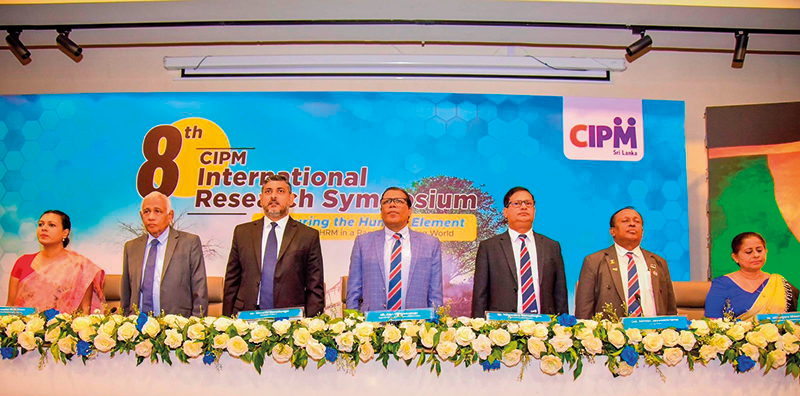
The Chartered Institute of Personnel Management (CIPM) successfully concluded the 8th Annual CIPM Symposium, which took place on 31st May 2024. Themed “Nurturing the Human Element—Redefining HRM in a Rapidly Changing World,” the symposium underscored the pivotal role of human resource management (HRM) in today’s dynamic global landscape. Since its inception in 1959, CIPM has been dedicated to advancing the HR profession through education, professional development, and advocacy, solidifying its position as Sri Lanka’s leading professional body for HRM.
Ken Vijayakumar, the President of the CIPM, graced the occasion as the chief guest. The symposium commenced with the welcome address by the Chairperson, Prof. Arosha Adikaram, followed by the Web Launch of the Symposium Proceedings and Abstract Book by the CIPM President. The event featured distinguished addresses, including a speech by Chief Guest Ken Vijayakumar, President of CIPM, and an address by Guest of Honor Shakthi Ranatunga, Chief Operating Officer of MAS Holdings Pvt. Ltd., Sri Lanka.
The symposium also featured an inspiring keynote address by Prof. Mario Fernando, Professor of Management and Director of the Centre for Cross Cultural Management (CCCM) at the University of Wollongong, Australia.
Vote of Thanks of the inauguration session was delivered by Dr. Dillanjani Weeratunga, Symposium Co-chair.
The symposium served as a comprehensive platform for researchers to present their findings across a wide range of critical topics in HRM. These included Cultural Diversity and Inclusion, Talent Development and Retention, Ethical Leadership and Corporate Social Responsibility, Adapting to Technological Advancements, Mental Health and Well-being at Work, Global Workforce Challenges, Employee Empowerment, and Reskilling and Upskilling.
The plenary session was led by Prof. Wasantha Rajapakse. Certificates were awarded to the best paper presenters during the valedictory session, followed by a vote of thanks delivered by Kamani Perera, Manager of Research and Development.
The annual symposium of CIPM was a truly inclusive event, attracting a diverse audience that spanned undergraduates, graduates, working professionals, research scholars and lecturers. This widespread interest highlights the symposium’s significance in the field of HRM, offering a unique opportunity for everyone to network and learn from scholarly brains.The CIPM International Research Symposium was sponsored by Hambantota International Port, Sri Lanka Institute of Information Technology (SLIIT), E B Creasy & Co. PLC, and Print Xcel Company.



US sports envoys to Lanka to champion youth development

Rahuman questions sudden cancellation of leave of CEB employees


