
News
Eminent scientist says SL consumers unlikely to see benefits of going green sans independent regulation

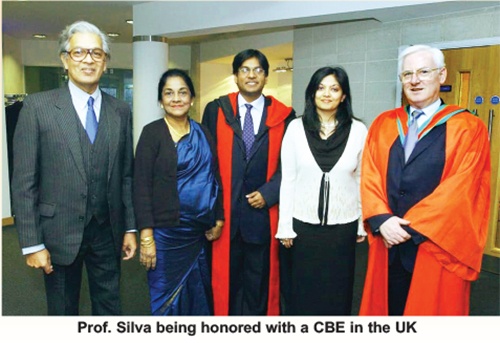
In the renewables sector
by Ifham Nizam
Sri Lanka’s energy sector needs major revision based on a plan to ensure there are no black or grey areas, and there is stability in the grid to take renewables at scale, says a top Sri Lankan scientist based in the United Kingdom.
“I believe it is entirely possible for Sri Lanka to move towards 50% solar within a decade with the help of policymakers in terms of a credible master plan integrated to the country’s energy needs”, said Professor Ravi Silva, Director, Advanced Technology Institute at the University of Surrey, who has been awarded a CBE for his services to Science, Education and Research.
CBE (Commander of the British Empire) is the highest ranking Order of the British Empire award, followed by OBE and MBE. It ranks just below a knighthood or dame-hood.
The son of Roland Silva, a former Commissioner of Archaeology in Sri Lanka, the eminent scientist stressed the need for consistency in government policy and alignment of all stakeholders to achieve a common objective or goal such as a realistic 70% renewables target, which includes hydro.
For private sector involvement, there needs to be a clear and transparent framework. This will encourage FDI in the renewables sector, particularly with potential changes to the current electricity and regulation acts. Without independent regulation in the sector, it is difficult to envisage the consumers seeing the benefits of going green, the professor said in an email interview with The Sunday Island.
“Maybe an independent PPP for a one-stop-shop for investment in the power sector may open the doors for more private sector involvement with FDI”, he suggested.
Prof. Silva further said that Sri Lanka, as an island, is blessed with a wonderful geology with central hills surrounded by plains extending to the sea. There is also significant rainfall and a well developed hydroelectricity system in the country, with already established dams to store water that can be converted to electricity.
As a country situated close to the equator, Sri Lanka enjoys maximum solar irradiation that potentially provide all energy needs with a combination of solar, wind and pumped hydroelectricity as storage to run base load, he noted.
At prevailing market costs, solar is provided to major facilities at less than two US cents per kWhr by companies such as ‘8 Minutes’. There is no reason to stick to fossil fuels that harm the environment and costs more to the consumer in the longer term, he continued.
Prof. Silva said he delivered a talk to the National Trust in July 2019 on: “Clean, Green and Free: Solar Electricity for 2035”; where it was shown that with the help of minimal disturbance to human settlements, a distributed network of 10 solar farms of around 200MW each, (taking up in total of 100 acres) can power the nation with the help of the existing hydroelectricity network (this was based on the peak energy demand of 2016 of 2453 MW).
The idea is that pumped hydro can be used to ensure the base load is covered, and there is enough solar/renewable capacity to fit the peak power demand during the day via the solar installations, he remarked.
“My talk to the National Heritage Trust in Colombo in July 2019 was based on preserving the “heritage” of free light from the sun to the people of Sri Lanka so they can enjoy their rights much like the vistas of stupas and archaeological sites given to us by our forefathers. I strongly believe we are defined by the unique culture to which we have been born and blessed in Mother Lanka”, he noted.
“As a product of D. S. Senanayake College, I passionately believe in “country before self”, much like many of my brothers at DSS and all citizens”, he emphasized.
On Covid-19, Prof. Silva said, “Sri Lanka can define its destiny and come out of the pandemic stronger and more self-sufficient if we all believe in our nation, and develop our available resources with Sri Lankan ingenuity that exists in all sectors. We must believe and trust in evidence-based decision-making, and place faith in our industry to bring high-value products through science and technology to the markets.
“We must be proud to wear the “Made in Sri Lanka” label on both consumables and technology, and help build a better and more sustainable world for the generations to come”, he added.
Professor Silva was honored with a CBE for his outstanding services to Science, Education and Research over the past three decades with contributions that cut across the world.
CBE is awarded to individuals for playing a prominent role at national level, or a leading role at regional level and also for distinguished and innovative contribution to any area.



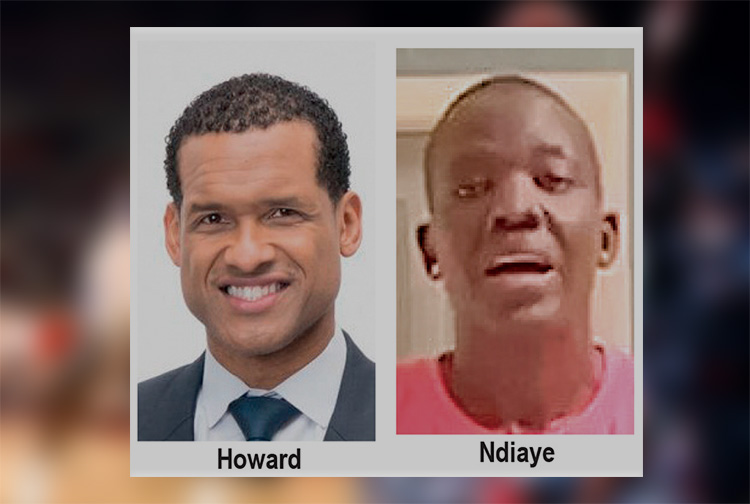
The U.S. Embassy in Colombo welcomed the U.S. Sports Envoys to Sri Lanka, former National Basketball Association (NBA) and Women’s National Basketball Association (WNBA) players Stephen Howard and Astou Ndiaye, from June 8 through 14.
The Public Diplomacy section of the U.S. Embassy said that it would launch a weeklong basketball program intended to harness the unifying power of sports, made possible through collaboration with Foundation of Goodness and IImpact Hoop Lab.
While in Sri Lanka, Howard and Ndiaye, both retired professional basketball players, will conduct a weeklong program, Hoops for Hope: Bridging Borders through Basketball. The Sports Envoys will lead basketball clinics and exhibition matches and engage in leadership sessions in Colombo and Southern Province for youth aged 14-18 from Northern, Uva, Eastern and Western Provinces, offering skills and leadership training both on and off the court. The U.S. Envoys will also share their expertise with the Sri Lanka Basketball Federation, national coaches, and players, furthering the development of basketball in the country. Beyond the clinics, they will collaborate with Sri Lankan schoolchildren to take part in a community service project in the Colombo area.
“We are so proud to welcome Stephen and Astou as our Sports Envoys to Sri Lanka, to build on the strong people-to-people connections between the United States and Sri Lanka,” said U.S. Ambassador Julie Chung. “The lessons that will be shared by our Sports Envoys – communication, teamwork, resilience, inclusion, and conflict resolution – are essential for leadership development, community building, equality, and peace. The U.S. Sports Envoy program is a testament to our belief that sports can be a powerful tool in promoting peace and unity.”
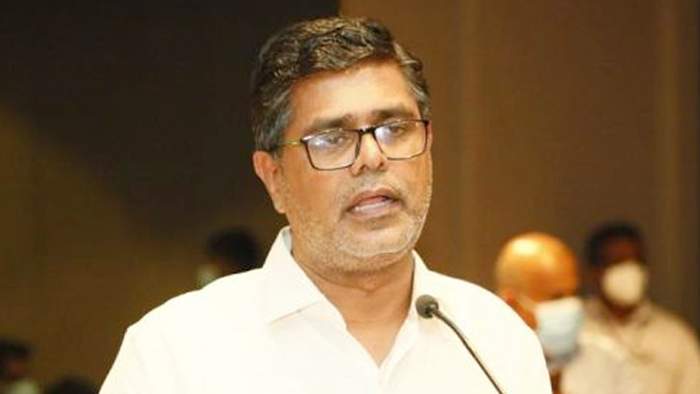
SJB Colombo District MP Mujibur Rahuman in parliament demanded to know from the government the reasons for CEB suspending the leave of all its employees until further notice from Thursday.
MP Rahuman said that the CEB has got an acting General Manager anew and the latter yesterday morning issued a circular suspending leave of all CEB employees with immediate effect until further notice.
“We demand that Minister Kanchana Wijesekera should explain this to the House. This circular was issued while this debate on the new Electricity Amendment Bill was pending. There are many who oppose this Bill. The Minister must tell parliament the reason for the urge to cancel the leave of CEB employees,” the MP said.However, Speaker Mahinda Yapa Abeywardena prevented Minister Wijesekera responding to the query and said that the matter raised by MP Rahuman was not relevant.
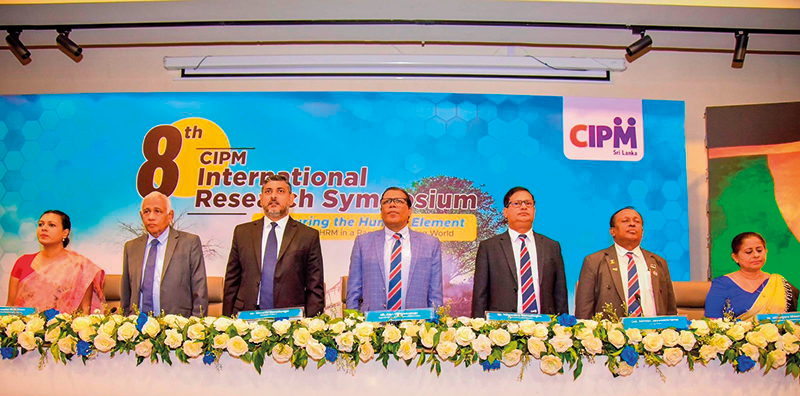
The Chartered Institute of Personnel Management (CIPM) successfully concluded the 8th Annual CIPM Symposium, which took place on 31st May 2024. Themed “Nurturing the Human Element—Redefining HRM in a Rapidly Changing World,” the symposium underscored the pivotal role of human resource management (HRM) in today’s dynamic global landscape. Since its inception in 1959, CIPM has been dedicated to advancing the HR profession through education, professional development, and advocacy, solidifying its position as Sri Lanka’s leading professional body for HRM.
Ken Vijayakumar, the President of the CIPM, graced the occasion as the chief guest. The symposium commenced with the welcome address by the Chairperson, Prof. Arosha Adikaram, followed by the Web Launch of the Symposium Proceedings and Abstract Book by the CIPM President. The event featured distinguished addresses, including a speech by Chief Guest Ken Vijayakumar, President of CIPM, and an address by Guest of Honor Shakthi Ranatunga, Chief Operating Officer of MAS Holdings Pvt. Ltd., Sri Lanka.
The symposium also featured an inspiring keynote address by Prof. Mario Fernando, Professor of Management and Director of the Centre for Cross Cultural Management (CCCM) at the University of Wollongong, Australia.
Vote of Thanks of the inauguration session was delivered by Dr. Dillanjani Weeratunga, Symposium Co-chair.
The symposium served as a comprehensive platform for researchers to present their findings across a wide range of critical topics in HRM. These included Cultural Diversity and Inclusion, Talent Development and Retention, Ethical Leadership and Corporate Social Responsibility, Adapting to Technological Advancements, Mental Health and Well-being at Work, Global Workforce Challenges, Employee Empowerment, and Reskilling and Upskilling.
The plenary session was led by Prof. Wasantha Rajapakse. Certificates were awarded to the best paper presenters during the valedictory session, followed by a vote of thanks delivered by Kamani Perera, Manager of Research and Development.
The annual symposium of CIPM was a truly inclusive event, attracting a diverse audience that spanned undergraduates, graduates, working professionals, research scholars and lecturers. This widespread interest highlights the symposium’s significance in the field of HRM, offering a unique opportunity for everyone to network and learn from scholarly brains.The CIPM International Research Symposium was sponsored by Hambantota International Port, Sri Lanka Institute of Information Technology (SLIIT), E B Creasy & Co. PLC, and Print Xcel Company.



US sports envoys to Lanka to champion youth development

Rahuman questions sudden cancellation of leave of CEB employees


