
Sports
Karunaratne four-for keeps New Zealand to 274

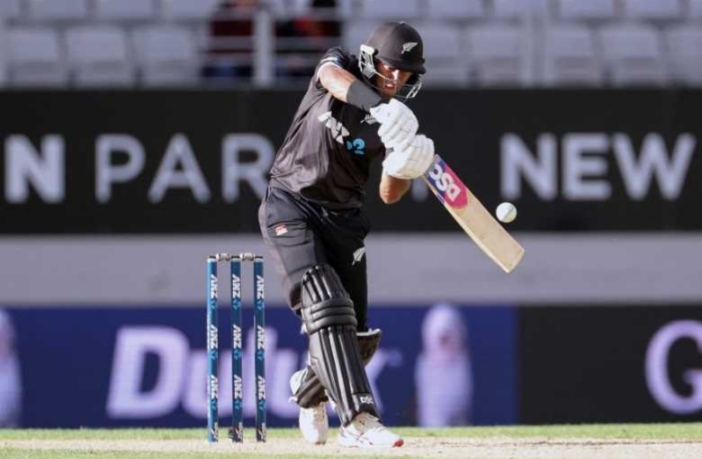


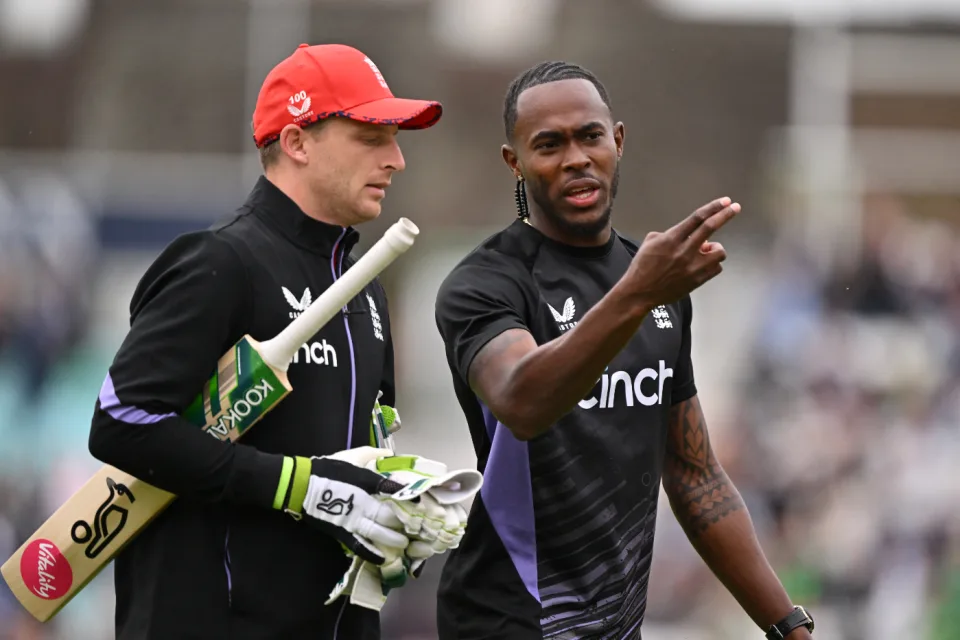
The first truly heavyweight clash of this expanded T20 World Cup format comes freighted with both history and subplots. A rematch of the 2010 World T20 final at Kensington Oval, the match pits Jos Buttler’s defending champions – who are aiming to become the first team to retain the trophy – against the Australian winning machine, victors at the 2021 edition and current world title-holders in Test and ODI cricket. And that’s before you throw in the Ashes for afters.
Already there is added pressure on England, after the rain in Bridgetown led to a share of the points in their opener against Scotland (and that having conceded 90 runs from 10 overs without taking a wicket in a tepid bowling display). Lose to their oldest rivals and it will leave their Super 8 prospects open to being waylaid by the perils of net run-rate calculations, or worse.
The Scotland match was the third abandonment in five suffered by England, after a rain-affected home series against Pakistan, which has clearly hampered their readiness for this campaign after almost six months without playing T20 together. It does not take much for a side to click in this format – and England looked in decent shape when they did get on the field against Pakistan – but Buttler will be anxious for things to go their way on Saturday, if only to avoid further questions referencing the team’s disastrous ODI World Cup defence last year.
Australia, under the laidback leadership of Mitchell Marsh would love nothing more than to add to the English sense of jeopardy – having helped bundle them out of the tournament in India on the way to taking the crown. Their head to head record is less impressive in T20 however, with England having won six of the last seven completed encounters, as well as that 2010 final.
Despite a wobble with the bat, Australia avoided mishap against Oman earlier in the week, the experience of David Warner and Marcus Stoinis shining through in difficult batting conditions. Surfaces in the Caribbean – not to mention those games staged in the USA – have already had teams scratching their heads; rather than the “slug-fest” England had prepared for, following a high-scoring tour of the Caribbean in December, it looks as if boxing smart may be the way to go.
Speaking of Warner, this could be the last time he faces up against England in national colours – and another match-winning contribution would likely reduce the chances of them meeting again in the knockouts. On the other side of the card is Jofra Archer, fresh from an emotional maiden outing at Kensington Oval and ready to take on Australia for the first time in any format since 2020. Can Mark Wood fire up England’s campaign, as he did during last summer’s Ashes? Will Pat Cummins be back to harass the old enemy once again? Seconds out, it’s almost time to rumble.
Cummins is set to return after being rested for the Oman game, which saw Mitchell Starc leave the field with cramp. Starc is understood to be fine and could keep his place – which would likely see Nathan Ellis miss out. Marsh is still not fit to bowl, with Australia likely to continue with the allrounder combination of Stoinis and Maxwell to give them cover.
Australia (probable XI): David Warner, Travis Head, Mitchell Marsh (capt), Glenn Maxwell, Marcus Stoinis, Josh Inglis (wk), Tim David, Pat Cummins, Nathan Ellis/Mitchell Starc, Adam Zampa, Josh Hazlewood
The one change England may consider is Reece Topley coming in for Wood, with the expectation that there will be some rotation among the seamers through the course of the tournament.
England (probable XI): Phil Salt, Jos Buttler (capt & wk), Will Jacks, Jonny Bairstow, Harry Brook, Liam Livingstone, Moeen Ali, Chris Jordan, Jofra Archer, Adil Rashid, Reece Topley/Mark Wood
[Cricinfo]
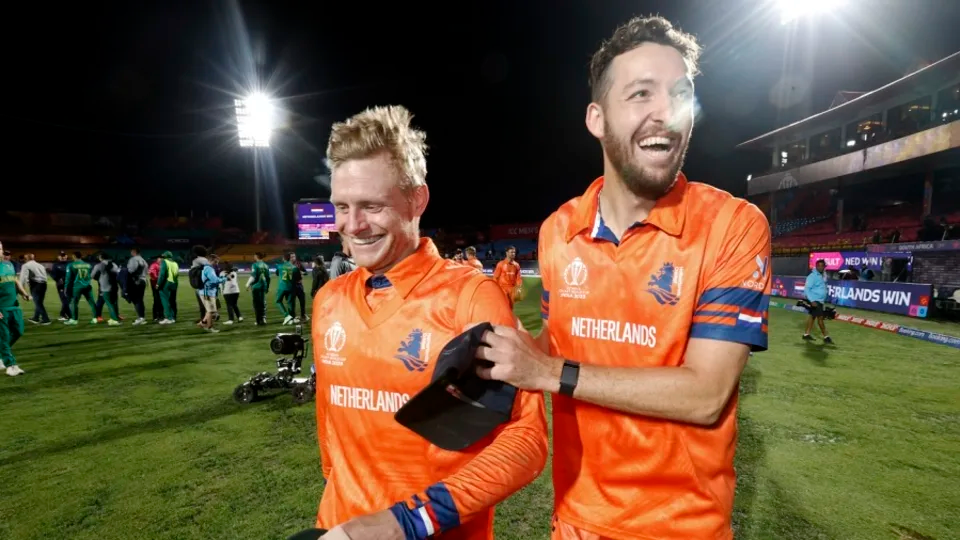
Once is coincidence, twice is a clue, and three times is proof.
To paraphrase Agatha Christie, that is the narrative around South Africa’s meeting with Netherlands at this T20 World Cup.
The Dutch beat South Africa at the 2022 tournament and ended their semi-final hopes in a match where South Africa appeared to be sleep walking, and then beat them again at the 2023 ODI World Cup, where they exposed South Africa’s vulnerability in the chase. If they to do the treble, not only will Netherlands take the lead in Group D, but they will offer conclusive evidence of the threat they pose to Full Members, especially South Africa.
Of course, it will take some doing after South Africa’s opening performance against Sri Lanka, where they reduced their opposition to their lowest T20I total and chased it down in fairly straightforward fashion thanks to the most stable middle-order of their white-ball era. In Aiden Markram, Tristan Stubbs, Heinrich Klaasen and David Miller, South Africa have bankers and big-hitters and, for this match, they also have the advantage of experience. They’ve already played at Eisenhower Park, and have first-hand knowledge that run-scoring doesn’t come easily;Klassen said they are prepared to use their “cricket brains” and play “smarter cricket”.
But the conditions could be good news for Netherlands, who are not naturally a line-up of big hitters and build their innings on a foundation of turning ones into twos. In other words, they tend to take a slightly more conservative approach to batting, which may work well here, but they’ll be wary of the uneven bounce of the surface and will have to come up with plans to counterattack especially against South Africa’s seamers. Their own bowlers were exemplary in Dallas and will look to build on that performance against a line-up that will likely be more proactive than Nepal’s, but who they have managed to keep quiet not once, but twice in the past. Third time’s the charm, they say.
Anrich Nortje’s stunning return to form against Sri Lanka means South Africa may not have to tinker with the bowling combination, and Gerald Coetzee and Tabraiz Shamsi may have to wait their turns to get a game. The batting line-up should be unchanged, with no space for Ryan Rickelton yet.
South Africa: Quinton de Kock (wk), Reeza Hendricks, Aiden Markam, Tristan Stubbs, Heinrich Klaasen (wk), David Miller, Marco Jansen, Keshav Maharaj, Kagiso Rabada, Ottneil Baartman, Anrich Nortje
Conditions in New York may tempt Netherlands to include an extra seamer and they have Kyle Klein in their squad. But it could come at the expense of a shortened batting line-up and they may not want to risk that.
Netherlands: Michael Levitt, Max O’Dowd, Vikramjit Singh, Sybrand Engelbrecht, Scott Edwards (capt, wk), Bas de Leede, Teja Nidamanuru, Logan van Beek, Tim Pringle, Paul van Meekeren, Vivian Kingma
[Cricinfo]
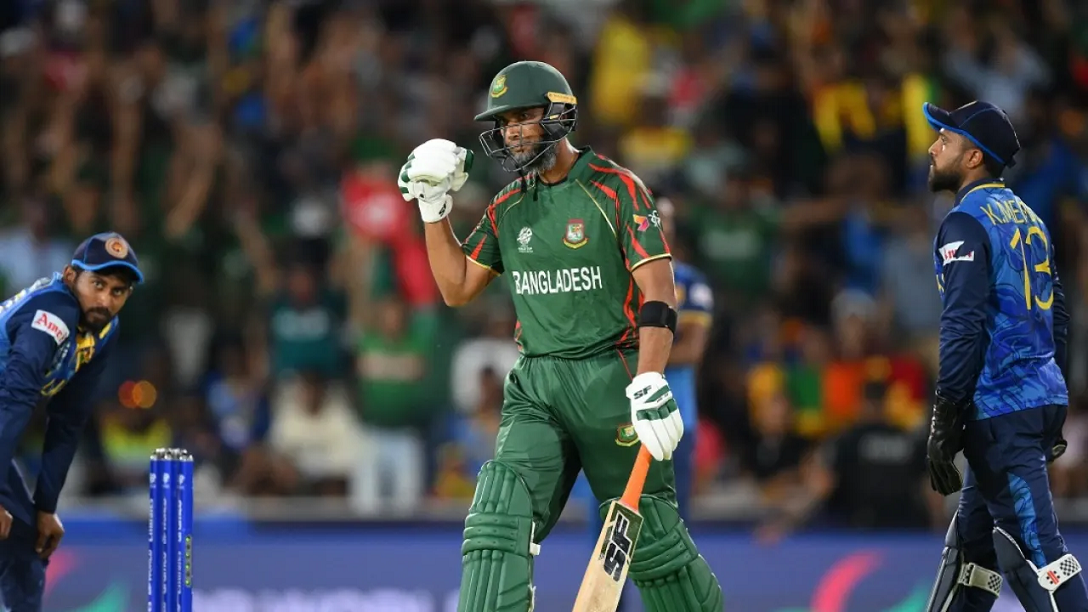
Nuwan Thushara’s last over brought Sri Lanka screaming back into the match,as he first bowled Rishad Hossain, and then nailed Taskin Ahmed in front of the stumps with a pinpoint swinging yorker. This left Bangladesh eight wickets down, with 12 runs still to get.
However, the experienced Mahmudullah was at the crease for Bangladesh, and despite some further nervy moments, pushed Bangladesh across the line off the last ball of the 19th over.
But this was a match chiefly decided by Bangladesh’s own outstanding bowling. Mustafizur Rahman was the best among them, using shorter lengths and his cutters efficiently, to claim figures of 3 for 17. Rishad Hossain’s three-for through the middle overs also kept Sri Lanka quiet.
Mustafizur was instrumental in Sri Lanka’s downward spiral through the middle overs, which culminated in a crash-and-burn end. Ultimately, their inability to find boundaries, or even rotate strike against good Bangladesh bowling resulted in their downfall. A score of 125 for 9 always seemed poor on a decent pitch, even if their bowlers made a match of it in the end.
Brief scores:
Bangladesh 125 for 8 in 19 overs (Towhid Hridoy 40, Litton Das 36; Dhanajaya de Silva 1-11, Nuwan Thushara 4-18, Wanidu Hasaranga 2-32, Matheesha Pathirana 1-27) beat Sri Lanka124 for 9 in 20 overs (Pathum Nissanka 47, Dhananjaya de Silva 21; Tanzim Hasan Sakib 1-24, Taskin Ahmed 2-25, Mustafizur Rahman 3-17, Rishad Hossain 3-22) by two wickets
[Cricinfo]



US sports envoys to Lanka to champion youth development

Rahuman questions sudden cancellation of leave of CEB employees


