
Life style
A Leopard’s leap

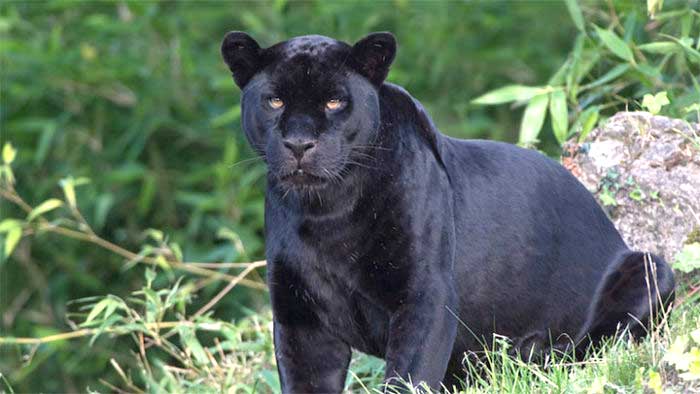
The rare Sri Lankan black leopard which succumbed to injuries resulting from a hunter’s trap on a tea estate in Nallathanniya in Hatton a few months ago is being preserved by the Department of National Museums. The stately creature is soon to join its other ‘friends from the wilds’ sheltered at the Museum of Natural History, Colombo.
by Randima Attygalle
Igniting the outrage of animal lovers, a black leopard that was snared at a tea estate in Nallathanniya, Hatton in late May this year, succumbed to its injuries a few days later. A rare subspecies unique to the island, Sri Lankan black leopard is a melanistic colour variant of the Sri Lankan leopard zoologically termed- Panthera pardus kotiya. Although leopards are commonly associated with a yellow coloured skin and dark spots, mutation known as melanism, as in the case of the ill-fated leopard, renders it distinct all black colour. It was the third black leopard to have been reported in the past decade adding to the ill-fated list of over 40 recorded leopard deaths in the country during the period.
In a bid to enable fu
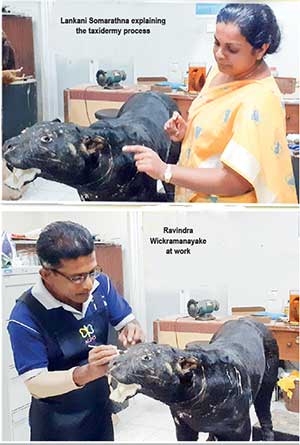
ture research on this rare giant cat, the Department of National Museums is in the process of preserving both its skin and the skeleton. This taxidermy process (preserving of an animal’s body for display purposes) which is now nearing completion is one of the most challenging exercises the Zoology Division of the Department of the National Museum has embarked recently, Assistant Director (Zoology), Department of National Museums, Lankani Somarathna told the Sunday Island.
“Since the animal had suffered severe neck injuries and had gone through a post-mortem process as well, preserving its skin required a lot of effort. Moreover unlike in the case of an elephant or any other commonly sighted animal, understanding its habitat, positioning requires extra effort,” says Somarathna who was responsible for the supervision of the project.
On a request made by the Department of National Museums, the body of the black leopard was handed over to it by the Department of Wildlife Conservation last month. “After the postmortem on the animal was performed by the Peradeniya Veterinary Faculty and following the proper legal process, we were handed the body on July 13 and since then the taxidermy process has been in place,” says Somarathna.
A well-built young male about eight ft in length and four ft tall, was killed by human cruelty robbing the majestic creature of many more years in the highlands and the country of the very few known black leopards.
“Since the death of the last Sri Lankan black leopard eight years ago whose body is preserved at the Wildlife Museum in Giritale, (managed by the Department of Wildlife Conservation), the animal was believed to be extinct in the country and no trace of it could be found until this recent tragedy in Nallathanniya,” says the Zoologist who notes that sightings of the animal have been very rare for several reasons. Its low population, its habitat in the dark
er regions enabling camouflage and its solitary nature are cited by her as reasons for rare sightings.
In the study of mammals, their skeleton and skull features are fundamental, notes t
he Zoologist, expl
aining the rationale behind the preservation of the leopard’s skin and the mounting of its skeleton. Both these will soon be displayed at the Osteology Gallery of the Natural History Museum which exhibits the skeleton of the iconic blue whale, Heiyanthuduwe Raja, Lechchami the female tusker and many more four legged creatures and reptiles.
The taxidermy project was carried out by a team from the Department of National Museums comprising the Taxidermist Chamalka Kotelawala and conservationists Ravindra Wickramanayake, P. Gunasiri, Susantha Balasooriya and Ashan Sandaruwan. Counting 30 years of experience, Ravindra Wickramanayake who had played a significant role in ‘resurrecting’ many a wild creature says that the chief challenge in the latest exercise was cleaning of the leopard’s skin for conservation.
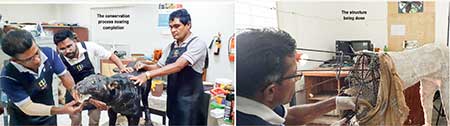
 “This was largely because the animal had suffered severe neck injuries in its trap and skin trauma following the post mortem,” says Wickramanayake who also cites the moulding of its ‘artificial skull’ as another hurdle which had to be overcome. “Since the skull (and the skeleton) was removed for mounting, we had to substitute it with a fibre base and also its teeth retaining its original character as far as possible.”
A base made out of wire mesh on which plaster and gunny material are placed holds the preserved skin of the black leopard- the biggest of the cats he had helped conserve so far he says. “Unlike in the past, now the use of plaster of Paris is minimal to avoid the hassle in moving the exhibits due to its weight and also possible damage,” says Wickramanayake. An assortment of chemicals is used to conserve animal carcasses he says. These chemicals differ from animal to animal.
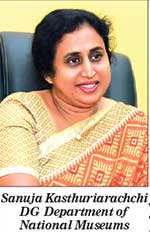
Thanking the Department of Wildlife and all other relevant authorities who facilitated the move of the black leopard to the Department of National Museums and applauding its skilled team of conservationists for a job well done, the Director General of Department of National Museums, Sanuja Kasthuriarachchi says, “sadly this Sri Lankan black leopard which ideally should have been part of our ‘live heritage’ is no more. By conserving it and displaying it at our Museum of Natural History, what we envisage is to enable research on this stately creature as means of contributing towards its future conservation in its natural habitat.”



Institute of Hospitality Sri Lanka
 The 32nd Annual General Meeting (AGM) of the UK-based Institute of Hospitality’s Sri Lanka Chapter was held recently at the Ramada Hotel Colombo,.The event provided an evening of camaraderie , reflection of the past and present achievements,setting new benchmarks for the future
The AGM had the presence of two distinguished guests, the Chief Guest Opposition Leader Sajith Premadasa, and the Guest of Honour British High Commissioner to Sri Lanka, Andrew Patrick. Their inspiring speeches were lauded by all hoteliers who were present at the occasion
A special thanks was extended to Robert Richardson, CEO of the Institute of Hospitality UK, along with his team, sponsors, committee members, and all attendees for making the event memorable.
Dr. Harsha Jayasingh, Past President of the Institute of Hospitality (UK) Sri Lanka Chapter, emphasised the Institute’s longstanding history and the strength of its Sri Lankan branch. “The Institute of Hospitality (IH) UK has a history of 86 years, and we are proud to be the Sri Lanka Branch. IH Sri Lanka is much stronger now with many members from all areas of the hospitality industry,” he stated.
Dr. Jayasingh highlighted the significant role of tourism in Sri Lanka’s economy,. He said tourism it is the third-largest source of revenue for the country. “Tourism accounts for about 13.3% of total foreign exchange earnings and employs 450,000 people directly and indirectly. The hospitality industry in this island of pearl holds tremendous potential for economic growth, job creations, and cultural exchange,” he added.
He also pointed out more women should be attracted to the industry and advocated for the use of technology in hospitality sector to attract the younger generation.
The newly appointed Chairman Ramesh Dassanayake spoke about the challenges faced by the industry, including the reluctance of youth to join the sector. . Dassanayake expressed concerns over the migration of staff between hotels and the overall ‘brain drain’ in the sector. ” We must maintain high standards in the hotel We must try to attract tourists to Sri Lanka, we must have with many facilities Hence, hotel schools and other professional institutions involved in skills development mustincrease their intakes,” he pointed out.
Chief Guest Sajith Premadasa emphasised the importance of eco tourism and said “We need to have an environmental policy related to tourism in place,” . .
The 32nd AGM of the Institute of Hospitality UK, Sri Lanka Chapter, was a testament to the strength and potential of Sri Lanka’s hospitality industry. The insights and commitments shared during the event set a new benchmark for the future.(ZC)


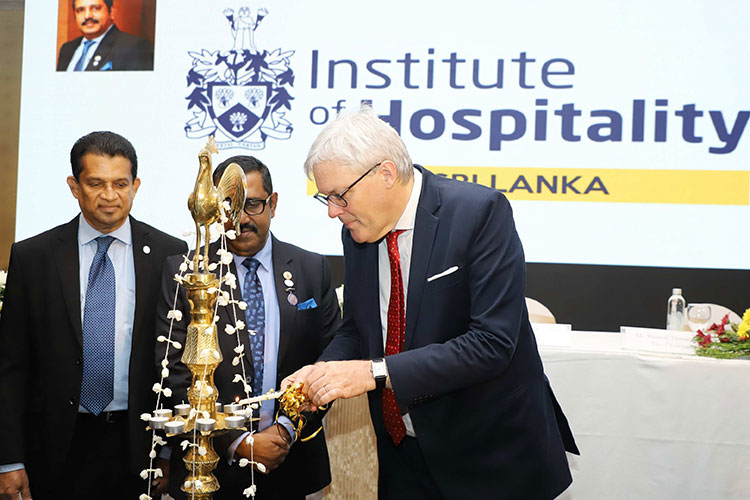
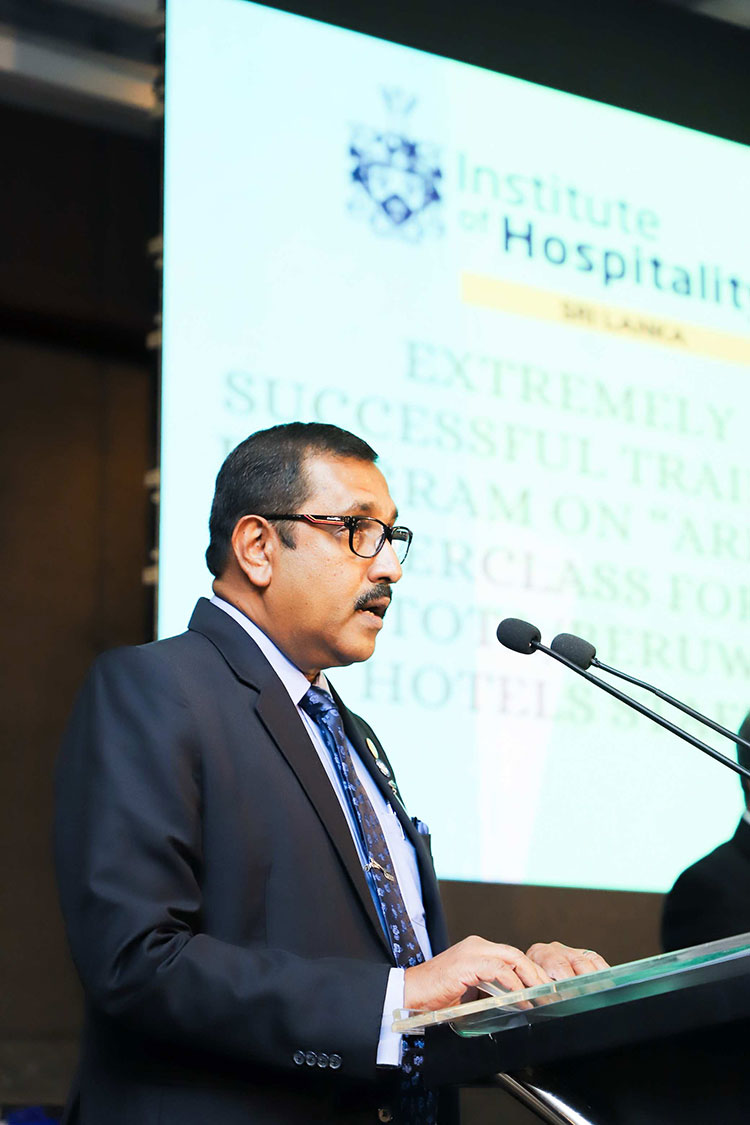

Pix by Thushara Attapathu
Life style
He recognizes human identity beyond boundaries of gender, race, nationality and religion.

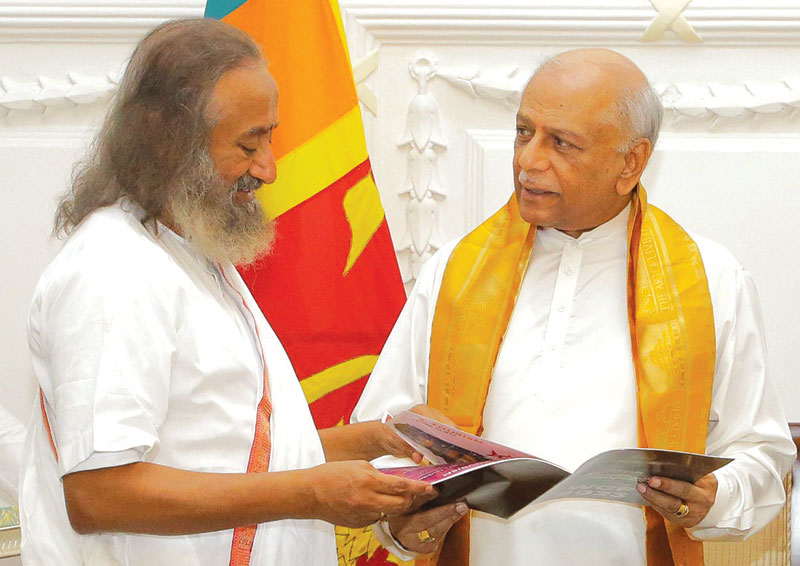
Visit of Sri Gurudev to Sri Lanka
Humanitarian, spiritual leader and Global Ambassador of Peace Gurudev Sri Sri Ravi Shankar (Sri Gurudev) was in Sri Lanka on a three day tour on the invitation of the Prime Minister of Sri Lanka Dinesh Gunewardene. Gurudev who inspired a wave of volunteerism and service to moot one of the largest volunteer-based organisations in the world – The Art of Living – visited the various projects under the aegis of the foundation and launched twelve vocational and technical centers around the island. He was accompanied by thousands of followers from Sri Lanka and around the world.
Gurudev who visited Sri Lanka for the sixth time also had a first day cover launched in honour of his visit. He is a strong proponent of spreading happiness, using the unique Sudarshan Kriya, yoga, meditation and practical wisdom to unite people, empower individuals and transform communities. His programmes provide techniques and tools to live a deeper, more joyous life, while his non-profit organisations recognize the human identity beyond the boundaries of gender, race, nationality and religion.
The Art of Living which has more than 30,000 teachers and over one million volunteers across 180 countries has touched in excess of five hundred million people around the world. CNN called it “Life Changing” and The Washington Post headlined it, “Fresh air to millions”.
In Trincomalee, Gurudev met with war victims and had a heartwarming engagement with the children from the children’s homes run by the Foundation. He also visited the Koneswara Temple in Trincomalee and graced the Kumbhabhishekam at Seetha ecogPnize the human identity beyond the boundaries of gender, race, nationality and religion. Amman temple at Nuwara Eliya. He held discussions with the trustees on the progress of the foundation’s social service projects, while also holding a special event – Ekamuthuwa – attended by a large number of dignitaries and his devotees from around the world.
His time with the Prime Minister was spent discussing the prospects of unity in diversity and uniting Sri Lanka by adding happiness into the formula of living. In addition he had discussions with the Speaker of the Parliament of Sri Lanka Mahinda Yapa Abeywardena, prominent business stewards and civil society leaders.
by Zanita Careem
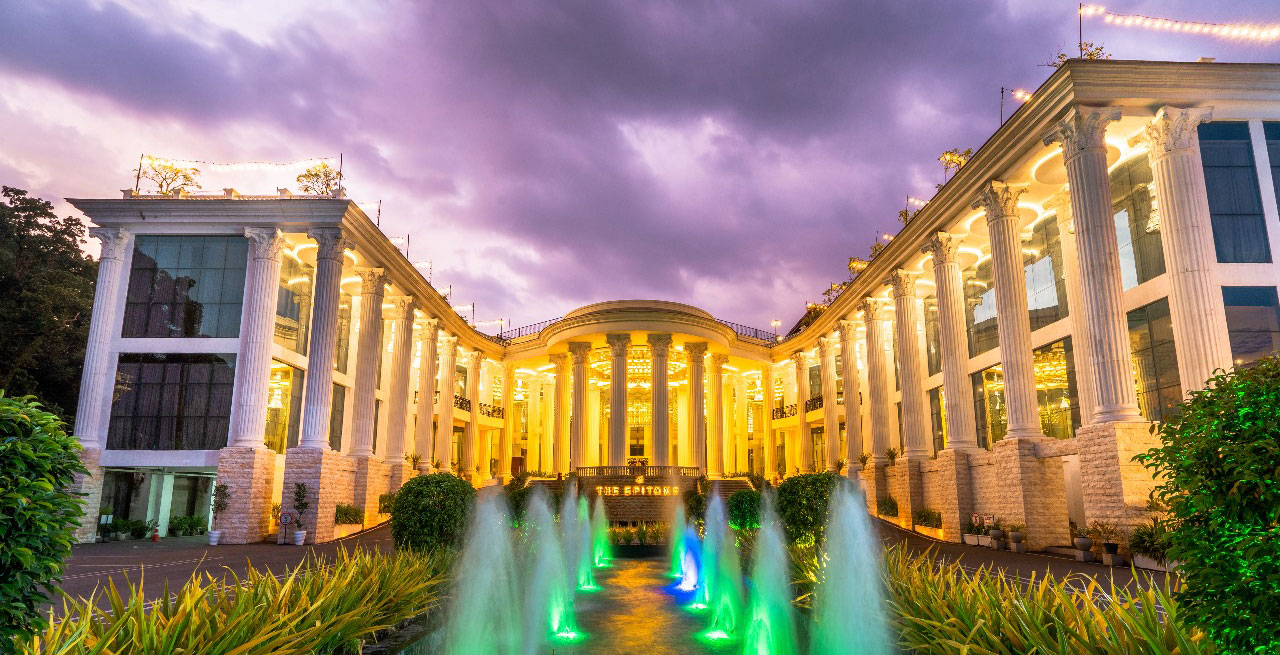
Envison your dream wedding day come to life at the Epitome Hotel, a prestigious city hotel in Kurunegala offering an unrivalled luxury rendors experience for weddings.
The venue is designed to embody opulence and luxury from all quarters for a spectacular wedding in kurunegala,Thier ballroom is the largest banquet facility in Sri Lanka It can be divided into six luxurious pillarless wedding halls on the ground floor and 25pax smaller banquet halls.
It can be easily named as a five star heaven in the heart of the city contributing to a myriad of immense experiences tailored to inspire and delight wedding experiences.
From opulent décor set up to exquisite table decor, lavish food, every detail is meticulously curated to spark your imagination and ignite creativity for a perfect wedding. The previous prestigious wedding shows season one and season two attracted large crowds
were unique events which gave the wedding vendors and potential clients had an opportunity to connect and interact with each other. Beyond being a showcase it was a chance for the wedding vendors to unite and contribute to the vibrancy of the wedding industry. The wedding show covered all area of the bridal industry providing a comprehensive variety of bridal supplies from Sri lanka and became the most popular bridal exhibitions in Kurunegala.This bridal exhibitions allowed brides and grooms to experience first hand the products and services available from suppliers in Sri Lanka
These wedding shows held at The Epitome created a benchmark and gave an opportunity for vendors to create connections to the utmost satisfaction said Harshan Lakshita Executive Director. of the magnificent Hotel
Our wedding shows featured experts and professionals in every field‘ It covered all areas of the bridal industry provided a comprehensive variety of bridal supplies from Sri lanka and became most popular bridal exhibition in this region.We are always open to everyone to join us at our wedding shows in the future. It is an opportunity to discover the incredible talent within our local wedding and bridal vendors to make meaningful relationships and plan thier special day at our breathtaking hotel The Epitome said General Manager Kavinda Caldera
The Epitome Hotel’s bridal show which will be held end of June will buzz with great ideas,advice and inspiration for all those who plan thier dream wedding
…….
The Hotel Epitome’s Wedding Season 3 will marked excellence, celebration and inspiration for those in the wedding industry. The exhibition halls will resonate with ideas on exquisite bridal wear to decor, florists , photography etc and showshowcase the rich tapestry of talent within the local wedding industry. .





US sports envoys to Lanka to champion youth development

Rahuman questions sudden cancellation of leave of CEB employees


