
News
20A weakened domestic mechanisms, says Civil Society Platform


The Civil Society Platform (CSP) says President Gotabaya Rajapaksa’s call for a dialogue between his government and the expatriate Tamils is not realistic. President Rajapaksa made the declaration in talks with UN Secretary General Antonio Guterres. CSP says an environment conducive for such an initiative is not available at the moment.
Dr. Ms. Nimalka Fernando was a member of the Office on the Missing Persons (OMP) from 2018-2021 and Brito Fernando, Chairperson of Families of the Disappeared in Sri Lanka issued the following statement in response to The Island query:
“When Sri Lanka co-sponsored the UNHRC Resolution 30/1 in Oct 1, 2015, the then Foreign Minister the late Mangala Samaraweera, informed the Human Rights Council that the Government would initiate a domestic mechanism after consulting the victims and survivors.
The Government established a Secretariat to Coordinate Reconciliation Mechanisms (SCRM) to coordinate the domestic mechanisms. After a lengthy public consultation process,conducted by Consultation Task Force on Reconciliation Mechanisms, chaired by the late Ms. Manouri Muttetuwegama, a comprehensive report was published.
Based on the recommendations of the Task Force, domestic or internal mechanisms were established. Office on Missing Persons (OMP) was established for truth seeking, while Office for Reparations (OR) was created to address the issue of Reparations. The independence of these institutions had been guaranteed as appointments to these mechanisms were done by the President, based on the recommendations of the Constitutional Council created by the 19th Amendment to the Constitution.
Those were the steps taken to establish credible domestic mechanisms.
The present government distanced itself from the UNHRC Resolution 30/1 in March 2020. It dissolved the Secretariat to Coordinate Reconciliation Mechanisms. The government continues to maintain two domestic mechanisms created under the UNHRC resolution 30/1. However, the enactment of the 20th Amendment to the Constitution has impacted on the very nature of the independence of the two existing domestic mechanisms with the Constitutional Council being replaced by the Parliamentary Council.
The appointment of members to these mechanisms are now vested in the President in his discretion. The Parliamentary Council can only direct observations related to the nominees given by the President. Thus the independence of the two mechanisms are seriously compromised and the confidence of victims and survivors, which is of paramount importance for the success of any mechanism, has eroded.
According to the statement by the PMD, the President has said that the internal issues of Sri Lanka should be resolved through an internal mechanism of the country and he has further said that the Tamil Diaspora would be invited for discussions in this regard. The previous government has engaged with the Tamil diaspora groups as stakeholders of the domestic reconciliation process. However, in February 2021, Secretary to the Ministry of Defence has proscribed seven prominent organisations of Tamil diaspora including the Global Tamil Forum, British Tamil Forum and Canadian Tamil Congress, and hundreds of individuals, by listing them under the United Nations Act No. 45 of 1968.
Some of the individuals and organisations have been actively engaged in building the domestic reconciliation mechanisms in Sri Lanka during the previous government. While appreciating the President for extending an invitation for dialogue to the Tamil diaspora organisations, we note that continuation of the proscription of organizations and individuals is counterproductive to achieve this goal. Wouldn’t it be necessary to take steps to delisting these individuals and organisations in order to facilitate the genuine engagements and dialogue?
Civil Society Platform has noted the President’s assurance of continued engagement with civil society organisations to bring about development and reconciliation in the country. However, this policy has to be reflected at the grass-root level. We have credible reports where civil society organisations working at community level with victims and survivors are subjected to surveillance and harassment. It is important that the Government and the civil society agree on issues of common concern in order to have a meaningful dialogue with an aim to achieve deliverable targets in achieving reconciliation and development.
We note with concern the statement of the President referring to issuing death certificates to the families of the missing and the disappeared. Prior to providing them with the death certificates it is important that circumstances related to the disappearances be investigated based on the information provided by families. Further information is also available in the previously appointed Presidential Commissions of Inquiry including the Lessons Learnt and Reconciliation Commission (LLRC) and Paranagama Commission. It is the responsibility of the State to account for each individual who has disappeared. The basic principle of accountability is linked to ascertaining the truth related to the disappearance. The issuance of death certificates is a complex issue. Even families in the south whose loved ones disappeared in the 1989 era are contesting the death certificates they have received. It is a grieving community that requires an honest and credible process. If we are honest about what happened, then healing becomes easier. If we hide information the scars will remain forever, festering.
The government has failed to even facilitate the granting of the interim-relief of Rs 6000/- approved in October 2019 by the previous government as recommended by the interim recommendations of the OMP. No doubt the government is presently developing a compensation package. But the families need the interim relief very badly. They too have been affected by the Covid-19 pandemic. Requests made to the authorities to include the families of the disappeared too under the Covid-19 relief package have gone unanswered. Letters sent to the Ministry of Justice, which is the line ministry responsible for the payment of Rs 6000/- remains unanswered.
We believe that the Civil Society Organisations and NGOs can be partners in development and reconciliation. Historically, we have been engaged with every government and we are willing to engage with this government too. But, we need to do so, maintaining our independence and remaining as a critical mass affirming the principles of Freedom of Expression, Freedom of Assembly and Freedom of Association.”



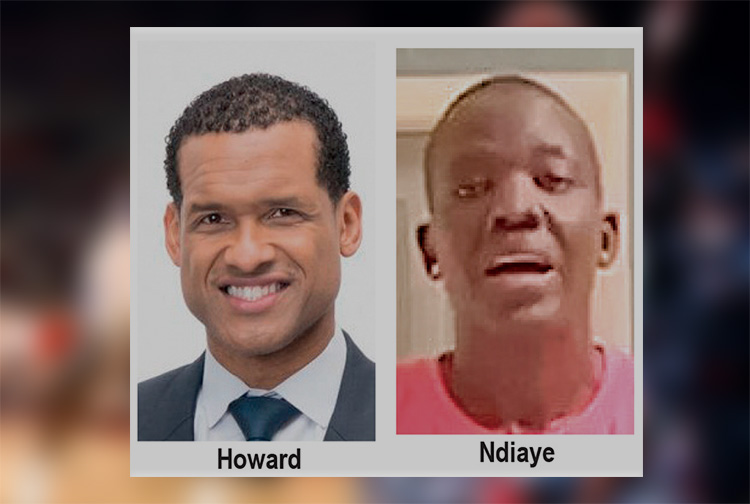
The U.S. Embassy in Colombo welcomed the U.S. Sports Envoys to Sri Lanka, former National Basketball Association (NBA) and Women’s National Basketball Association (WNBA) players Stephen Howard and Astou Ndiaye, from June 8 through 14.
The Public Diplomacy section of the U.S. Embassy said that it would launch a weeklong basketball program intended to harness the unifying power of sports, made possible through collaboration with Foundation of Goodness and IImpact Hoop Lab.
While in Sri Lanka, Howard and Ndiaye, both retired professional basketball players, will conduct a weeklong program, Hoops for Hope: Bridging Borders through Basketball. The Sports Envoys will lead basketball clinics and exhibition matches and engage in leadership sessions in Colombo and Southern Province for youth aged 14-18 from Northern, Uva, Eastern and Western Provinces, offering skills and leadership training both on and off the court. The U.S. Envoys will also share their expertise with the Sri Lanka Basketball Federation, national coaches, and players, furthering the development of basketball in the country. Beyond the clinics, they will collaborate with Sri Lankan schoolchildren to take part in a community service project in the Colombo area.
“We are so proud to welcome Stephen and Astou as our Sports Envoys to Sri Lanka, to build on the strong people-to-people connections between the United States and Sri Lanka,” said U.S. Ambassador Julie Chung. “The lessons that will be shared by our Sports Envoys – communication, teamwork, resilience, inclusion, and conflict resolution – are essential for leadership development, community building, equality, and peace. The U.S. Sports Envoy program is a testament to our belief that sports can be a powerful tool in promoting peace and unity.”
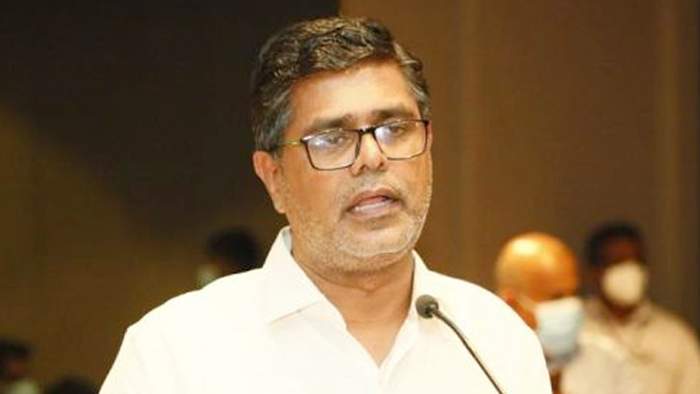
SJB Colombo District MP Mujibur Rahuman in parliament demanded to know from the government the reasons for CEB suspending the leave of all its employees until further notice from Thursday.
MP Rahuman said that the CEB has got an acting General Manager anew and the latter yesterday morning issued a circular suspending leave of all CEB employees with immediate effect until further notice.
“We demand that Minister Kanchana Wijesekera should explain this to the House. This circular was issued while this debate on the new Electricity Amendment Bill was pending. There are many who oppose this Bill. The Minister must tell parliament the reason for the urge to cancel the leave of CEB employees,” the MP said.However, Speaker Mahinda Yapa Abeywardena prevented Minister Wijesekera responding to the query and said that the matter raised by MP Rahuman was not relevant.
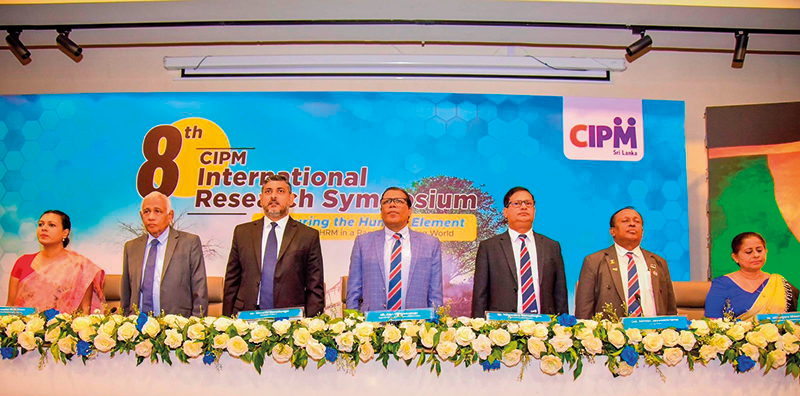
The Chartered Institute of Personnel Management (CIPM) successfully concluded the 8th Annual CIPM Symposium, which took place on 31st May 2024. Themed “Nurturing the Human Element—Redefining HRM in a Rapidly Changing World,” the symposium underscored the pivotal role of human resource management (HRM) in today’s dynamic global landscape. Since its inception in 1959, CIPM has been dedicated to advancing the HR profession through education, professional development, and advocacy, solidifying its position as Sri Lanka’s leading professional body for HRM.
Ken Vijayakumar, the President of the CIPM, graced the occasion as the chief guest. The symposium commenced with the welcome address by the Chairperson, Prof. Arosha Adikaram, followed by the Web Launch of the Symposium Proceedings and Abstract Book by the CIPM President. The event featured distinguished addresses, including a speech by Chief Guest Ken Vijayakumar, President of CIPM, and an address by Guest of Honor Shakthi Ranatunga, Chief Operating Officer of MAS Holdings Pvt. Ltd., Sri Lanka.
The symposium also featured an inspiring keynote address by Prof. Mario Fernando, Professor of Management and Director of the Centre for Cross Cultural Management (CCCM) at the University of Wollongong, Australia.
Vote of Thanks of the inauguration session was delivered by Dr. Dillanjani Weeratunga, Symposium Co-chair.
The symposium served as a comprehensive platform for researchers to present their findings across a wide range of critical topics in HRM. These included Cultural Diversity and Inclusion, Talent Development and Retention, Ethical Leadership and Corporate Social Responsibility, Adapting to Technological Advancements, Mental Health and Well-being at Work, Global Workforce Challenges, Employee Empowerment, and Reskilling and Upskilling.
The plenary session was led by Prof. Wasantha Rajapakse. Certificates were awarded to the best paper presenters during the valedictory session, followed by a vote of thanks delivered by Kamani Perera, Manager of Research and Development.
The annual symposium of CIPM was a truly inclusive event, attracting a diverse audience that spanned undergraduates, graduates, working professionals, research scholars and lecturers. This widespread interest highlights the symposium’s significance in the field of HRM, offering a unique opportunity for everyone to network and learn from scholarly brains.The CIPM International Research Symposium was sponsored by Hambantota International Port, Sri Lanka Institute of Information Technology (SLIIT), E B Creasy & Co. PLC, and Print Xcel Company.



US sports envoys to Lanka to champion youth development

Rahuman questions sudden cancellation of leave of CEB employees


